TSLA392.500392.5%
GM80.540-0.78%
F12.870-0.005%
RIVN16.92016.92%
CYD44.1700.91%
HMC25.3600.36%
TM215.250-1.95%
CVNA401.89014.36%
PAG162.8201.5%
LAD288.7605.72%
AN209.5301.54%
GPI351.2101.27%
ABG212.7101.27%
SAH71.7801.08%
TSLA392.500392.5%
GM80.540-0.78%
F12.870-0.005%
RIVN16.92016.92%
CYD44.1700.91%
HMC25.3600.36%
TM215.250-1.95%
CVNA401.89014.36%
PAG162.8201.5%
LAD288.7605.72%
AN209.5301.54%
GPI351.2101.27%
ABG212.7101.27%
SAH71.7801.08%
TSLA392.500392.5%
GM80.540-0.78%
F12.870-0.005%
RIVN16.92016.92%
CYD44.1700.91%
HMC25.3600.36%
TM215.250-1.95%
CVNA401.89014.36%
PAG162.8201.5%
LAD288.7605.72%
AN209.5301.54%
GPI351.2101.27%
ABG212.7101.27%
SAH71.7801.08%

Volkswagen, UAW reach tentative first labor agreement at Tennessee plant

The proposed contract includes 20% wage increase and enhanced benefits nearly two years after Chattanooga workers voted to unionize.

UAW, VW, agreement

On the Dash:

  • Volkswagen and UAW reach a tentative first contract at the Chattanooga plant with 20% wage increases.
  • Rising labor costs may add long-term pressure to vehicle pricing and margin strategies.
  • Union momentum at nonunion automakers could influence future production and allocation planning.
  • Dealer profitability remains closely tied to how OEMs balance labor agreements with affordability concerns.

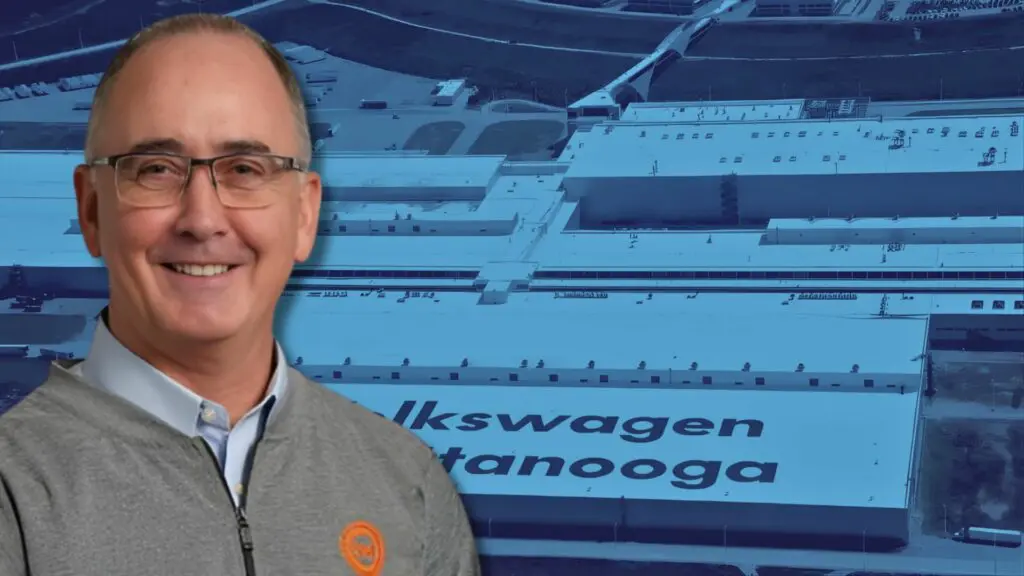
Volkswagen and the United Auto Workers (UAW) have reached a tentative agreement on their first labor contract at the automaker’s Chattanooga, Tennessee, plant, nearly two years after workers voted to unionize, the union announced Wednesday.

The agreement includes a 20% wage increase over the life of the contract, along with improvements to health care, paid time off, and job security, according to the union. The deal will now be put to a ratification vote by plant employees.

UAW President Shawn Fain called the agreement “life-changing,” while Volkswagen said the proposed contract delivers meaningful improvements for its workforce, including higher wages and lower health care costs.

Sign up for CBT News’ daily newsletter and get the latest industry stories delivered straight to your inbox

Workers at the Chattanooga plant voted 73% in favor of union representation in April 2024, making it the first foreign-owned automaker in the South to unionize through an election since the 1940s. Earlier organizing efforts at the plant failed in 2014 and 2019.

The tentative agreement comes as the UAW continues to push for broader organizing across nonunion automakers, following its 2023 strikes against Ford, General Motors, and Stellantis that secured wage increases of about 25%. Volkswagen workers had signaled they were seeking similar gains during negotiations.

For dealers, the agreement underscores the growing role of labor costs and workforce dynamics in automaker pricing, production planning, and long-term investment decisions. Any sustained increase in manufacturing costs could affect vehicle pricing, incentives, and retail-level allocation strategies.

The outcome of the ratification vote could also shape future labor negotiations at other nonunion plants, as automakers and dealers navigate a market already challenged by affordability pressures and shifting consumer demand.

More from Industry News
Samsung SDI inks multi-year EV battery supply deal with Mercedes-Benz

Samsung SDI inks multi-year EV battery supply deal with Mercedes-Benz

- April 20, 2026
On the Dash: Expanding battery partnerships signal continued acceleration of EV product pipelines from legacy automakers. High-nickel battery chemistry points to ongoing focus on range and performance improvements in upcoming...
Energy secretary says gas prices have peaked, but relief may take time

Energy secretary says gas prices have peaked, but relief may take time

- April 20, 2026
On the Dash: Gas prices at $4.05, up from $3.16 a year ago, continue to pressure consumer affordability. Uncertainty around sub-$3 pricing timelines complicates demand forecasting. Elevated fuel costs may...
Helium shortage driven by Iran conflict threatens chip supply, raising risks for automakers, EV production, and dealer inventory constraints.

Helium shortage threatens automotive supply chain amid Iran war disruptions

- April 20, 2026
On the dash: Semiconductor-linked helium shortages could reduce vehicle production and constrain automaker assembly capacity. EVs and tech-heavy vehicles are most exposed due to semiconductor-intensive systems. Dealers may see tighter...
Volkswagen ends U.S. EV output, triggering $600 million financial hit 

Volkswagen ends U.S. EV output, triggering $600 million financial hit 

- April 17, 2026
On the Dash: Slower EV demand may impact inventory planning and turn rates for electric models. Production pullbacks could tighten EV supply or shift sourcing toward imports. Ongoing cost pressures...
CBT News
Privacy Overview

This website uses cookies so that we can provide you with the best user experience possible. Cookie information is stored in your browser and performs functions such as recognising you when you return to our website and helping our team to understand which sections of the website you find most interesting and useful.