
It may sound like heresy, but Henry Ford was a procrastinator.
“I need a faster horse.” That was the consumer mantra when the early automobile market was still elite. People didn’t realize that cars were the answer and would soon be ubiquitous. So, when Ford introduced the Model T in 1908, the first gas-powered automobile widely available in the U.S., he thought he had reached his goal of building the “universal car.”
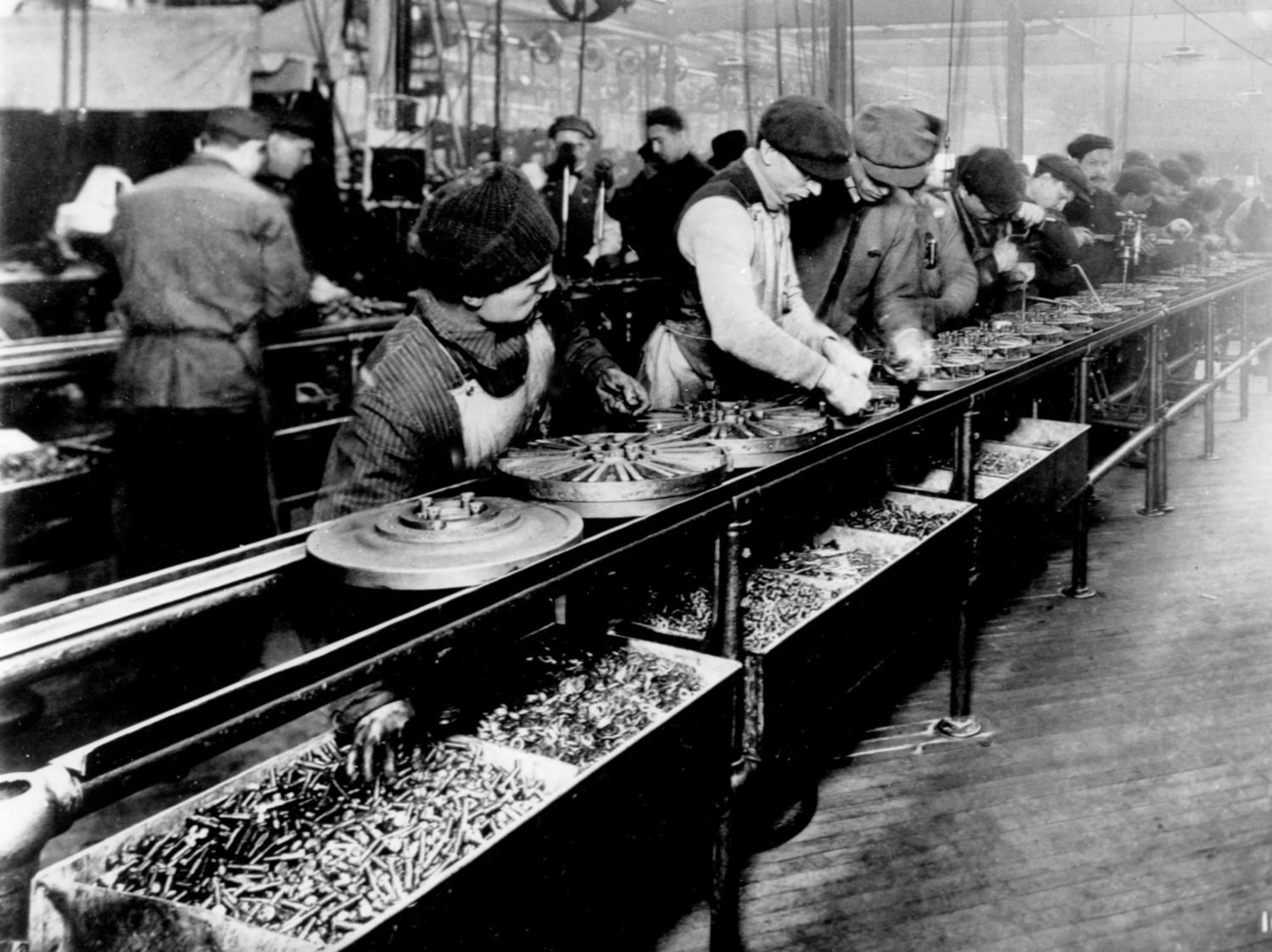
Ford's use of a moving line reduced a car's assembly time from 12 hours to 93 minutes // Image source: AP
This achievement required Ford to adapt the moving assembly line to manufacture his vehicles – arguably his greatest innovation – and to focus on that, he froze the design of the Model T. The new process was wildly successful, increasing delivery from 10,000 cars in 1908 to over 900,000 in 1920.
Ford offered affordable products to a larger segment of the population than had ever been available before. The cars were easy to drive and of good quality. Ford was sitting on a gold mine, and he was satisfied with that. Critics, as well as many of his own salesmen, urged him to diversify his product line. But Ford thought the only improvements needed were those made to defects, not style. Emphasizing his well-known perspective that his cars should be “any color so long as it is black,” he said ⎯
“It is strange how, just as soon as an article becomes successful, somebody starts to think that it would be more successful if only it were different. There is a tendency to keep monkeying with styles and to spoil a good thing by changing it.”
Ford, one of the world’s greatest innovators, had stopped innovating.
At the peak of Ford’s market domination, General Motors began producing cars for distinct market segments. Ford’s fortunes began to slip. And by 1927 when Ford brought the Model A to market, its market share had fallen from about 65% to nearly 15%, and it was losing $20 on each car it produced. Ford’s failure was simply his refusal to continuously innovate.
Modern technology is replete with similar examples – Blockbuster’s death by Netflix, Circuit City’s fall to Best Buy, Compaq’s loss to HP, Monster.com’s tumble to LinkedIn, all the old department stores consumed by Amazon… to name but a few. Another procrastinating giant drops to an innovating competitor every day.
A disproportionate number of successful-in-the-moment companies doing all the right things – making penny-perfect payments, maintaining their status quo – want to live off the legacy of their current businesses. Those are The Procrastinators. Others are always innovating and looking for the next sizzle – the next big thing – The Innovators.
 Watch here:
Which are you? Are you satisfied? Are you comfortable? Are you looking to upgrade? Are you leading the pack? Are you chasing the tail? Are you worried it’s too late, that you missed your chance?
In 1927 when Ford introduced the Model A, it was offered in four colors (no black) with a long list of useful performance improvements over the Model T. It was produced for five years during the Great Depression, with sales of over $4.3 million (roughly $74 million in today’s dollars). The Model A, Henry Ford’s last-ditch response to innovation demands he was reluctant to make, saved the business and secured its place in automotive history.
It seems clear: If you don’t keep innovating, you’ll almost certainly be left behind. Many of the mighty have fallen and not lived to tell the tale. Be like Henry Ford. Don’t procrastinate, innovate.