
Okay, perhaps you won’t die, but can we all agree it’s finally time to drastically shorten the old-school road-to-the-sale and truly improve the customer’s buying experience?
In Ernest Hemingway’s 1926 novel, The Sun Also Rises, we read the following dialogue:
“How did you go bankrupt?” Bill asked.
“Two ways,” Mike said. “Gradually and then suddenly.”
Let’s call this concept of “gradually and then suddenly” Hemingway’s Law of Major Change. I like to think of it as a law, because most major change, you see, generally follows this path. It happens gradually for what feels like a very long time until everything seems to change suddenly (and almost without warning… almost).
Changes at the retail level in automotive, it can be said, have always followed Hemingway’s Law of Major Change. Market shifts are slow and gradual… and then sudden. Take the current market flattening, for example. While it feels like we just started to experience softening this year, the truth is that the new car market has been relatively flat since mid-2015.
It’s been two years of gradual flattening. When the big groups and OEMs are laying off regional headcount (as some have already begun to do), it will all seem rather sudden.
Warning Signs
For all changes that occur gradually and then suddenly, the warning signs are always there. Like tiny cracks in a foundation, they are there when only a few “Chicken Littles” notice them. They remain there over the months and years as just minor fissures, steadily growing imperceptibly, until everything seems to crumble all at once.
Gradually and then suddenly.
I use this example from Hemingway to illustrate the point about the car buying experience. Customers, it appears, have always hated this process; but we still sold cars. Sure, some people started buying and selling locally on Craigslist, but we still sold cars. A few even bought and sold on eBay, but we still sold cars.
Now, some are starting to buy fully online from upstarts like Carvana and even some via progressive new car dealers like Ricart Ford, but the rest of us are still selling cars. We are, you might say, somewhere in the gradual part of the major change dynamic. When “and then suddenly” gets here is anyone’s guess; but one thing is for sure: it will get here and to most everyone involved, it will all seem rather sudden.
The Long Road-to-the-Sale
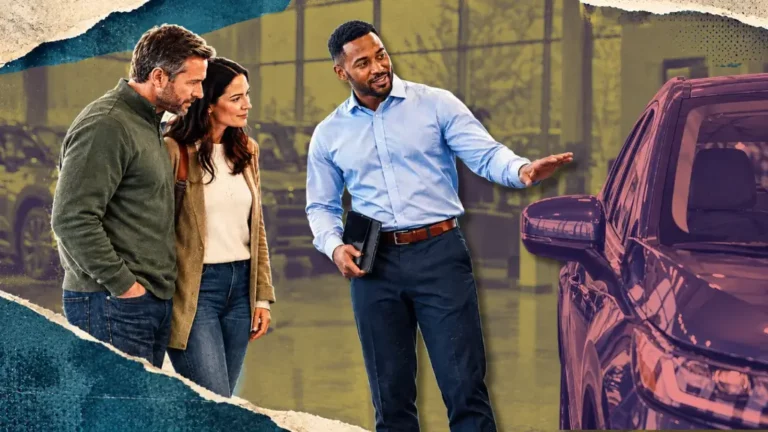
The problem for those dealers still following an antiquated road-to-the-sale – one that puts the demo drive fifth or sixth on the list – is that today’s “Traditional Up” has already completed their Needs Analysis, Product Selection and Feature Presentation. They’re ready to test drive.
In reality, they showed up on your lot armed with knowledge and ready to buy, while your team treated them like know-nothing tire kickers. (This is why the average dealer still only closes about 20 percent of their Traditional Ups; even though today’s buyers visit fewer lots than ever before.) You’re losing prospects that were ready to buy today; you’re losing them because your salespeople are treating them like suspects instead of prospects.
Much of the traditional road-to-the-sale feels like an interrogation to the prospect, filled with redundancies and nonsensical questions like “Is it just minivans you’re looking at or are you also interested in mid-sized SUVs?”
What?
They’ve spent the last two weeks online looking at a dozens of sources. They’ve narrowed down their choices of the millions of vehicles for sale to something on your lot and perhaps something on your neighbor’s lot. They showed up ready to buy your vehicle and hoping that someone at your dealership would sell it to them — hoping they would sell it to them without giving them the runaround or taking advantage of them.
They showed up expecting to start on Step 6 of your road-to-the-sale, and you took them all the way back to Step 1. (Talk about a lousy experience!)
But Steve, I Don’t Want to Cut Corners!
Shortening your road-to-the-sale doesn’t mean rushing through the process and it doesn’t mean shortcutting your grosses. It simply means recognizing that today’s customers have all the information, they’ve already researched for more than 20 hours and they’re ready to buy – and, more than anything else, they don’t want to start over with you.
A shorter selling process – one that keeps the buyers engaged and doesn’t repeat steps – can create a great buying experience; we know the opposite is true. Moreover, when you’re willing to shorten the process and present numbers that are consistent with your market, you’ll close more deals and even make better overall grosses.
Of course, shortening the selling process means different things to different dealers, so it’s not practical to build the perfect road-to-the-sale for every dealer in a magazine article. However, there are a few common sense steps to consider when shortening the process that will help you create a car buying experience your customers will love:
- Assume the Sale. When you assume that everyone that arrives on your lot is here to buy and they are here to buy today, you’ll ask different questions and you won’t waste their time retracing steps like Needs Analysis, Product Selection or Feature Presentation. So, instead of asking them questions that sound like an interrogation, your team can more directly ask them questions that make sense like “Which vehicle did you want to test drive today?”
- Keep them Engaged. As I wrote in May, keeping the customer engaged in the buying process makes the time spent in your dealership seem shorter. This means, for example, helping the guest value their own trade on a tablet, rather than having the desk just scribble down an indefensible number on a foursquare. Not only does the time go by more quickly, but because the customer participated in valuing their trade, there is a level of process transparency that builds trust.
- Think: “Demo then Deal.” When you’re prepared to present the write up as soon as the guest returns from the test drive, you’re hitting them at the peak of their buying interest. Of course, this means trade walks and guest-assisted trade evaluations should occur before the test drive. When done properly, the write up (complete with a defensible trade appraisal) can be waiting for the prospect when they return.
Interestingly, creating a better customer experience is all that’s necessary to keep your prospects from buying at Carvana and the like. Car buyers truly want to shop; they just don’t like the current shopping processes.
There can be no doubt the warning signs indicate a major change is coming to automotive retail; gradually right now, of course. The only question is whether or not you’re going to be one of the dealerships caught off guard when “gradually” becomes “and then suddenly.” The good news is that shortening your antiquated road-to-the-sale and creating a great buying experience now positions you to win in any market.
Good Selling!