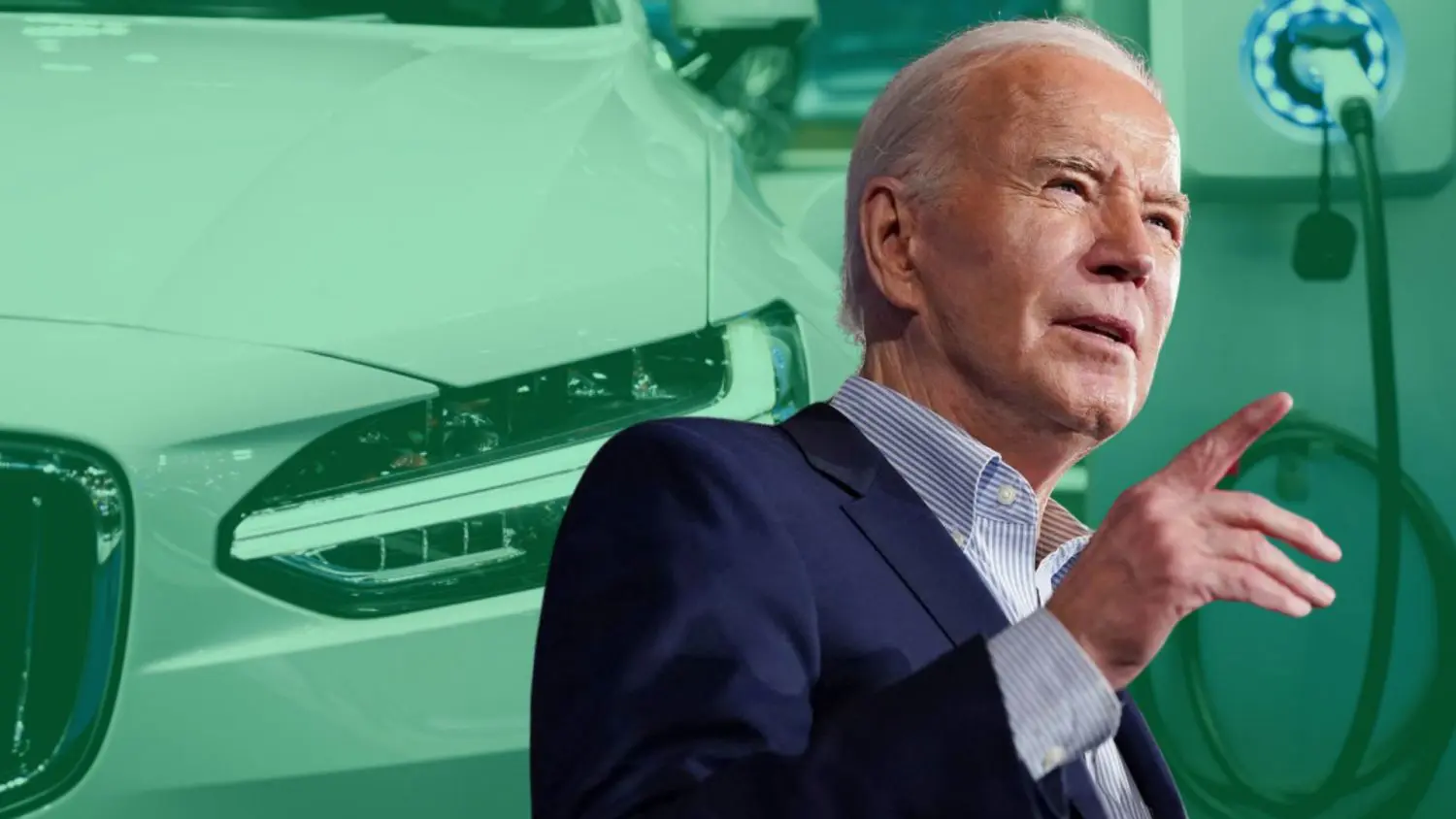
President Biden dialed back fuel economy regulations proposed by the Environmental Protection Agency (EPA) that would have forced U.S. automakers to rapidly transition away from internal combustion engine (ICE) vehicles or face steep fines.
Last year, the EPA issued a new Corporate Average Fuel Economy (CAFE) proposal, regarded as its most restrictive emissions policy to date, which quickly drew the ire of automakers and dealers, both of whom complained the updated rules were unrealistic given the current market landscape.
As originally envisioned, the updated CAFE guidelines would have rapidly tightened fuel economy standards on an annual basis, charged car brands heavy fines for failing to meet emissions targets, and quickly slashed incentives for manufacturing electric vehicles. To offset penalties, automakers could sell low or zero-emission models and scale back ICE production. The agency’s ultimate goal was to drive EV market share up to 60% by 2030.
Under the Biden Administration’s new policies, however, CAFE changes would take effect at a gradual pace, prolonging the timeline for transitioning away from ICE and extending EV-related incentives. That being said, the White House’s revisions were largely moderate and are unlikely to significantly delay the President’s green-energy goals. For instance, rather than aiming for an EV market share of 60% by 2030, the new guidelines would allow for a market share of 50%.
Nevertheless, the industry’s reaction to the new policies has been mostly positive, especially when compared to sentiments from over the last year.
“The major limits on EV adoption in the U.S. have been price, model availability and customer familiarity. Prices are already coming down and more models are available. Once everyone knows someone who has an EV, they are going to be unstoppable,” said Liz Najman, lead researcher for Recurrent.
The White House’s original emissions plans received sharp criticism from multiple sectors in the car industry almost as soon as they were proposed. The Alliance for Automotive Innovation, a lobby group funded by most major U.S. car manufacturers, including the Detroit Three, submitted several challenges to the guidelines in the months following the EPA’s announcement, arguing that the industry would accrue more than $14 billion in fines over the next decade and that the proposal would drive car prices up as much as $3,000.
“The [Biden] administration is walking a fine line between trying not to alienate unions and manufacturing while still adhering to important climate goals,” added Najman.
Meanwhile, dealer associations have argued that the battery-powered car segment was still too small to drive profits and urged the government to instead pursue a consumer-driven EV transition. The United Auto Workers union, which endorsed President Biden’s 2024 re-election campaign earlier this year, also expressed dislike for the CAFE proposal, citing concerns that it would result in mass layoffs.