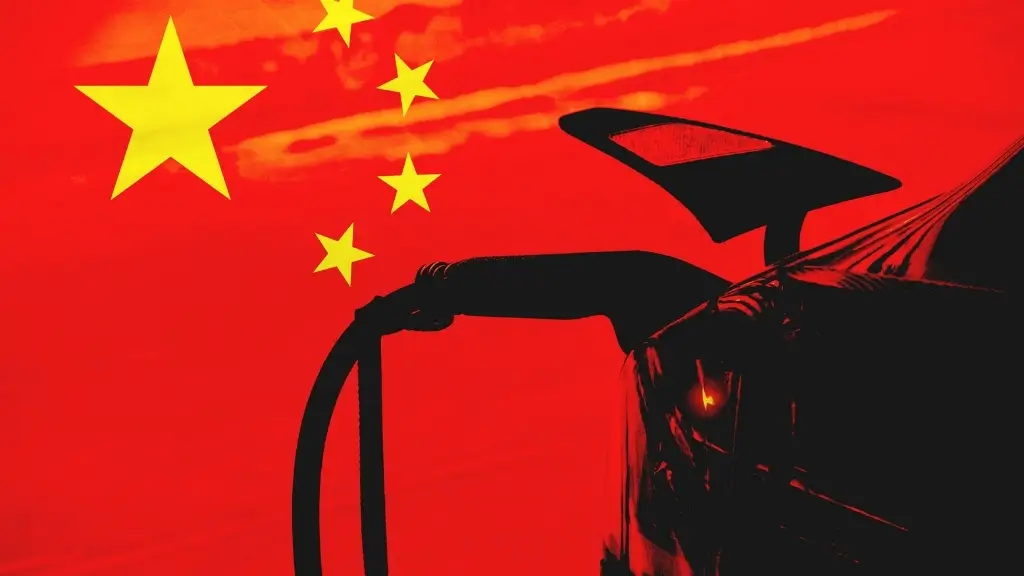
If you think the debate over Chinese vehicles is about cheaper cars showing up at American dealerships, you’re missing the bigger story—and it’s one policymakers in Washington are no longer willing to ignore.
A new legislative push to ban Chinese cars and auto parts from entering the U.S. market isn’t just about trade. It’s about control—of technology, supply chains, data, and ultimately, the future of the American auto industry. And this time, the tone has shifted. Lawmakers, automakers, suppliers, and dealers are no longer speaking in cautious corporate language. They’re drawing lines.
Senator Bernie Moreno’s proposal to block Chinese vehicles and components entirely signals a turning point. His message is blunt: Chinese autos should not, and will not, have a foothold in the United States. It’s not an incremental policy tweak. It’s a full stop.
The results will shape not just what you drive—but who controls the industry that builds it. And the impact is more than that. The stakes are massive. Automobiles account for more than a fifth of trade between the United States, Mexico, and Canada. This isn’t a niche sector, it’s the backbone of North American manufacturing. And now it’s being tested by a global competitor that plays by very different rules.
While the United States tightens restrictions, the global response is fractured. Europe has imposed steep tariffs on Chinese electric vehicles, arguing they are being dumped below cost. This has impacted their economy and jobs in a very negative way. Meanwhile, Canada has taken a very different path, agreeing to allow 49,000 Chinese EVs into its market. That divergence matters because supply chains don’t respect borders.
Washington is already signaling that any backdoor entry through Canada or otherwise will be shut down. The message is clear: if Chinese vehicles can’t come in directly, they won’t be allowed to sneak in indirectly.
But this isn’t happening in a vacuum. The Biden administration already laid the groundwork with executive actions restricting Chinese auto imports, particularly over concerns tied to software, parts and hardware vulnerabilities. Those concerns aren’t hypothetical. U.S. officials have confirmed that Chinese state-sponsored hackers have infiltrated critical infrastructure systems.
U.S. officials have confirmed that Chinese state-sponsored hackers have infiltrated critical infrastructure systems.
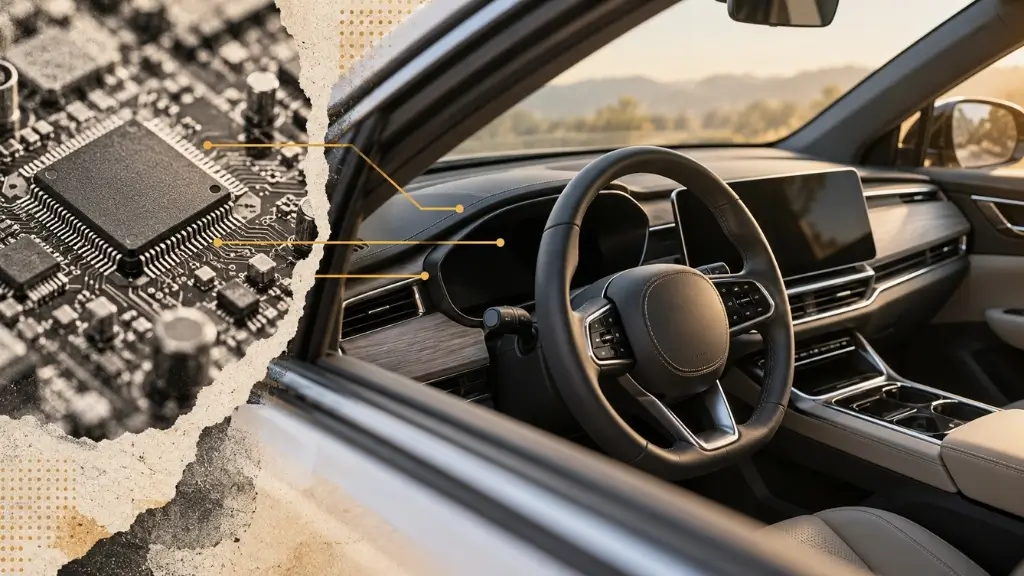
Now apply that reality to modern vehicles, which are essentially rolling computers. The risk isn’t just about where a car is built. It’s about who controls the software, the data, and the connectivity embedded inside it.
That’s why Moreno’s proposal aims to close loopholes, not just in manufacturing, but in partnerships, software integration, and component sourcing. It’s an attempt to address a problem that has been growing quietly for years. And here’s where it gets interesting: the auto industry itself is now pushing back.
In fact, major industry groups representing automakers, dealers, and suppliers are now urging Washington to go further. Their warning is direct, whether Chinese vehicles are imported or built domestically, the risks and market distortions remain the same. In other words, simply allowing Chinese companies to build factories on U.S. soil doesn’t solve the problem. It may just relocate it.
That puts policymakers in a difficult position. On one hand, there’s the appeal of investment, jobs, and manufacturing growth. On the other, there’s the reality that control of the technology and supply chain may still sit overseas. At the same time, the global auto industry is undergoing a transformation that’s moving faster than many legacy automakers anticipated. And no one captured that urgency better than Toyota’s leadership. When one of the most disciplined and successful manufacturers in history starts talking about survival, people should pay attention.
The warning wasn’t subtle. The message was that the industry’s old habits, its cost structures, its processes, even its assumptions are no longer sufficient. This isn’t about minor adjustments. It’s about fundamental change. China’s advantage isn’t just about building cheaper cars. That’s the headline, but it’s not the story.
The real advantage lies in scale and control. Chinese companies dominate battery production, controlling roughly 80 percent of global output. That’s not just a supply chain edge, it’s a strategic one. Batteries are the most expensive and critical component in electric vehicles, and control over that market translates directly into pricing power and speed. Larger batteries are on hybrids and high tech vehicles, too.
Companies like BYD aren’t just building vehicles. They’re controlling the ecosystem with batteries, software, and charging infrastructure. That level of vertical integration allows them to move faster and cheaper than competitors who rely on fragmented global supply chains.
And it doesn’t stop there. Technology firms are entering the automotive space with a different mindset. They’re not burdened by decades of legacy systems or manufacturing inertia. They’re focused on speed, software, and scalability. Watch for companies like NVIDIA and Qualcomm as they have made huge strides.
For traditional automakers, that creates a different kind of pressure. It’s no longer just about building a better car. It’s about building it faster, cheaper, and smarter vehicle, while navigating regulatory uncertainty that seems to shift with every election cycle.
That regulatory instability is another issue the industry is quietly raising. Executives are increasingly frustrated with what they describe as “whiplash”; a constant rewriting of the rules that makes long-term planning nearly impossible.
Two years ago, the push was toward full electrification. Today, that momentum has slowed, and the market is shifting toward hybrids. Automakers are adjusting in real time, but the cost of those pivots is enormous.
Hyundai’s leadership put it plainly: competing with Chinese vehicles on price is a losing game. The only viable strategy is to compete on quality, brand strength, and dealer networks. That’s a defensible position but only if consumers are willing to pay for it. And that’s the question hanging over the entire industry.
At the end of the day, consumers care about affordability. If Chinese manufacturers can deliver competitive vehicles at significantly lower prices, the pressure on Western automakers will only intensify. That’s why this debate isn’t going away. It’s going to escalate.
The push to ban Chinese cars and components is as much about buying time as it is about setting policy. It’s time for American and allied manufacturers to catch up in battery technology and components. It’s time to rebuild supply chains. It’s time to figure out how to compete in a market that has fundamentally changed. But time alone won’t fix the problem.
The U.S. still has enormous advantages in engineering talent, brand loyalty, and a dealer network that remains one of the strongest in the world. But those advantages aren’t guaranteed. They have to be reinforced with competitive products, realistic pricing, and a clear strategy. Right now, that strategy is still taking shape.
What’s clear is that the industry is entering a new phase, one that is not just defined by innovation, but by geopolitical tensions. Cars are no longer just transportation, they are data hubs, technology platforms, and strategic assets. And that changes everything.
This isn’t just about keeping Chinese cars out. It’s about deciding what kind of auto industry the United States wants to have and who gets to control it. If the last few years have shown anything, it’s that once you lose control of a supply chain, getting it back is a lot harder than anyone expects. And this time, the consequences go far beyond the showroom floor.
Check out my full commentary on this story: https://youtu.be/rZ7bfzVme8Y
Looking for more automotive news? https://www.CarCoachReports.