Dealers are increasingly relying on consumer trade-ins to source inventory, but a growing gap between buyer expectations and dealership practices is proving to be costly.
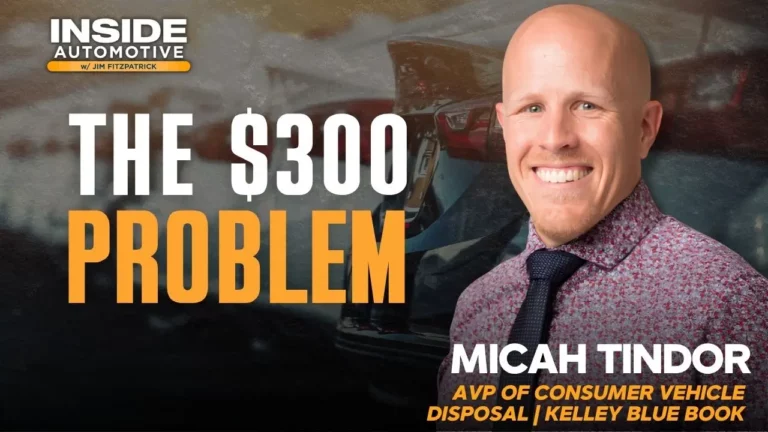
Micah Tindor, AVP of Consumer Vehicle Disposal at Kelley Blue Book, joins us on the latest episode of Inside Automotive to break down the three converging pressures that are hammering today’s car buyers:
- High interest rates
- Still-elevated vehicle prices
- Lower-than-normal tax refunds
“Last year at this time, Q2 2022, the average new car interest rate was 4.5%. Average used car was 8.5-ish. Now average new is 9%. Average used is 14%,” Tindor said.
Buyers facing the steepest impact
According to Tindor, the jump is hitting younger buyers especially hard. While the average millennial household earns $69,000 a year while carrying $78,000 in debt, most millennials and Gen Z consumers carry credit scores between 660 and 680, putting them squarely at the 14% interest rate.
“If you compare a $48,000 car, which is the average new car price right now, at a 14% interest rate… they’re looking at probably an $850 fee for a car per month,” Tindor said. “A year ago, back when they could get an 8.5% rate, it would have been $550.”
Central to affordability
That $300 monthly gap is accelerating a broader market shift. Vehicles priced at $35,000 and above have lost roughly 7 percentage points of sales pace over the past year, with buyers moving into lower price tiers. Trade-ins, which have been owned for an average of 8.4 years, naturally slot into that more affordable inventory range, making them doubly valuable to dealers trying to restock.
Around 55% of transactions now include a trade-in, according to Tindor. But dealers may be underestimating how prepared those trade-in customers have become.
"Consumers need the equity value of their trade-in to be applied to a new car purchase. And when we did our last survey, dealers said around 55% of transactions had a trade-in attached, so you really want to be able to win that trade-in to apply the equity to condense the amount the customer has to finance."
Despite months of trying to raise awareness, Tindor said dealer adoption of that reality has been slow. “I’ve been trying to get the message out there for the last six months.”
Consumer pain points around trade-ins cluster around three areas:
- Not understanding how a vehicle is valued
- Fear that the appraisal process will be used against them
- Concern about being taken advantage of on price.
Tindor confirms that 60% of those pain points can be resolved simply by walking customers through the process.
“Historically, a lot of us in the retail side have said, salesperson, take the customer, look at the new car. Flip the keys to me and I’ll come back to you with an appraisal value. That triggers five of the unmet pain points automatically.”
Rethinking the appraisal experience
The fix, he said, is transparency, doing a damage walk with the customer present, explaining supply and demand conditions in the local market and narrating the appraisal process from start to finish.
“We’re transitioning where we need to focus on educating the consumers of the trade-in process to win the deal,” Tindor said, comparing the shift to when online pricing erased information advantages dealers once held on new car sales.
Kelley Blue Book’s Instant Cash Offer tool is designed to bridge that trust gap, providing consumers with an upfront appraised value tied to a brand they already recognize, then connecting them to participating dealers.