TSLA379.7801.73%
GM88.680-0.97%
F12.271-0.0987%
RIVN13.700-0.31%
CYD20.580-0.08%
HMC34.870-0.97%
TM214.580-3.93001%
CVNA72.923-3.332%
PAG213.5900.8%
LAD305.810-4.99%
AN184.130-1.93%
GPI264.090-4.37%
ABG206.610-3.61%
SAH62.250-0.9%
TSLA379.7801.73%
GM88.680-0.97%
F12.271-0.0987%
RIVN13.700-0.31%
CYD20.580-0.08%
HMC34.870-0.97%
TM214.580-3.93001%
CVNA72.923-3.332%
PAG213.5900.8%
LAD305.810-4.99%
AN184.130-1.93%
GPI264.090-4.37%
ABG206.610-3.61%
SAH62.250-0.9%
TSLA379.7801.73%
GM88.680-0.97%
F12.271-0.0987%
RIVN13.700-0.31%
CYD20.580-0.08%
HMC34.870-0.97%
TM214.580-3.93001%
CVNA72.923-3.332%
PAG213.5900.8%
LAD305.810-4.99%
AN184.130-1.93%
GPI264.090-4.37%
ABG206.610-3.61%
SAH62.250-0.9%


Why leadership pace determines organizational performance

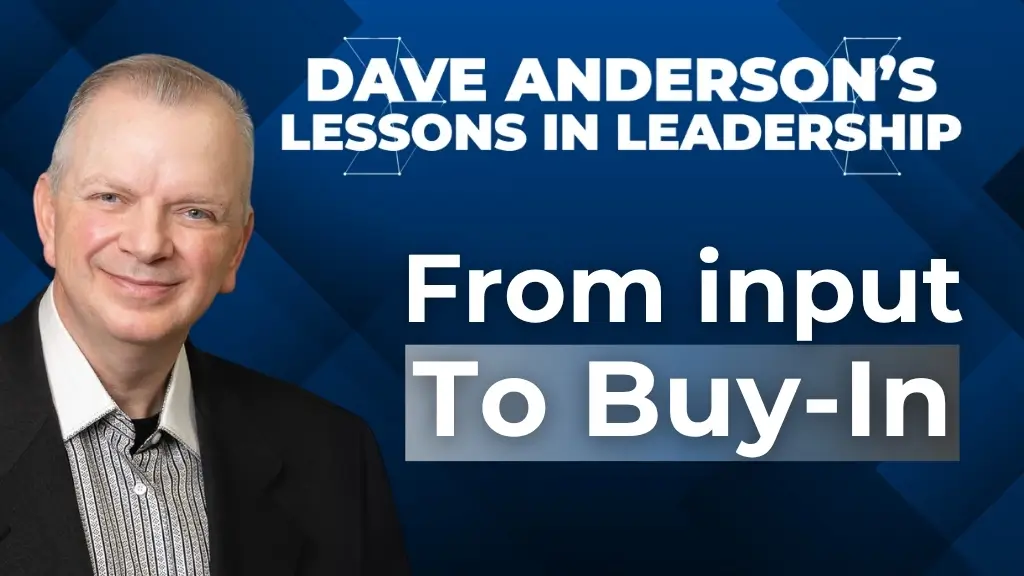
Leadership Expert Dave Anderson says organizations rise or fall based on the pace, discipline and standards established by leadership.

During the latest episode of Lessons in Leadership, Anderson revisits the first principle from his long-running “15 Commandments for Organizational Peak Performance” program, arguing that leadership behavior directly shapes team performance and organizational culture.

“The speed of the leader is the speed of the pack.” 

According to Anderson, leaders often underestimate how closely employees mirror management habits, attitudes and expectations. He argues that organizations do not attract talent based on what leaders want, but rather based on who leaders are.

Sign up for CBT News’ daily newsletter and get the latest industry stories delivered straight to your inbox.

Drawing from concepts in his book Up Your Business, Anderson describes leadership as a business version of the law of attraction.

“You don’t attract into your business what you want, you attract what you are,” he contends.

Additionally, Anderson explains that leaders operating at lower performance levels struggle to recruit, retain and develop high-performing employees. Using a one-to-10 scale, he argues that a “six” as a leader rarely attracts “eights, nines and tens.”

Anderson says, “If you want better people, want to be able to develop better people, you’ve got to become better yourself.” 

Throughout the discussion, Anderson emphasizes that employee behavior often scales directly from leadership behavior. Leaders who make excuses, tolerate mediocrity or perform at minimum standards unintentionally normalize those habits throughout the organization. Conversely, leaders who demonstrate urgency, accountability and discipline create stronger performance cultures.

For example, Anderson illustrates the point with a story from a seminar in Chicago, where a sales manager complained about being “surrounded by idiots.” After learning the manager had led the department for three years, Anderson argues the issue no longer belonged to inherited circumstances but to leadership itself.

The anecdote underscored Anderson’s broader message that leaders cannot expect employees to improve without first improving themselves.

Moreover, Anderson says leadership development begins by increasing personal value and consistently modeling the standards expected from employees.

“If you want your team to be better, you’ve got to get better... Become more valuable so you can add value to them.”

For Anderson, organizational culture remains a direct reflection of leadership consistency and intensity. Teams accelerate when leaders raise their standards, and performance weakens when leaders lose focus or urgency.
More from Lessons in Leadership
Why dealership leaders must stay in ‘attack mode’

Why dealership leaders must stay in ‘attack mode’

- October 21, 2026
When retail automotive operations experience record sales, high margins and strong inventory turn, management teams tend to face a quiet yet dangerous threat: complacency. In the latest episode of Lessons...
How dealers can create a steady rhythm of urgency on the showroom floor

How dealers can create a steady rhythm of urgency in the showroom

- October 14, 2026
For decades, retail automotive operations have relied on frantic end-of-month pushes to hit sales quotas and volume bonuses. However, relying on late-month pressure often leads to rushed deals, customer dissatisfaction,...
 Stop over-managing and start leading to fuel dealership growth

Stop over-managing and start leading to fuel dealership growth

- October 7, 2026
On today's Lessons in Leadership episode, Leadership Expert and CEO of LearnToLead Dave Anderson tackles the 13th commandment of his 15 Commandments for Organizational Peak Performance, which he says warns...
How dealers can foster a culture of true collaboration

How dealers can foster a culture of true collaboration

- September 30, 2026
Leadership is not about having all the answers, solving every problem, or dominating every conversation. On the latest episode of Lessons in Leadership, Leadership Expert and President and CEO of...

Add us as a preferred source on Google

CBT News
Privacy Overview

This website uses cookies so that we can provide you with the best user experience possible. Cookie information is stored in your browser and performs functions such as recognising you when you return to our website and helping our team to understand which sections of the website you find most interesting and useful.