
TSLA396.870-13.12%
GM72.350-0.75%
F13.1750.145%
RIVN12.835-0.515%
CYD50.380-0.06%
HMC25.2850.075%
TM185.660-1.71%
CVNA62.680-3.34%
PAG160.4800.73%
LAD260.260-4.63%
AN180.930-1.01%
GPI313.790-3.39%
ABG180.3204.04%
SAH75.0701.01%
TSLA396.870-13.12%
GM72.350-0.75%
F13.1750.145%
RIVN12.835-0.515%
CYD50.380-0.06%
HMC25.2850.075%
TM185.660-1.71%
CVNA62.680-3.34%
PAG160.4800.73%
LAD260.260-4.63%
AN180.930-1.01%
GPI313.790-3.39%
ABG180.3204.04%
SAH75.0701.01%
TSLA396.870-13.12%
GM72.350-0.75%
F13.1750.145%
RIVN12.835-0.515%
CYD50.380-0.06%
HMC25.2850.075%
TM185.660-1.71%
CVNA62.680-3.34%
PAG160.4800.73%
LAD260.260-4.63%
AN180.930-1.01%
GPI313.790-3.39%
ABG180.3204.04%
SAH75.0701.01%

New vehicle supply reaches two-year high in early December

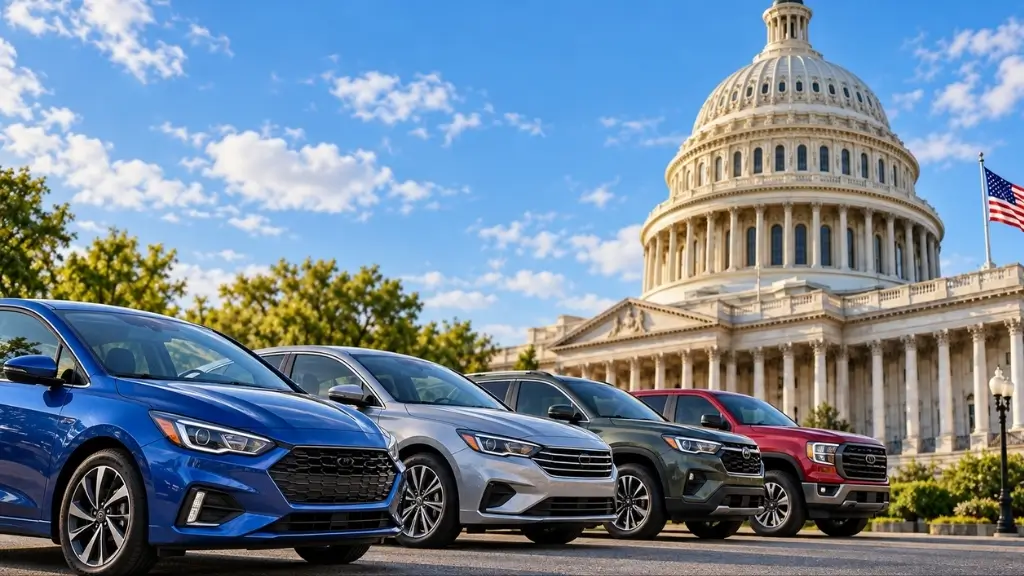
New vehicle supply rose 57% year-over-year over November and into December, with some automakers adjusting production rates in response
New vehicle supply rose 57% year-over-year over November and into December, with some automakers adjusting production rates in response.

New vehicle supply has made a substantial recovery throughout 2023, culminating in December’s initial inventory total of 2.56 million units, the highest levels seen since early 2021.

That number represents a 57% year-over-year increase from the year-before period and a gain of roughly 6.7% from early November, according to Cox Automotive. Last month’s average days’ supply started at 69 days and ended at 70 but rose once more to 71 at the start of December. The increase in new vehicle supply coincided with an increase in sales, which rose 2% month-over-month and 7% from November 2022.

Despite this increase in sales, some automakers have opted to adjust production rates, along with their workforces, while new vehicle supply continues piling up. General Motors, Ford, and Stellantis have each moved to lay off thousands of manufacturing workers across the U.S. over the last three months, each citing a plethora of factors.

Ford cut labor at its Lightning pickup factory in October, shortly before lowering the plant’s production target for 2024 to reflect slower-than-anticipated demand in the electric vehicle segment. Stellantis blamed its layoffs on burdensome emissions policies implemented across multiple states, originally proposed by the California Air Resources Board, which effectively limit sales of gas-powered vehicles. General Motors’ most recent layoffs arrived as it shuttered production of the Chevrolet Bolt and Camaro.

Whatever automakers claim, pricing is likely the primary reason for their decision to cut production in spite of stronger sales. New vehicle prices have fallen by only 1.5% from November 2022, primarily due to incentives, even as demand shows signs of stagnating from its post-pandemic growth and inventories inch ever closer to pre-pandemic norms. By remaining reactive to changes in new vehicle supply, manufacturers can keep prices inflated longer, a strategy that also works to the advantage of dealers.


Read More
More from Articles
TrueCar, CBT News both work to get ahead of FTC pricing policy updates

TrueCar, CBT News both work to get ahead of FTC pricing policy updates

- May 19, 2026
On The Dash: TrueCar says it will include mandatory dealer fees directly in advertised prices, exceeding FTC standards. In March, the FTC sent warning letters to nearly 100 dealer groups...
Elon Musk predicts self-driving domination within a decade as Tesla, Waymo face new recalls

Elon Musk predicts self-driving domination within a decade as Tesla, Waymo face new recalls

- May 19, 2026
On The Dash: Musk predicted Tesla's unsupervised self-driving service will expand nationwide by the end of 2026. Musk said AI will handle 90% of all miles driven within a decade. ...
S&P Global Mobility opens FeeSync to entire automotive industry at no cost, establishing first-of-its-kind dealer fee transparency infrastructure

S&P Global Mobility opens FeeSync to entire automotive industry at no cost, establishing first-of-its-kind dealer fee transparency infrastructure

- May 19, 2026
NEW YORK — May 18, 2026 — S&P Global Mobility today announced that it is opening access to FeeSync powered by Market Scan, its automotive payments-as-a-service platform, to the entire automotive industry at...
House bill targeting EV and PHEV owners sparks environmental backlash

House bill targeting EV and PHEV owners sparks environmental backlash

- May 19, 2026
On the Dash: The BUILD America 250 Act would charge EV owners $130 annually in federal registration fees. Plug-in hybrid owners would pay $35, with both fees rising every two...
CBT News
Privacy Overview

This website uses cookies so that we can provide you with the best user experience possible. Cookie information is stored in your browser and performs functions such as recognising you when you return to our website and helping our team to understand which sections of the website you find most interesting and useful.