On the Dash:
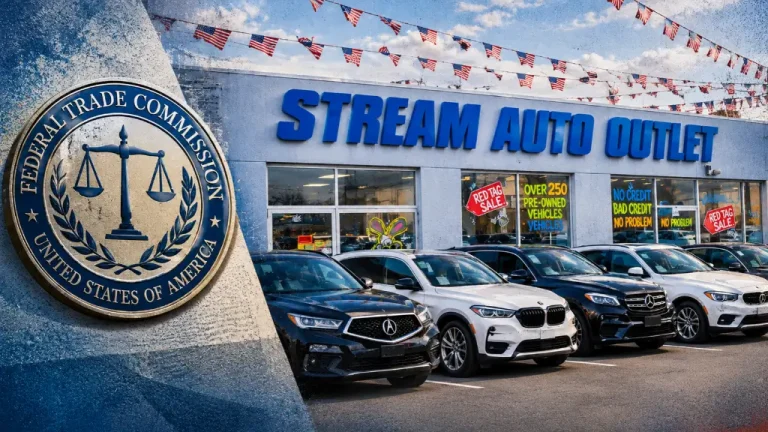
- The FTC alleges Stream Auto Outlet advertised vehicles at artificially low prices and then charged consumers thousands of dollars in required down payments, dealer fees and unwanted add-ons.
- A proposed order would prohibit the dealership group from misrepresenting vehicle costs or terms and require advertised prices to reflect the actual amount consumers must pay, excluding government-required charges.
- The agreement follows a March 2026 FTC warning letter that identified advertising prices that exclude required fees as a potentially illegal practice.
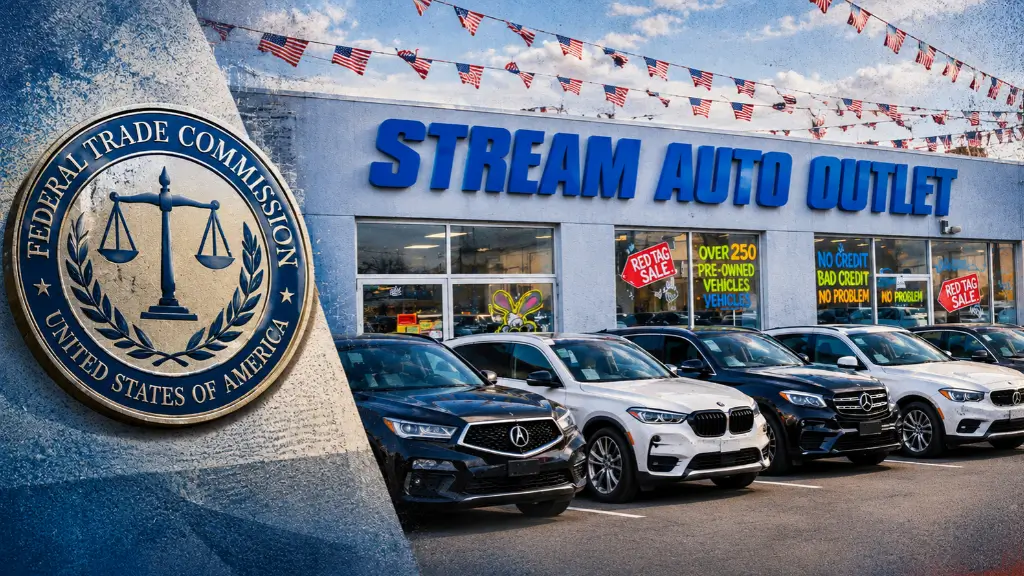
On Nov. 9, the Federal Trade Commission (FTC) announced an agreement with Stream Auto Outlet, a dealership group based in Long Island, New York, to resolve allegations of misleading vehicle pricing practices. The FTC alleges the dealership advertised prices significantly lower than what consumers ultimately paid.
Under the proposed order, Stream Auto is prohibited from misrepresenting the costs or terms associated with acquiring a vehicle. Any advertisements featuring a vehicle price must clearly display the actual amount consumers must pay, excluding only government-mandated charges.
The FTC’s complaint also states that Stream Auto concealed necessary down payments and additional fees. However, the dealership allegedly used low online prices to attract customers but didn’t honor them, imposing thousands of dollars in required down payments on top of the listed costs. Information about these required down payments was reportedly buried in small-print disclaimers on a details page that was hidden behind a pop-up and mixed with other disclosures. Despite promotional claims stating, “NO FEES. NO GAMES. JUST CARS,” the FTC asserts that Stream Auto continued to charge consumers more through dealer fees and unnecessary add-on products.
This agreement follows an earlier FTC warning in March 2026, which alerted Stream Auto to the illegal practice of excluding required fees from advertisements. The FTC’s complaint alleges that the dealership continued its misleading pricing strategies, resulting in consumers paying significantly more than advertised. FTC Bureau of Consumer Protection Director Christopher Mufarrige emphasized that consumers deserve transparent information about vehicle costs and that hidden charges undermine informed purchasing decisions and fair competition. The FTC has identified price transparency as a priority across several markets, including automotive sales and leasing, grocery delivery, rental housing, and event ticketing.
FTC’s pricing push & next steps
CBT News has tracked the FTC’s pricing push since March 13, when the agency sent warning letters to 97 dealership groups nationwide telling them that advertised prices must reflect the total amount consumers are required to pay, including all mandatory fees. The FTC then published its “Automobile Industry Pricing Transparency” FAQs on Sept. 15, which address advertised vehicle prices, mandatory fees, discounts, online listings and third-party advertising, and NADA welcomed the guidance. Online marketplaces have also adjusted, with Cox Automotive pausing its Good Price and Great Price badges on Autotrader and Kelley Blue Book listings while TrueCar, Cars.com and CarGurus updated their platforms to show all-in pricing.
The FTC filed the proposed order in the U.S. District Court for the Eastern District of New York, where it awaits approval. The Commission voted 2-0 to authorize staff to file the complaint and stipulated final order. Once a district court judge approves and signs the proposed order, it will have the force of law. The FTC noted that the complaint reflects the Commission’s belief that the company is violating or about to violate the law and that action is in the public interest.