On the Dash:
- Scout Motors lost a bid for a Tennessee dealer license in a 14-of-16 commission vote.
- Scout argues Tennessee law bars competition only with same-line-make dealers, not affiliates.
- Litigation continues, so dealers should track direct sales rules in their own states.
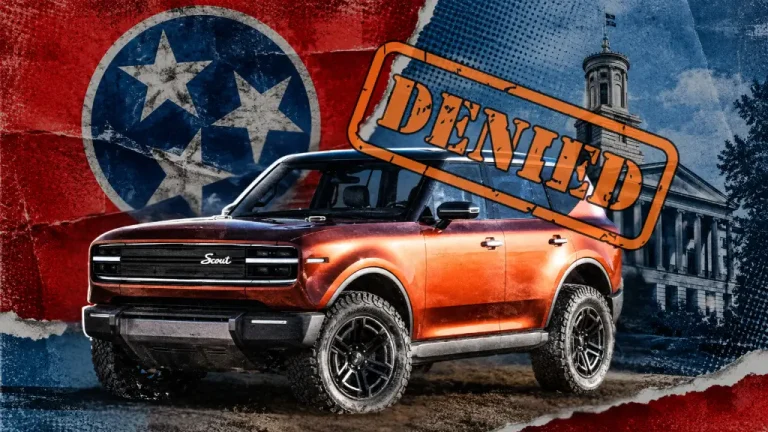
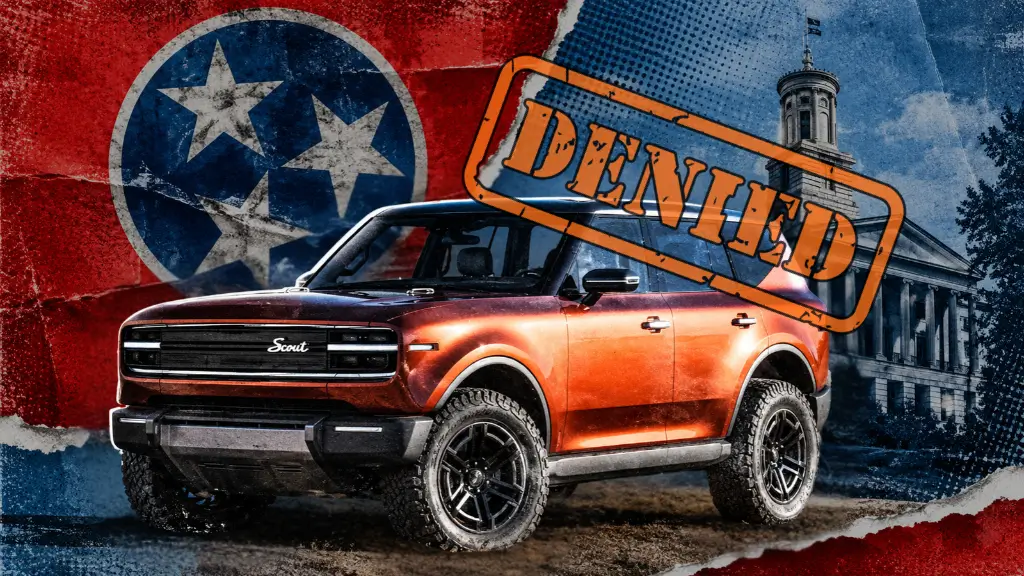
Tennessee regulators have denied Scout Motors a dealer license, preventing the Volkswagen-owned brand from selling directly to buyers in the state for now. According to Kelley Blue Book, the decision is a setback for a brand that plans to sell its Terra truck and Traveler SUV directly rather than through dealerships. The issue is whether Volkswagen’s affiliation with Scout allows state law to treat the new brand as a competitor to franchised dealers.
The ruling matters to franchised dealers because it tests whether an automaker can use a separate brand to sidestep franchise protections. Most new vehicles in the U.S. are sold through franchised dealerships, even though EV makers, such as Tesla and Rivian, have built businesses on direct sales.
Commission votes against Scout Motors’ direct sales license
Fourteen of the 16 members of the Tennessee Motor Vehicle Commission voted to deny the license, Automotive News reported. The commission addressed the matter at its Oct. 27 quarterly board meeting, with the Scout application listed under old business.
Scout is a new brand that operates like a startup but is owned by Volkswagen, which holds the rights to the old International Harvester name, and centers on the International Harvester Scout SUV, a once-popular off-roader. Scout is currently planning to build two models in South Carolina: the Terra truck and the Traveler SUV.
Scout wants to sell those vehicles directly to buyers rather than through dealerships. However, state laws govern whether and how that can happen, so each state’s licensing decision matters to the plan.
Scout’s counsel says Tennessee law has no affiliate ban
According to Automotive News, Scout Associate General Counsel Sara Ash said Tennessee law prohibits manufacturers from selling directly only when they would compete with a dealer selling the same line-make. She added that the law doesn’t bar a manufacturer from competing with an affiliate’s line-make, nor does it prohibit a manufacturer from sharing an ultimate parent with a separate line-make and selling directly.
Scout has faced an uphill battle since announcing its direct-sales plan. The company, Volkswagen, and Volkswagen Group of America have faced several lawsuits from dealerships and trade groups seeking to block the model, but Scout has said it remains committed to selling directly.
However, dealer representatives worry that opening the door to Scout would trigger a wave of other automakers doing the same. They fear manufacturers would cut dealers out of the picture. Litigation is still ongoing, so the final decision could be a long time in the making.
What the ruling means for dealers
The Tennessee decision shows that state licensing boards are a real checkpoint for direct sales, and that boards can read affiliate and line-make language differently. In South Carolina, where Scout will build its vehicles, a bill that would have allowed Scout to sell direct was rejected 8-0 in committee. Each state’s statute and each board’s reading of it may shape where Scout can sell.
Dealers should understand their state’s franchise law, including how it applies to manufacturers and their affiliates. The wording of each statute may determine whether a brand like Scout can obtain a license. Dealer associations are likely to keep making that case in courts and statehouses. Dealers may also want to track pending license applications in their states. The Tennessee case suggests that licensing hearings, not just courtrooms, can decide these disputes.