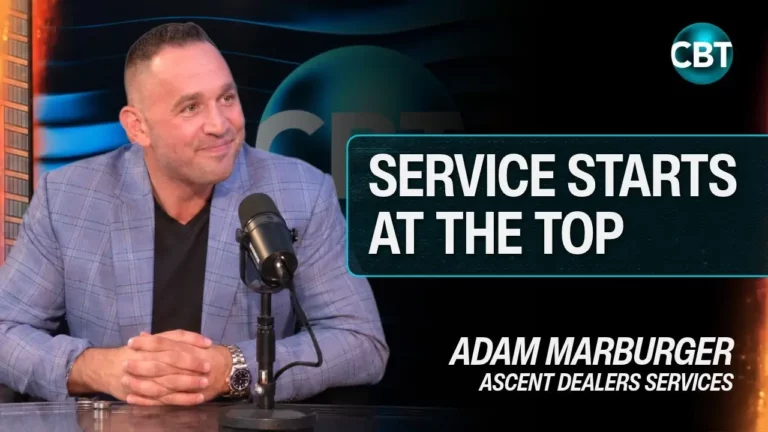
Welcome to another episode of Training Camp, with host Adam Marburger. Today, we’re joined by James Mercer, VP of Sales, and Rob Johnson, VP of Acquisitions of Ascent Dealer Services, to detail how dealers can maximize profit participation programs through disciplined review, strategic structure selection, and consistent execution.
Marburger centers today’s conversation on reinsurance, dealer-owned warranty companies, retros, and hybrid participation models, emphasizing education and ongoing oversight rather than a set-it-and-forget-it approach.
“The best way to learn something is to teach it to somebody else.” – Rob Johnson
According to Mercer, many dealers operate long-standing participation programs that have not been thoroughly reviewed in years. He asserts that a 98% loss ratio scenario signals the need for a deep dive into the labor rates, claim severity, and reserve positioning. Notably, dealers should conduct at least one comprehensive annual review, with operational quarterly check-ins based on operational complexity. Additionally, participation oversight should be treated similarly to retirement investment planning, requiring periodic top-down evaluation and measurable action steps.
Industry benchmarks often target a loss ratio of around 70%, though that figure varies by franchise brand, geographic region, and product mix. High-reliability brands may sustain lower target ratios, while others may operate effectively at higher levels. The key is to align expectations with underwriting goals and long-term reinsurance objectives, rather than relying on static industry averages.
Moreover, Johnson notes that while retro programs may offer lower-risk entry points for more conservative operators, reinsurance and hybrid models can create greater upside for dealers comfortable managing underwriting volatility. However, choosing the right structure is only the first step. The quality and consistency of premium flowing into the program ultimately determine its value as an appreciating asset.
"The concept of switching reinsurance service contracts is always a little bit bigger event than a lot of car dealers think it is.” – James Mercer
The duo notes that some dealers remain wary of reinsuring due to outdated guidance or misconceptions about risk exposure. Others fear disruption when switching providers. In reality, transitions are often largely administrative and can be executed with minimal operational impact when handled by experienced partners.
Properly managed, participation companies can evolve into meaningful balance sheet assets. By strategically closing legacy books of business and allowing contracts to mature, dealers can shift programs into cash-generating entities over time. This approach requires long-term planning, disciplined product selection, and ongoing oversight.
As participation structures continue to modernize, including expanded use of 831(b) elections and hybrid models that combine underwriting and investment income, education remains paramount. Dealers are encouraged to consult advisors with access to multiple program options to ensure objective guidance and a tailored strategy.
Ultimately, profit participation is not merely an F&I add-on. When reviewed regularly and aligned with dealership goals, it can become a foundational driver of sustained profitability and enterprise value.