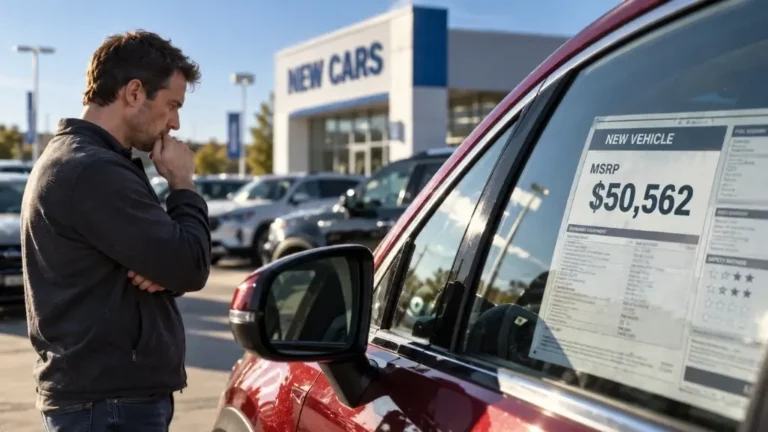
The used electric vehicle market is growing fast. The expiration of the federal incentives for new EVs, along with rising gas prices, and the influx of pre-owned EVs into the market are driving many customers to the used EV lot. While many dealerships are more focused on selling gas-powered vehicles, there’s growing demand for dealerships specializing in pre-owned electric vehicles. Eco Auto is focusing on that segment and looking to expand.
Joining host Adam Marburger on this episode of Training Camp is Al Salas, CEO of Eco Auto, a used EV specialty operation based in the greater Boston area. Salas built his career from the sales floor through seven years in the F&I box before launching Eco Auto, which he is now scaling through franchising.
From the floor, to finance, to franchisor
Salas began his career in F&I at a young age. While working in sales and going to business school, his general manager pulled him aside and presented him with a choice. Stay in school or go all-in on F&I. Salas chose F&I without hesitation.
“For a 21-year-old kid with a future ahead of him, to me the option was very clear. So I went full-time into F&I. 21 years old. That was it,” Salas said.
Salas spent the next seven years in the box. One week before his first child was born, he told his finance director, who was also his fiancée, that they couldn’t both work retail hours. Something had to give, so Salas put in his notice. That’s when he decided to launch his own F&I agency. Years later, Salas saw an even bigger opportunity in the rapidly growing used-EV market.
The Eco Auto concept
During COVID, Salas noticed a sharp increase in green vehicle sales. Manufacturers took notice and pushed hard on new car sales. But Salas says nobody was paying attention to the secondary market that shift was creating.
"There's no better value in today's market than a used EV. Period."
While many dealers had a few EVs on their used lots, they rarely had the specialized services to go with them. Salas says he built Eco Auto to close that gap. The model covers sales and service under one roof, with a focus on the full life cycle of green vehicles.
Putting ownership in reach
Salas says he designed Eco Auto to scale from the start, and early results gave him the confidence to move forward. As sales grew, service revenue followed. Battery work became increasingly profitable as vehicles aged out of warranty.
Salas says franchising also solved a bigger problem. Traditional dealership ownership was expensive and out of reach for many operators who came up through the ranks. Salas says he wants to change that.
“I want to create 27 millionaires minimum. So that’s my why,” Salas said.
Eco Auto obtained SBA certification to give franchisees a clear path to capital. Its current footprint includes three signed franchisees and one corporate location in the Boston area, with four total locations expected to be operating by the end of Q4. Salas has stepped back from day-to-day store operations, leaving execution to a leadership team that includes Bob Barton, the former global SVP of franchising for Hertz, and Anthony Carboni, a Harvard grad and former private equity operator who serves as director of operations.
Thinking outside the F&I box
One thing Salas did differently at Eco Auto was eliminating the F&I office entirely. The traditional box, he says, creates unnecessary pressure for customers.
“One thing that I did away with in our store is the box. The box itself is a high-pressure point for consumers… F&I managers at times, desk people, the salespeople. And so we eliminated that friction point,” Salas said. The turnover process still happens, Salas says, but in an open environment that promotes transparency and pulls F&I personnel into the store rather than isolating them behind a closed door.
When it comes to protection products, Salas says EVs have a different risk profile than their ICE counterparts. That shapes how he frames these products for used-EV buyers. His framework for evaluating EV insurance risk comes down to frequency and gravity. For the most part, Salas says, EVs break down less often than ICE cars, but when they do, the repairs can be costly.
“We find that the frequency of repairs on an EV is much lower, but the gravity is higher. And because of that, when you incorporate volume into it, you’re actually better off. I would say you’re ahead of an ICE portfolio,” Salas said.
Advice for apprehensive dealers
For dealers still on the fence about stocking used EVs, Salas says specialization is key. Dealers need dedicated capability on both the sales and service side before they can do it effectively, he says. That’s what he says an Eco Auto franchise brings to operators.
“You need that person on the sales side and on the tech side, too. Because not only do you need to sell it, but you also need to be able to service it,” Salas said.
Beyond operations, he says, mindset is the bigger obstacle for most dealers. Salas admits there can be a lot of uncertainty around EVs, but he says the market points to a bright future for eco-friendly vehicles. As long as gas prices and affordability are concerns, Salas says used EVs will be an attractive option for budget-conscious buyers.