New research from Urban Science and The Harris Poll shows confidence in the role of the traditional car dealership model is on the rise. Each year, the 2026 Urban Science Harris Poll Study* surveys more than 3,000 U.S. auto buyers and approximately 250 U.S. original equipment manufacturer (OEM) automotive dealers to understand auto-buyer and dealer perspectives on the evolving path to purchase.
Among both dealers and auto buyers, support for the traditional dealership model is at a five-year high. Nearly two-thirds (63%) of dealers said they strongly agreed the traditional car dealership was optimized for the future. Among auto buyers, 42% agreed, up five percentage points year over year from 2025. Growing confidence in the dealership model comes as buyers navigate an incredibly competitive shopping process. Findings from the 2026 Urban Science Harris Poll study show buyers are becoming more deliberate in their vehicle decisions and placing greater emphasis on value, putting increased pressure on sales teams as they work to convert leads into buyers.
Affordability pressures reshape brand loyalty
Elevated interest rates, economic uncertainty and rising vehicle costs continue to pressure auto buyers. When asked about their biggest concerns around leasing or buying a vehicle, 58% of buyers cited affordability, making it the leading concern among auto buyers. To combat cost-related concerns, buyers are changing how they shop for vehicles. Consumers are researching longer, cross-shopping more brands and submitting leads more frequently. Nearly a third of buyers (31%) reported a heightened focus on price and value over brand loyalty. Meanwhile, 44% of buyers said they were spending more time researching before contacting a dealership compared with a year ago.
As brand loyalty weakens, dealers and their sales teams face a tougher battle to convert every lead opportunity. Buyers who once stayed loyal to a single brand are now more likely to compare makes, models and pricing before committing to a purchase. In this environment, dealers must compete more aggressively to attract and retain buyers’ attention, leaving little room for inconsistent or incomplete follow-up. A delayed response or missed follow-up creates an opportunity for a competing dealership to win the sale.
Closing a visibility gap for dealers
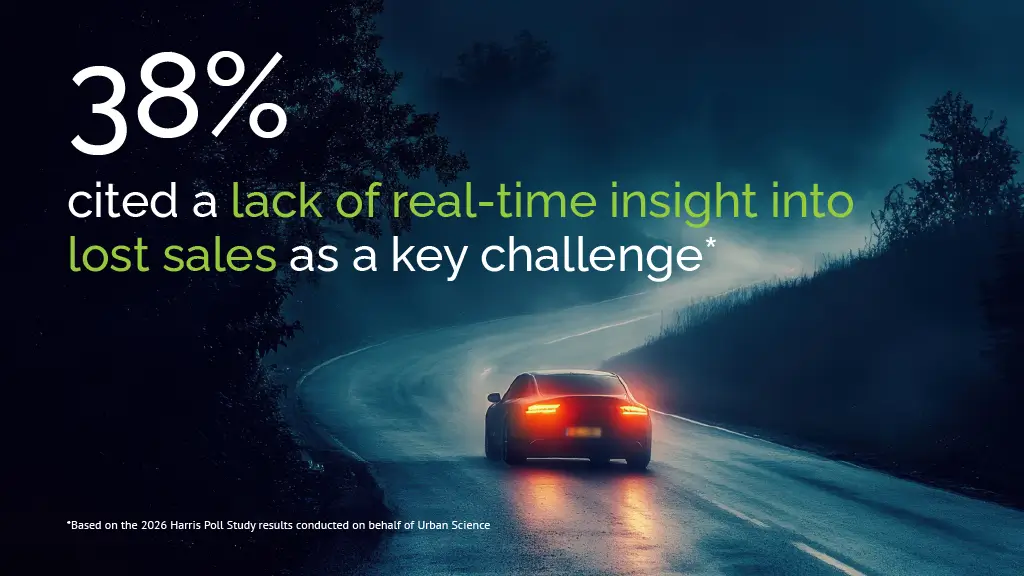
The 2026 Urban Science Harris Poll Study suggests dealers recognize the increased risk of defection (lost sales) from cost-sensitive consumers. Dealers remain confident in their sales teams’ ability to nurture and convert leads, but many still face visibility gaps throughout the sales process. Among dealers surveyed, 38% cited a lack of real-time insight into lost sales as a key challenge. Additionally, 74% said they were not fully satisfied with their ability to identify when a lead defected.
Dealers’ limited ability to track lead status is especially relevant given almost half of dealers (49%) said the lead-to-sale conversion rate is the lead metric they would most like to improve. To boost conversion rates, dealers must first understand when and why sales are being lost. Urban Science provides the industry’s only source of daily automotive sales and defection data, giving dealers clearer visibility into lost sales through SalesAlert™ and TrafficView®. SalesAlert notifies dealers daily when a lead has purchased a vehicle from another same-brand or competitive dealership, allowing sales teams to quickly refocus their efforts on active in-market buyers. TrafficView helps dealers to analyze defections by lead source, model, salesperson and geography. Dealers can spot gaps in the sales process, improve follow-up strategies and uncover coaching opportunities for sales teams.
Competing in a cost-sensitive market
Findings from the 2026 Urban Science Harris Poll Study reinforce the value of daily defection insight for dealers. Confidence in the dealership model continues to rise, but buyers are also spending more time researching and comparing options. As the buyer journey becomes more fragmented and self-directed, dealers need faster access to actionable sales intelligence.
Dealers who track their losses as closely as wins gain a clearer understanding of sales performance and process gaps. Daily sales and defection data help dealers identify where the sales process succeeds, where buyers disengage and how sales teams can compete more effectively in a cost-sensitive market.