
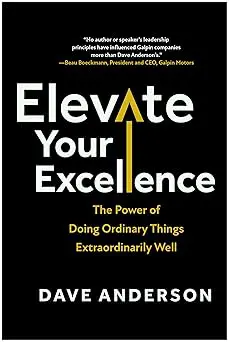
The ability to hold others accountable is one of the cornerstones of effective leadership, and it should be a skill that all leaders strive to master. In today’s episode of Lessons in Leadership, Dave Anderson, author of Elevate Your Excellence, breaks down the three C’s of accountability that leaders need to know to manage their team’s performance effectively.
The three C’s of accountability consist of clarity, candid feedback, and consequences. Each aspect is integral to effective performance management and cannot exist without the other.
Clarity
Effective accountability always starts, first and foremost, with clarity. Failure to create clarity within an organization is a recipe for disaster.
Leaders should remember that most employees genuinely want to perform well. However, a lack of clarity can create difficulties for them. This confusion and frustration can result in disgruntled employees who may feel stressed, creating a negative cycle. Consequently, productivity may decline, impacting business performance and lowering job satisfaction among employees. This situation could lead to increased turnover and negative business outcomes.
Some of the most critical areas where leaders should establish clarity in every organization:
- Vision
- Mission
- Values
- Performance expectations
- Daily non-negotiable tasks
- Processes
It’s important to keep in mind that clarity leaks. Most leaders start off being extremely clear in their expectations. However, the clarity begins to fade if they fail to live and enforce those expectations consistently.
Anderson highlights that clarity doesn’t disappear overnight. It slowly happens over time until it vanishes. To combat this, leaders should consistently uphold the expectations that they’ve set and check in with their employees to gauge understanding.
There are no surprises when leaders establish strong, persistent clarity with their teams. Every employee knows what’s expected of them. This opens a window of opportunity for leaders to provide their employees with feedback on their performance effectively.
Candid Feedback
Straightforward and sincere feedback legitimizes clarity, and it is one of the most practical accountability tools. To give beneficial, effective feedback to an employee, leaders must have something tangible to link back to.
- Did the employee follow the established process or not?
- Do they consistently uphold the company’s values or not?
- Do they consistently complete the non-negotiable tasks or not?
It’s easy to answer these questions when clarity has been established. Employees need feedback regardless of their performance.
Giving feedback to a high-performing team member encourages them to continue the good work, reinforces the behaviors or actions contributing to their performance, and helps them better understand where they’re performing well. This open-ended communication is essential because it can encourage them to continue but also open up the conversation to their areas of opportunity.
Delivering effective feedback to a team member with lackluster or poor performance can help open their eyes to their areas of opportunity, reestablish clarity, and allow them to course-correct.
Consequences
Oftentimes, candid feedback is effective enough to manage a poor performer’s performance. However, if it fails, then it’s time to enforce consequences in order to turn around their performance. While the consequences can range greatly, it’s up to the employer to determine the correct course of action.
Some of the most common consequences include:
- Formal performance improvement plans (PIP)
- Demotion
- Loss of future promotion opportunities
- Negative performance evaluations
- Termination
Mastering the 3 C’s of accountability
Mastering accountability isn’t just about enforcing rules–it’s about creating a culture where clarity, feedback, and consequences work together to drive excellence. When leaders consistently lead and engage their teams with the three C’s, they foster an environment of trust, growth, and continuous improvement.
"Ambiguity is the enemy of accountability." – Dave Anderson