On The Dash:
- Tesla is recalling 14,575 Model Ys after a factory scanner failed to verify certification labels.
- The missing label could lead owners to unknowingly overload their vehicles, increasing crash risk.
- No OTA fix is available. Affected owners will be notified by mail starting July 17.
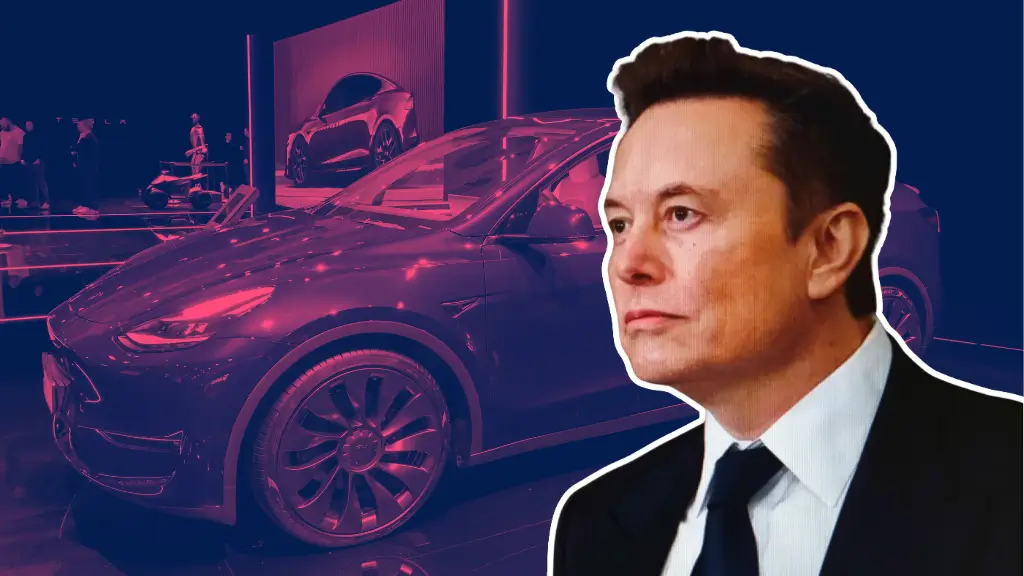
Tesla is recalling nearly 15,000 2025 and 2026 Model Y SUVs. The EV maker says an automated scanning tool failed to verify that a federally required certification label had been applied during production.
The label is supposed to be affixed to the driver-side door pillar. It lists the vehicle’s maximum loaded weight, tire specifications, and manufacturer date. Without it, NHTSA says owners could unknowingly exceed safe operating weight limits, increasing the risk of a crash.
Unlike most Tesla recalls, this one cannot be fixed with an over-the-air (OTA) software update. Technicians must physically inspect each vehicle and affix a certification label if one is missing. Tesla will perform the inspection and remedy at no cost to owners.
What went wrong
Tesla discovered the problem on April 17, during a routine internal audit at its Fremont, California factory. According to the safety recall report filed with NHTSA, an automated vision-scanning tool designed to verify the presence of a properly affixed certification label had been performing inconsistently.
The company investigated the issue from April 20 through May 4 to determine the scope, including whether vehicles built at its Gigafactory in Austin, Texas, were affected. After completing that investigation, Tesla made a voluntary recall determination on May 11, nearly three weeks after the problem was first discovered.
The Fremont factory team repaired the scanning tool and implemented manual checks on April 17, the same day the issue was discovered. Manual checks were added at Gigafactory Texas on April 21, and the automated tool there was fixed on May 7.
Which Model Ys are affected
The recall, filed with NHTSA on May 18, covers vehicles built at Tesla’s Fremont, California, factory and covers two production windows. A total of 2,697 Model Ys from the 2025 model year were built between Nov. 17, 2024, and Feb. 24, 2025. Another 11,878 units from the 2026 model year were produced between Feb. 25, 2025, and April 21, 2026. Tesla estimates roughly 45% of affected vehicles are actually missing the label.
Tesla will mail letters to owners of affected Model Ys starting July 17. Owners may also contact Tesla directly at 1-877-798-3752.
Tesla says there are no known warranty claims, collisions, injuries, or fatalities related to the recall.
Recent recalls
The Model Y label recall adds to a string of Tesla safety actions CBT News has covered in recent months.
In March 2026, NHTSA escalated its investigation into Tesla’s Full Self-Driving system to an engineering analysis after identifying nine crashes linked to the technology in reduced-visibility conditions, up from four incidents initially reviewed.
In 2025, Tesla recalled 46,096 Cybertrucks, nearly every unit produced before February 2025, over an exterior panel that could detach while driving.
Tesla also recalled approximately 380,000 vehicles over a power steering assist failure, which followed a January 2025 recall of roughly 239,000 vehicles for malfunctioning rearview cameras.