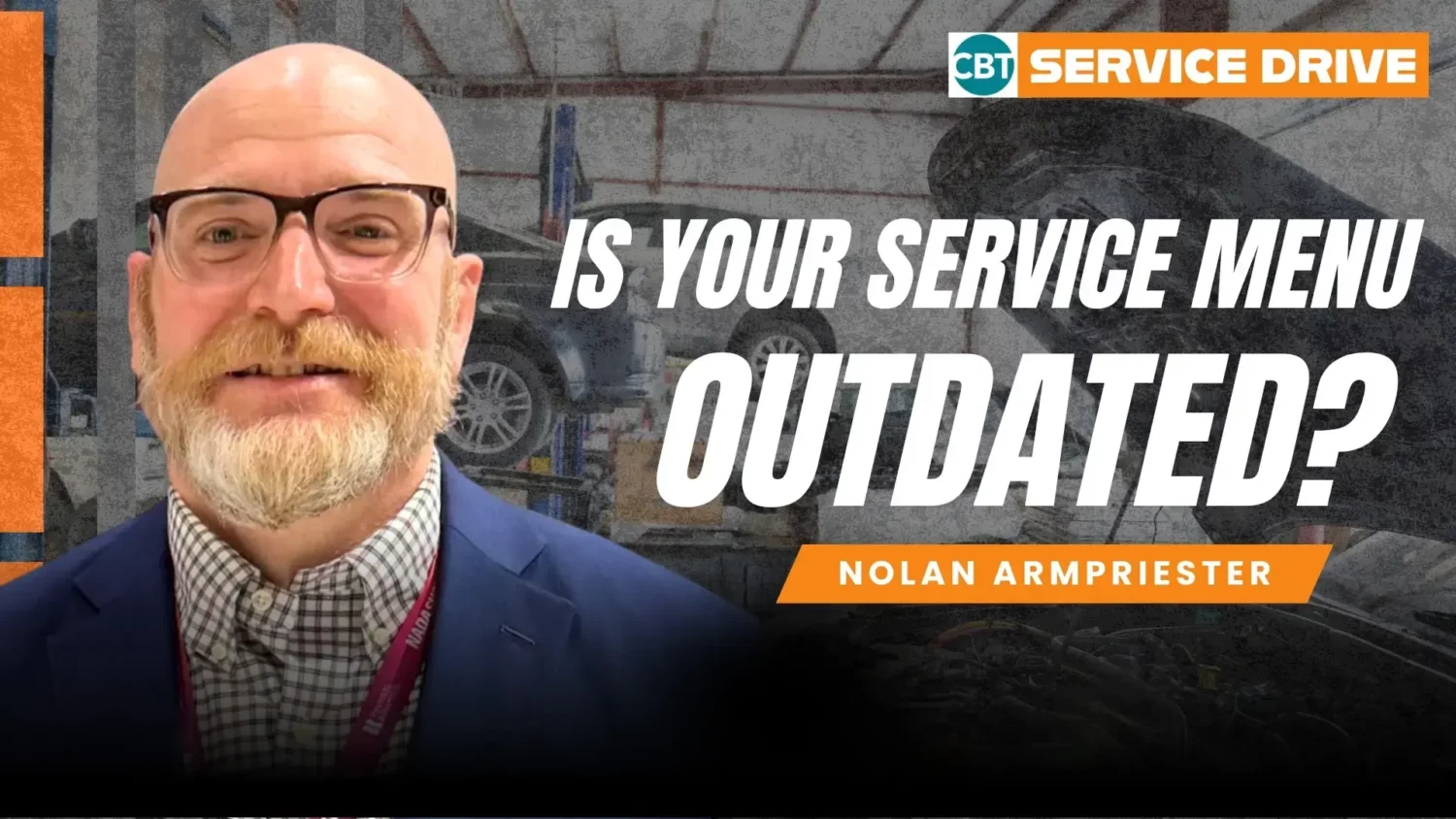
While many dealership leaders rise through variable operations, Nolan Armpriester, General Manager at Twin Pine Ford of Hamburg, is leaning into what he believes is the most stable and scalable driver of long-term profitability: fixed ops. With more than two decades of fixed operation experience, Armpriester joins us on the latest episode of Service Drive to discuss his philosophy to build around absorption, which ensures the service and parts departments generate enough gross profit to cover dealership overhead.
According to Armpriester, fixed operations should serve as the financial foundation of the business and provide stability regardless of fluctuations in new-vehicle sales. By strengthening the “back of the house,” he expects the front end to benefit from a healthier, more resilient operation.
Moving further into 2026, Armpriester attributes his priorities to expanding remote and mobile services, commercial and fleet businesses, increasing customer retention, and deepening the dealership’s use of artificial intelligence.
Armpriester mentions that one of the most aggressive initiatives underway is the expansion of mobile service. He claims that Twin Pine Ford currently operates 18 mobile service vehicles and plans to grow that number by roughly 40 within the next year, with each van effectively functioning as an additional service bay, allowing the store to increase capacity without expanding its physical footprint.
Armpriester highlights that staffing is crucial for growth, as top master technicians prefer staying at brick-and-mortar facilities, while mobile services offer younger technicians an entry point into the industry.
“When you grow your own from the bottom up, you typically have a better result.”
However, on the parts side, Armpriester is focused on disciplined inventory management. He notes that Twin Pine Ford closely tracks lost sales, maintains structured phase-in and phase-out processes, and prioritizes accurate sticking levels to avoid self-inflicted inventory shortages. The store is also expanding its digital footprint via RevolutionParts, syndicating inventory across online marketplaces and enabling national shipping.
Despite industry attention on electrification, Armpriester said EVs have not yet greatly disrupted fixed operations at the store. Rather, service and parts demand remains steady and EV-related impacts have been minimal to date.
Technology, however, plays a growing role, with Twin Pine Ford deploying AI across sales, service and parts functions, with particularly heavy use in reception and appointment scheduling. AI tools help prevent missed calls, set after-hours appointments, and mine recall opportunities, improving booking rates and operational efficiency.
Armpriester said the goal is not to replace employees but to enhance productivity and streamline daily operations.
As 2026 progresses, Armpriester projects growth across both variable and fixed departments. But under his leadership, fixed ops will remain the primary engine driving sustainable performance. By prioritizing absorption, expanding mobile service capacity, and integrating AI, Armpriester is betting that a service-first mindset will position Twin Pine Ford for a stronger, more resilient year ahead.