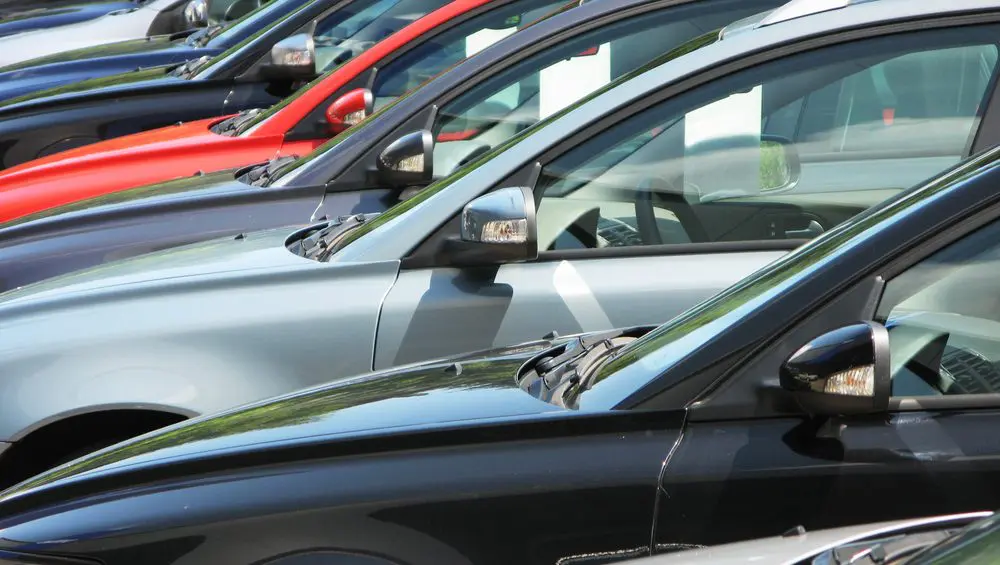
Car sales have fallen for several carmakers over the first quarter of 2022 including Ford and Stellantis compared to a year ago. Much of that hinges on the production shortages that continue to plague the auto industry. Dealer lots have more free space than they ever have, largely due to buyers looking to purchase or replace a vehicle. The low demand combined with more buyers in the market for popular models than units available has once again kept the average transaction price well in excess of MSRP.
Compared to February 2022, the average transaction price in March softened slightly, dropping by $156, or 0.3%. According to Kelley Blue Book, March is the third consecutive month of decreases after reaching never-before-seen transaction prices in December 2021. For non-luxury models, the average dropped only $53 to ring in at $42,364. That figure represents selling prices of $970 over MSRP. Luxury models actually rose by $272 per transaction for March.
The average transaction price is holding near-record levels as automotive production has yet to regain its pre-COVID levels. Carmakers including Toyota are scaling back their sales estimates for the year based on disruptions including the ongoing chip shortage – exacerbated by COVID flare-ups and lockdowns in Asian nations – and the turmoil between Ukraine and Russia.
Michelle Krebs, Executive Analyst for Cox Automotive, said, “With a myriad of supply chain issues disrupting global vehicle production, we expect inventory to remain tight through the rest of the year and prices to remain high.”
Along with the high MSRP, vehicle sales maintained their blistering pace. A backlog of shoppers who need to replace aging vehicles, along with those who are mostly unaffected by the high price, are buying out dealer inventory as quickly as they arrive. Popular models are often selling in less than 10 days after they land.
Buyers not scared off by inflation, other influences
The US economy has been facing incredible pressure by runaway inflation rates, and when March 2022’s figures are announced, it’s expected to be a monthly increase of 1.2% and an annual rate of around 8.4%. The price of oil has receded since the end of the month, but the inflation rate is a far cry from the annual US target of 2%.
The Federal Reserve has raised benchmark interest rates for the first time since 2018 to combat inflation, by a quarter percentage. They’ve strongly hinted at several additional rate hikes throughout the rest of the year, trying to put a wet blanket on an out-of-control market. But despite both increasing interest rates and inflation rates that make all products and services more expensive, buyers have been buying out dealer lots, and paying over MSRP while they do it.
Potential of a new normal
Prices are expected to soften later in 2022 as dealer inventory springs back, assuming the global chip shortage and other influences begin to give way and no other major issues come up. Car manufacturers have been indicating that leaner inventory could be the new normal in the coming months and years. Ford has had higher factory order rates than ever before for their F-Series pickups, recording 50,000 orders in the month of March alone, and it’s a practice they’re keen to keep up.
With lower dealer inventory levels, incentives could also be kept at their almost non-existent rates. Customers getting comfortable paying at or above MSRP and lower floorplan costs with reduced inventory is a recipe for strong dealer profits going forward.
Did you enjoy this article from Jason Unrau? Read other articles on CBT News here. Please share your thoughts, comments, or questions regarding this topic by submitting a letter to the editor here, or connect with us at newsroom@cbtnews.com.
Be sure to follow us on Facebook and Twitter to stay up to date or catch up on all of our podcasts on demand.
While you’re here, don’t forget to subscribe to our email newsletter for all the latest auto industry news from CBT News.