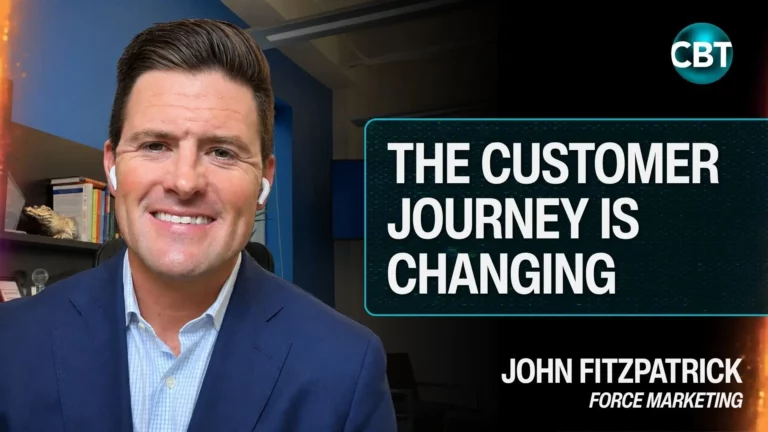
Dealers are navigating a longer customer journey as affordability pressures make consumers more cautious about purchasing a vehicle. Joining us on today’s CBT Live segment is Force Marketing CEO John Fitzpatrick to discuss what his team is seeing across more than 1,500 dealerships, including the impact of higher payments, rising insurance and gas costs, the Labor Day opportunity and the rapidly changing role of AI in dealership marketing.
Due to the influx of dealership pain points, John advises dealers to connect their marketing, sales and operations teams more closely as they prepare for these major changes in how consumers shop.
John said affordability is causing consumers to spend more time in market before making a purchase, which creates a challenge for dealers that rely on traditional marketing metrics. He also points out that longer shopping journeys can make lead volume and conversion rates appear weaker even when consumers remain interested in buying. Additionally, John urged dealers not to abandon those customers simply because they have not converted within the expected timeframe. Instead, dealers should increase the frequency of their communication and track customers throughout the entire journey, pointing to the opportunity in service retention and noting that dealers retain fewer than 30% of the customers they sell vehicles to, leaving considerable room to bring those customers back to the dealership.
With Labor Day days away, John says there’s an opportunity for dealers to turn increased vehicle usage into sales and service conversations. While Americans are expected to drive more over the holiday weekend, this notion alone gives dealers another reason to engage with customers before and after their trips; especially, a consumer who spends several days driving an older vehicle may begin thinking differently about replacing it.
AI is also poised to fundamentally change dealership marketing, but John said dealers first need to get their own data and pricing under control. He believes AI will increasingly handle consumer questions, lead responses and other functions that traditionally required large BDC teams, with speed becoming a major competitive advantage. But that also creates compliance risks if inaccurate pricing or inconsistent information is fed into AI systems. John notes that dealers need to ensure pricing is consistent across digital retailing tools, websites, third-party platforms, social media, email and other marketing channels because the dealership remains responsible for what consumers see. He urged dealers to bring vendors together rather than operate in silos, arguing that a coordinated approach to first-party data, pricing and AI will become increasingly important as the technology develops.