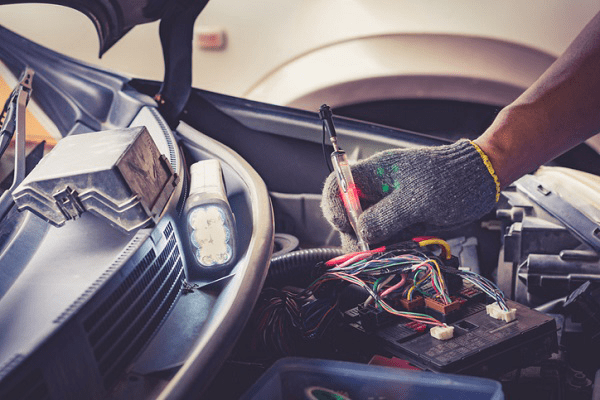
In today’s age, automotive technology is constantly changing, making it difficult for service departments to keep up. Even the NHTSA says that “one day, automated driving systems, which some refer to as autonomous vehicles, may be able to handle the whole task of driving when we don’t want to or can’t do it ourselves.” However, your dealership doesn’t need to fall behind. We can show you how to prepare your service department for autonomous vehicles.
Levels of automation
According to the Society of Automotive Engineers (SAE), you can break down automation into five levels. Each of these requires a different level of expertise and various tools to be used.
- Level 0: No Automation. The driver performs all driving functions.
- Level 1: Driver Assistance. The vehicle provides some automated driving modes, such as steering guidance and cruise control.
- Level 2: Partial Automation. Vehicles help you with acceleration, deceleration, steering, and more. With this technology, drivers cannot take their hands off the wheel, ensuring that drivers are in control when a problem exists.
- Level 3: Conditional Automation. This car handles monitoring the environment, takes on the driving tasks, and makes decisions, but the driver can take over if there is a problem or a sensor malfunctions.
- Level 4: High Automation. The car performs all tasks that the driver would handle, but the person might need to take over in certain environmental or roadway conditions.
- Level 5: Full Automation. This vehicle can handle all driving tasks independently, no matter the conditions and environment.
While most vehicles don’t have Level 5 Automation yet, there are plenty of other technologies we need to prepare for.
3 steps to prepare for autonomous vehicles
When it comes to getting your dealership ready, you have time, but you shouldn’t drag your feet. There’s already plenty of technology that requires some unique expertise. Additionally, you don’t want to get caught off guard when the changes are made.
Here are a few ways to prepare right now.
1. Buy the latest tools
Whether your techs are working with a self-driving system or one of the driver-assist technologies, you will need special tools to ensure everything is repaired to factory specifications.
To perform ADAS repairs, you need the equipment to handle calibration. These scan tools aren’t cheap to have, so you might want to buy a couple at a time. Also, you will need to be careful about where they are placed, possibly behind lock and key in the parts department.
2. Learn new processes for calibration
It’s great to have all of the tools needed to complete calibration, but does your team have the processes to follow through? With each system and different automakers, you will have varying steps that must be followed.
Your technicians must stay up to date on service bulletins, especially when it comes to these newer technologies. It’s also good to have the procedures written out where they can be referenced easily in the middle of a job.
3. Train new and experienced technicians
The key to ensuring complete satisfaction is to keep your technicians trained. With so much new technology, it’s best to schedule regular training consistently. Some of your newer techs might already have the knowledge, especially if they are coming out of technical school. These newer team members might be able to teach some of your veterans.
Either way, it’s your job to equip the team with the knowledge they need to carry out the procedures necessary for autonomous vehicles. Suppose they fail because of a lack of understanding; that falls back on you. Try to make the upcoming changes exciting, and show the team that there’s a lot to look forward to. Your positive attitude will have a profound effect on the outlook of the technicians.
Did you enjoy this article from Brian Jones? Read other articles on CBT News here. Please share your thoughts, comments, or questions regarding this topic by submitting a letter to the editor here, or connect with us at newsroom@cbtnews.com.
Be sure to follow us on Facebook and Twitter to stay up to date or catch up on all of our podcasts on demand.
While you’re here, don’t forget to subscribe to our email newsletter for all the latest auto industry news from CBT News.