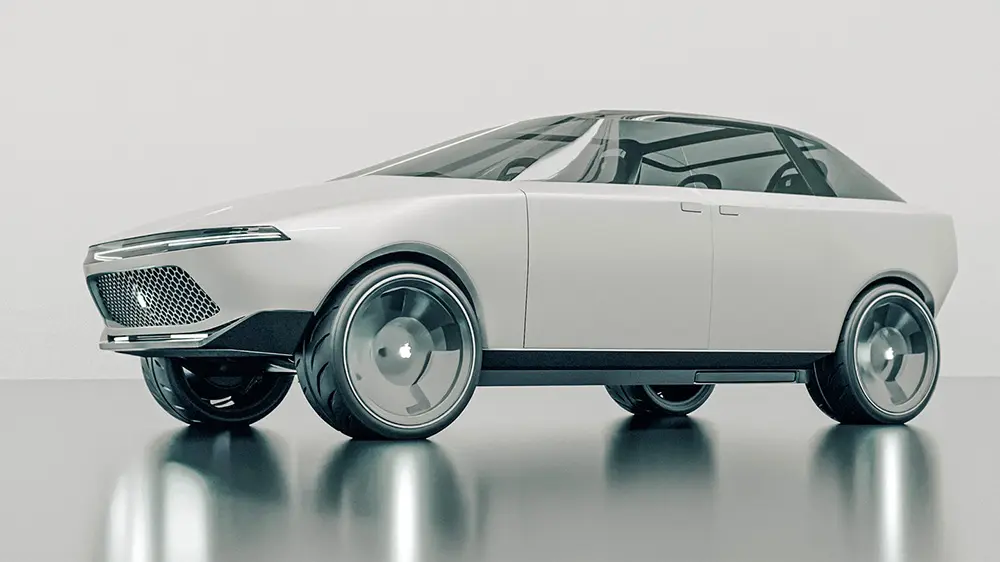
It appears that the long but poorly concealed Apple car project, a constant source of speculation among tech and auto enthusiasts alike for many years, has finally come to an end, drowned beneath the ever-intensifying wave of engineering, safety, and profitability issues facing high-tech vehicles in today’s market.
The vehicle’s development, called “Project Titan” among the company’s employees, began approximately a decade ago. The ultimate mission was to create a fully electric and autonomous vehicle that would achieve an equivalent level of success as the brand’s other products, setting a new standard for quality in its market. What followed, however, was 10 long years of confusing, frustrating, and increasingly laborious development, work that has allegedly concluded with little to show for the effort.
According to a Bloomberg report published Tuesday, February 28, Apple executives have informed staff members the project is being canceled, leaving the future of the roughly 2,000 jobs involved with the vehicle’s development up in the air. While the challenges faced during development, which you can read more about here, doubtlessly fueled the company’s abrupt decision, it seems unlikely that the choice was executed during a downturn in electric and autonomous vehicle sentiments by mere coincidence.
While high-tech cars were all the rage leading up to the COVID-19 pandemic, recent years have laid bare the many obstacles such products must overcome if they are to be successful. For instance, electric vehicles, despite having existed for decades, have gained market share at a near-glacial pace, frustrating investors, executives, and dealers alike. Factors such as inaccessible charging options, limited driving ranges, and low affordability have led customers to show more hesitation than interest toward battery-powered cars.
Unfortunately, all three issues will take significant time and investment to solve, not to mention technological breakthroughs and a potential overhaul of the U.S.’s electrical infrastructure. Realizing this, many car manufacturers have opted to postpone or even cancel projects that would have ramped up production far ahead of current demand levels, while electric vehicle-focused startups, such as Rivian, Lucid, and VinFast, have switched to survival mode. Even Tesla, the most successful electric car brand aside from China’s BYD, has struggled to meet its own sales forecasts in today’s market, leading its leadership team to pursue alternative sources of company income such as robotics and artificial intelligence. It is highly unlikely these trends have gone unnoticed at Apple.
Meanwhile, autonomous vehicles have come face to face with a different set of challenges, primarily concerning safety. Given that self-driving cars are a fairly new innovation, policy has yet to catch up. But regulation is not far behind. An incident involving General Motors’ Cruise robotaxi service sheds light on how autonomous cars have rapidly lost favor in the eyes of both the public and the government.
Last October, a California pedestrian was struck and dragged several feet by a self-driving Cruise vehicle. Shortly after, state authorities claimed the company had failed to file a proper report of the accident, resulting in both internal and external investigations. As a result, much of the brand’s original leadership team, including CEO Kyle Vogt, have now resigned, while operations were put on hold, although the company expects to resume business “in the coming weeks,” this time with actual drivers within the vehicle to reduce the chances of an accident. The pushback appears to have also affected robotaxi rival Waymo, whose petition to expand its services in California was denied last week.
While internal factors almost certainly had an effect on Apple’s decision to cancel “Project Titan,” it is unlikely that its choice was made in a vacuum. Rather, executives were led to believe, based on the recent experiences of companies in the electric and autonomous vehicles spaces, that such a task would be of little benefit to the tech giant. That being said, Apple has other, less risky automotive undertakings to prioritize, ones which they already have experience with and may lead to more involved projects down the road. CarPlay, for example, is on track to become a universal feature in new vehicles, with virtually every major manufacturer now promising to include the infotainment system in future models.
Indeed, software, rather than hardware, may be the safest, most lucrative way forward for tech-focused brands to involve themselves in the car market. Boston Consulting Group forecasts that revenues from automotive software will grow to $248 billion by the end of the current decade. Apple, with its impressive history of operating systems and application development, stands to earn far more from this business than technically-challenged car manufacturers. Projects where external factors and a lack of experience could hinder efforts are far less advisable.