On the dash:
- Nissan targets 1 million U.S. sales by 2030, led by SUVs, Rogue Hybrid e-POWER and the return of the Xterra.
- Global lineup cut from 56 to 45 models to boost volume per vehicle and improve efficiency.
- AI and electrification expand, with 90% of models set for AI tech and ProPILOT autonomy by 2027.
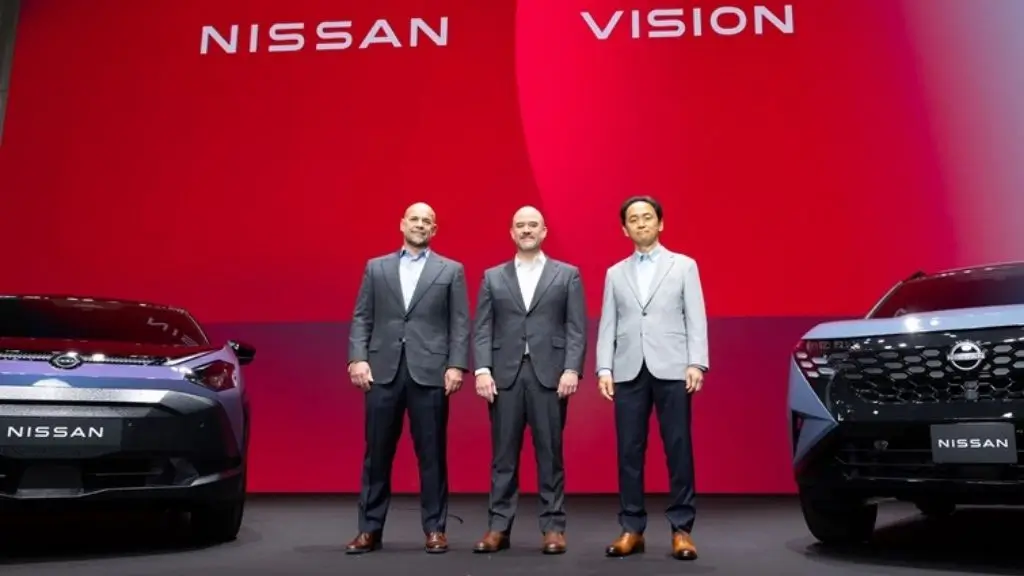
Nissan Motors is reshaping its U.S. retail outlook with its “Mobility Intelligence for Everyday Life“ to move toward higher-volume SUVs, reduce the number of nameplates, and expand hybrid availability. For dealers, the company aims to boost volume per model, streamline the lineup, and improve profitability by prioritizing its core, high-demand vehicles.
The company set an ambition to return to 1 million annual U.S. sales by fiscal 2030, anchored by large vehicles and a stronger manufacturing footprint. Key products driving the strategy include the next-generation Rogue hybrid e-POWER and the return of the Xterra as a body-on-frame SUV aimed at adventure buyers. Nissan also plans to continue using V6 and new V6 hybrid systems in larger SUVs, reinforcing its commitment to the U.S. utility segment.
Streamlined global lineup
Nissan will reduce its global lineup from 56 to 45 models as it exits underperforming segments and reallocates investment to growth areas. The automaker said the strategy will boost each model’s volume by more than 30% and improve development speed and cost efficiency across global operations.
Nissan is reorganizing its global lineup into four categories:
- Heartbeat: Models embodying Nissan’s identity, emotional value, and innovation
- Core: Models that sustain global business with scale and stability
- Growth: Models targeting expansion where demand is emerging
- Partner: Models that extend market coverage through disciplined collaboration
Additionally, the automaker highlighted several key models tied to its strategy, including the X-Trail and Rogue Hybrid e-POWER, which use the company’s electric-motor-driven hybrid system designed to deliver EV-like driving characteristics without external charging. The Juke EV will continue as a fully electric compact model for Europe, while the Skyline remains positioned as a performance-focused “Heartbeat” model in Japan. The revived Xterra anchors the U.S. “Heartbeat” category, focusing on off-road capability and rugged design.
Expanding powertrain options
The company says it is expanding electrified options across its lineup, such as its e-POWER hybrid system, which delivers electric-motor driving without external charging. Moreover, Nissan plans to expand its hybrid-electric, plug-in hybrid, and range-extender options through partnerships. This approach gives U.S. dealers more flexibility to match vehicles to shifting consumer demand and balance EV adoption trends.
AI technology and autonomous driving
Nissan also announced that it is adding artificial intelligence (AI) to its vehicles as part of its AI-defined vehicle (AIDV) strategy. This strategy combines Nissan AI Drive and Nissan AI Partner technologies. The company aims to expand AI Drive to 90% of its lineup over the long term. The next-generation Nissan Elgrand, a minivan for the Japanese market, will adopt updated ProPILOT technology with end-to-end autonomous capability targeted for introduction by the end of fiscal 2027. With its advancements in autonomous driving, Nissan states that Nissan AI Partner enhances the in-vehicle experience, connects more intuitively with drivers, and supports everyday tasks. This further integrates the vehicle into daily life.
Summing up the vision, Nissan CEO Ivan Espinosa said, “As we continue on our path to recovery, it is essential that Nissan demonstrates our relentless focus on serving the customer, seizing the opportunities provided by AI technologies, expanding electrification and driving innovation into our vehicles to deliver sustainable market growth.”