In the continuing saga of misinformation that I read in Facebook comments, one that always gets me is that EV technology is un-American, or somehow ruining America.

In fact, the opposite is true – the EV transition can reinvigorate and revitalize American manufacturing, unions, career paths, and infrastructure. Here are a few ways how.
American manufacturing
Historically, manufacturing was a backbone of the domestic economy. People could rely on it for well-paying, steady jobs, often without a college or postgraduate degree. However, American manufacturing has been hit by globalization and offshoring, and while it once contributed around 25% to national GDP, that number fell to 11% in 2019. And, that was before the pandemic!
There have been many proposals to reinvest in manufacturing in the US, and specifically in auto manufacturing. Ford, GM, and others have made huge capital expenditures into EV production facilities around the country in the past year, partially to meet the growing demand for electric vehicles, and partially due to strong local incentives to attract business. Cities and towns are vying for this investment; they are often economically depressed due to reliance on the underperforming manufacturing sector and are eager for the influx of money, jobs, and people that accompany reinvestment.
Ford invested $11.5 billion into EV and battery facilities in Kentucky and Tennessee, also creating 11,000 jobs. Some of these will be high tech positions, but many will be reliable and steady positions that underemployed sectors of the population can secure. GM similarly reinvested in Michigan with what was, before the Ford announcement, the “single biggest manufacturing investment in its history to boost its own plan to expand EV and battery production—in the same state as its Detroit headquarters.” This $7B investment promises 4,000 new jobs and the preservation of 1,000 existing ones. Overall, there have been at least a dozen battery factories planned in the US this year and this says nothing about the jobs that will be created by building and repairing chargers and other EV infrastructure and industry support such as certified EV technicians.
Supply chains, again
It’s not just the local and federal incentives that are encouraging American auto companies to onshore production. The ongoing supply chain issues are often centered around lack of accessibility to semiconductors and battery parts and had significant economic ramifications for the auto industry throughout 2021. If chip production and battery manufacturing happens domestically, a lot of the supply chain issues will be resolved.
Before recent events, the American electronics industry imported 88% of its semiconductors from countries like Japan, South Korea, and Taiwan and 85% of lithium ion batteries from China and East Asia. Climate change, politics, and shipping delays from East Asia led to a rare bipartisan push to onshore production, including a $52 billion package to build the domestic semiconductor industry. Onshoring semiconductor and battery manufacturing not only provides employment and US revenue, but it alleviates transit and logistic delays in getting necessary parts. Finally, it brings R+D and technological innovation back home, letting the US take a leadership position in high tech once again.
Battery recycling – a growing industry
Finally, to close the loop entirely, battery recycling companies, such as Redwood Materials and Li-Cycle, are popping up domestically and forming partnerships with EV powerhouses such as Tesla and Ford. They are a necessary part of the EV transition since battery recycling provides raw materials that would otherwise have to be sourced, mined, and shipped back to the US. As the dozen-plus new domestic battery factories come online, they can expect to trash “30% or more of their material to defects, rejects and cuttings, until they figure out what they are doing and get their yield rates up.” These scrap parts – anodes, cathodes, and raw materials – can be recycled to supply many of the supplies needed once the plant is making production-ready batteries. As this newer industry develops, it too will provide employment and stimulate satellite industries, as well as guard against future supply chain issues. The Department of Energy recently announced heavy investment in battery recycling for just these reasons.
Infrastructure
One of the most interesting and compelling ways that EVs can revitalize the country is by shoring up our aging, insufficient electric grid and providing a stopgap solution for the transition to greener energy. Our electric grid is not up to the challenge of the 21st century: both climate change and rapid urbanization mean that peak demands often exceed generational capacity. Think back to just last year: harrowing tales from Texas’ winter power loss and intentional shut offs during the Pacific Northwest heat wave. Many of the horrific losses were due to lack of electricity for those who rely on it, which is to say nothing of the economic impact of losing power.
There are a few ways to deal with this issue. New, conventional power plants can be built to generate an ever increasing supply of energy, but this also requires serious investment in new transmission lines, leads to more polluting energy, and increases customer’s tax and utility burdens. Moreover, it offers no solution or way out of the system that is driving climate change. On the other hand, many states are adding renewable energy to their electric mix. The addition of green energy and utility scale battery storage is great, but still requires a lot of time, construction, and system updates to integrate with the traditional grid. The easiest solution is one that is mostly software based: the integration of EVs into our power grid.
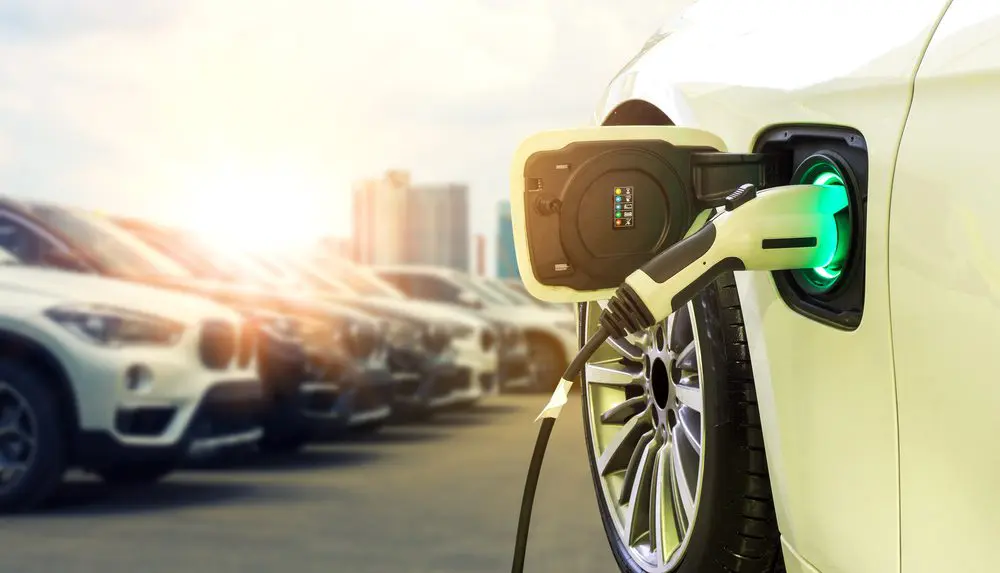
While our insufficient electric grid is often cited as a reason not to invest in electric transportation, the truth is that EVs are well suited to address the immediate crisis. Electric vehicles are essentially batteries on wheels, especially considering that most privately owned cars are parked for 95% of the day. Most modern EVs store enough energy to power the average American household for at least a day – more, if electricity use is limited to essentials. A concept called “vehicle to grid,” also known as V2G, allows for bidirectional energy flow between the grid and a car battery. So, not only can you charge the car from a household plug or charger, but you can also return that energy to the grid, or use it to power any electric appliance. The upcoming Ford F150 Lightning has this capability, as does the Nissan LEAF.
What EVs allow us to do is “balance the increasing mismatch in electrical usage and generation that occurs as weather-dependent solar and wind energy sources come online.” There are pilot programs for this sort of technology across Europe where more vehicles are V2G enabled, but this tech is still nascent in the US. Nuvve is one US-based company working on software to optimize energy flow. Marc Trahand, Nuvve’s executive vice president of marketing, explains “V2G can also become a valuable grid ally in states such as California that generate immense amounts of renewable energy during the day but then have to rely on other, often “dirty” greenhouse-gas-producing sources of power to meet the spike in demand when consumers come home and start turning on their appliances.”
The next time someone claims that the EV transition is unAmerican, clinging to a past version of America that was powered by coal and natural gas denies us our place as the leader of technology and innovation. The thing that has long made America great is our ability to meet new challenges with ingenuity and bravery, find homegrown solutions for global problems, and to support the working class with well-paying and reliable employment. A “full-throttle” investment in electric transportation and EVs will do all these things.
Did you enjoy this article from Liz Najman? Read other articles on CBT News here. Please share your thoughts, comments, or questions regarding this topic by submitting a letter to the editor here, or connect with us at newsroom@cbtnews.com.
Be sure to follow us on Facebook and Twitter to stay up to date or catch up on all of our podcasts on demand.
While you’re here, don’t forget to subscribe to our email newsletter for all the latest auto industry news from CBT News.