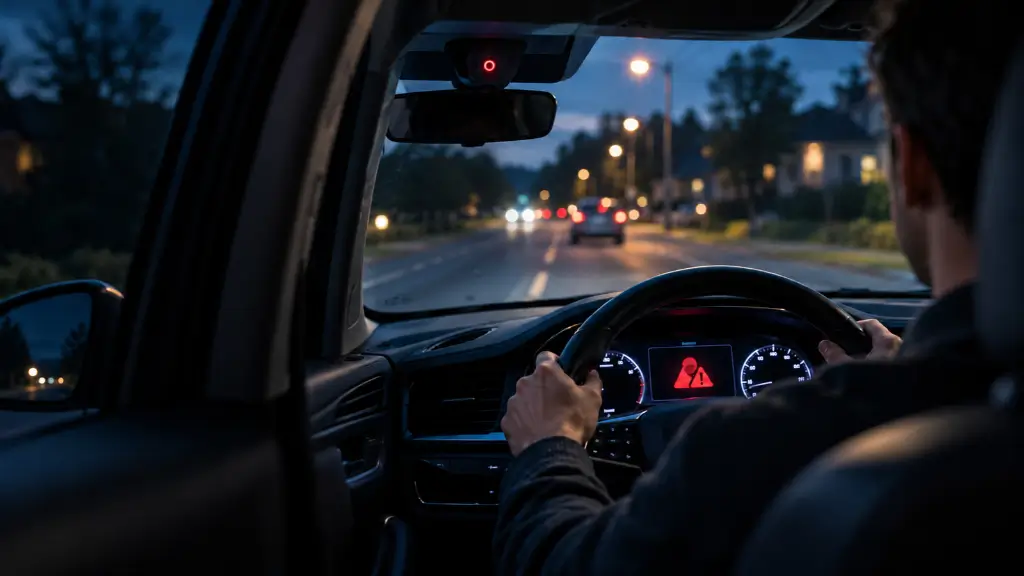
Last night, my Ford Bronco did what millions of modern vehicles now do without a second thought—it installed an automatic software update. The next morning, I discovered something I never authorized. The update had quietly opted me into sharing additional driving data and driving habits. Fortunately, I caught the change before heading out and immediately turned it back off. But instead of being annoyed by another software update, I found myself asking a much bigger question. Why does Ford need more information about how I drive? Who ultimately benefits from collecting it? And perhaps most importantly, how can a vehicle I purchased change my privacy settings without asking for my permission first?
That moment made me realize something I’ve been missing, even after covering this industry for decades. I’ve spent years reporting on Right to Repair, connected vehicles, driver surveillance, insurance companies buying driving data, Flock cameras, and government mandates. Like everyone else, I covered them as individual stories because that’s how they were presented. But they’re not separate stories anymore. They’re chapters of the same story, and almost nobody is connecting them.
Once you step back, the pattern becomes difficult to ignore. Every one of these developments depends on collecting more information about drivers, transmitting more information away from drivers, and giving consumers less visibility into what happens after that data leaves their vehicle.
Every connected vehicle contains what’s known as a Telematics Control Unit, or TCU. Most drivers have never heard of it, yet it’s one of the most important pieces of technology in their vehicle. It’s the communications hub that allows your car to connect to apps, manufacturers, dealerships, and cloud services. It also records an enormous amount of information about the vehicle and how it’s being driven.
Automakers describe this as improving convenience, diagnostics, and customer service. That’s certainly part of the story. But we’ve already learned there’s another side to it. General Motors was sued after driving information collected through OnStar was shared with data brokers and ultimately sold to insurance companies, creating a public relations disaster that cost the company millions and raised serious questions about consumer consent.
Now connect that to Right to Repair. Supporters believed the REPAIR Act would finally give consumers and independent repair shops access to the data modern vehicles generate. Instead, the House committee removed the telematics language before advancing the bill. Think about that for a minute. Manufacturers can collect your vehicle’s data, transmit it wirelessly, analyze it, and in most cases monetize it. But when lawmakers had an opportunity to guarantee vehicle owners access to that same connected data, those protections disappeared. If the information belongs to the companies that build the vehicle but not to the person who bought it, we should all be asking why.
Then I started looking at what automakers are developing behind the scenes. Ford has published patents describing biometric systems capable of reading lips, scanning irises, monitoring heart rate, tracking facial expressions, and using interior cameras to identify occupants. Some filings even describe comparing biometric information with external databases. No, a patent doesn’t mean every one of these technologies will appear in next year’s vehicles. Companies patent ideas all the time that never reach production. But patents tell us where engineers are spending their time, where research dollars are flowing, and what companies believe regulators or future markets may eventually demand. And Ford is not alone, every brand is seeking this type of information.
Then there are the laws that most Americans never hear about until after they’ve passed. Illinois recently approved an intelligent speed assistance program requiring repeat speeding offenders, with as little as two speeding tickets, to be forced to install electronic monitoring devices at their own expense. It will cost you $30 a month for 3 years. And if your car is older than 1996, that means you do not have on board diagnostics or OBDII, it doesn’t comply with the new Illinois law, so they will take your license, its suspended. For two speeding tickets!
At the federal level, Section 24220 of the 2021 Infrastructure Investment and Jobs Act directed NHTSA to establish standards for advanced impaired-driving prevention technology in future passenger vehicles. Those standards still haven’t been finalized because regulators acknowledge the technology isn’t yet reliable enough, but the direction is unmistakable. And this law is coming, there is mandated implementation of this law by November 5, 2027.
Vehicles are steadily becoming more connected, more dependent on sensors, cameras, software, and behavioral monitoring, all in the name of improving safety. Or so they say.
Now look outside the vehicle. Across the country, automated license plate reader networks continue expanding. Flock Safety may be the company most people recognize, but it’s no longer just Flock. Axon and other companies are building increasingly sophisticated surveillance networks under the same public-safety rationale. Separately, every one of these programs has its own explanation. One claims to reduce crime. Another claims to fight impaired driving. Another claims it will lower insurance costs. Another helps diagnose vehicle problems. Yet every one of them requires the same thing: more cameras, more connected technology, more data collection, and more monitoring of ordinary drivers. This is not what they are claiming.
That’s why my Bronco update bothered me far more than it probably should have. It wasn’t about Ford alone, and it wasn’t about one software update. It was the moment I realized I’d been covering one story through half a dozen different headlines. Right to Repair, telematics, surveillance cameras, insurance data, biometric patents, and connected vehicle mandates all intersect because they rely on the same foundation: a vehicle that continuously gathers information about you, its driver. Once that infrastructure exists, the debate shifts from whether data can be collected to who gets access to it, how long it’s stored, who profits from it, and what new uses will eventually be justified in the name of safety or convenience. And most importantly your rights and that they are being violated.
Maybe every one of these policies is well-intentioned. Maybe each one genuinely addresses a real problem. But when every solution depends on more monitoring, more connectivity, and more data flowing away from the driver, it’s time to stop treating these stories as unrelated. The overnight software update in my Bronco didn’t create this trend. It simply made me realize how all the pieces fit together. And once you see that picture, it’s impossible to unsee it.
All of this is tied together. They make it illegal to drive anything they can’t monitor and then force people to opt out of older vehicles through obscure laws. All of this was never about safety, it was never about emissions or pollution, it’s about control and revenue. Welcome to the connected and controlled world that the government and the car brands want.
Check out my full commentary on this story: https://youtu.be/jZAkH9df_0E
Looking for more automotive news? https://www.CarCoachReports.com
Listen to The Drive Car Show – https://www.youtube.com/@thedrivecarshow