
According to the latest data from Cox Automotive‘s Dealertrack Credit Availability Index, auto credit access hit the highest level since December 2022 in March. The All Loans Index reached 96.3, a slight uptick from February’s 95.9 and a 3.1% growth year-over-year.
All Auto Loans Index | Source: Dealertrack, Cox Automotive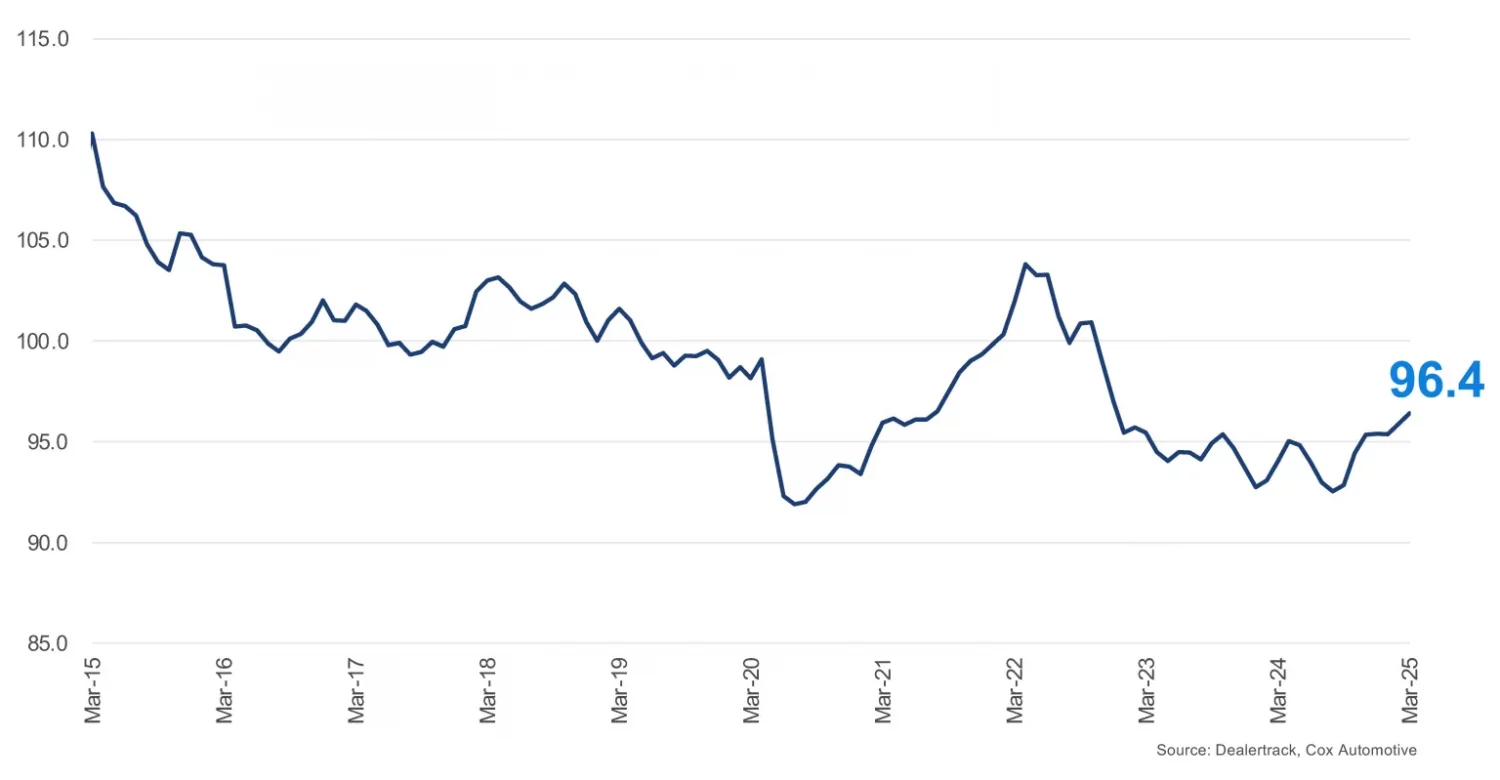
Several key factors drove the increase in auto credit access:
Approval rates
In March, approval rates for auto loans grew by 150 basis points (BPs). This growth indicates that more consumers successfully secured financing, an indicator of a more favorable lending environment. It also reveals confidence amongst lenders in the economy and consumers’ ability to repay their debt.
Subprime loans share
The subprime share of loans, a type of financing awarded to borrowers with lower credit scores, increased by 220 BPs. The significant increase reflects lenders’ willingness to take on more risk by extending credit to riskier borrowers.
Yield spreads
The yield spread increased by 50 BPs. In February, interest rates were 11.34%, and in March, they grew to 11.79%. The increase indicates that while lenders are willing to take on more risk by extending credit to higher-risk borrowers, they’re accommodating the risk by charging higher interest rates.
Loan term length
The percentage of loans extending beyond 72 months decreased by 50 BPs in March. This is a dramatic shift compared to last month, in which loan term lengths grew by 50 BPs. This indicates that consumers are looking to save on interest over the life of their loans and are managing their monthly expenses more conservatively.
Negative equity
The share of borrowers with negative equity increased by 40 BPs in March. These borrowers owe more on their loans than their vehicles are worth, and the increase in this figure indicates financial stress among consumers. It can lead to higher loan default rates.
Down payments
In March, the average down payment required to secure an auto loan increased by 40 BPs compared to February. The increase in down payment requirements indicates that lenders seek to mitigate lending risk by asking for more money upfront.
Sales channels
Overall, credit access improved across all sales channels in March except for new-vehicle loans, which experienced some tightening. Loans for used-vehicles from franchised dealers loosened the most.
Lender types
Once again, lender performance was mixed in March. Captive lenders tied to automakers displayed the most tightening in auto credit access. On the other hand, auto-focused finance companies loosened the most.
Overall, March’s auto credit environment revealed clear improvements compared to a year ago. While the higher approval rates and increase in subprime lending will grant more consumers access to financing they may need, the increase in yield spreads and larger down payment requirements highlight lenders’ taking a more cautious approach to lending during the current economic conditions.