
In February 2025, the Dealertrack Credit Availability Index revealed an overall improvement in auto credit access, with gains across most lending channels. While new-vehicle loans saw slight tightening, used-vehicle financing—particularly from franchised dealers—experienced the most significant loosening.
The All-Loans Index increased from 95.4 in January to 95.9, marking a 3.0% year-over-year rise and reaching its highest level since December 2022.
All Auto Loans Index | Source: Dealertrack, Cox Automotive 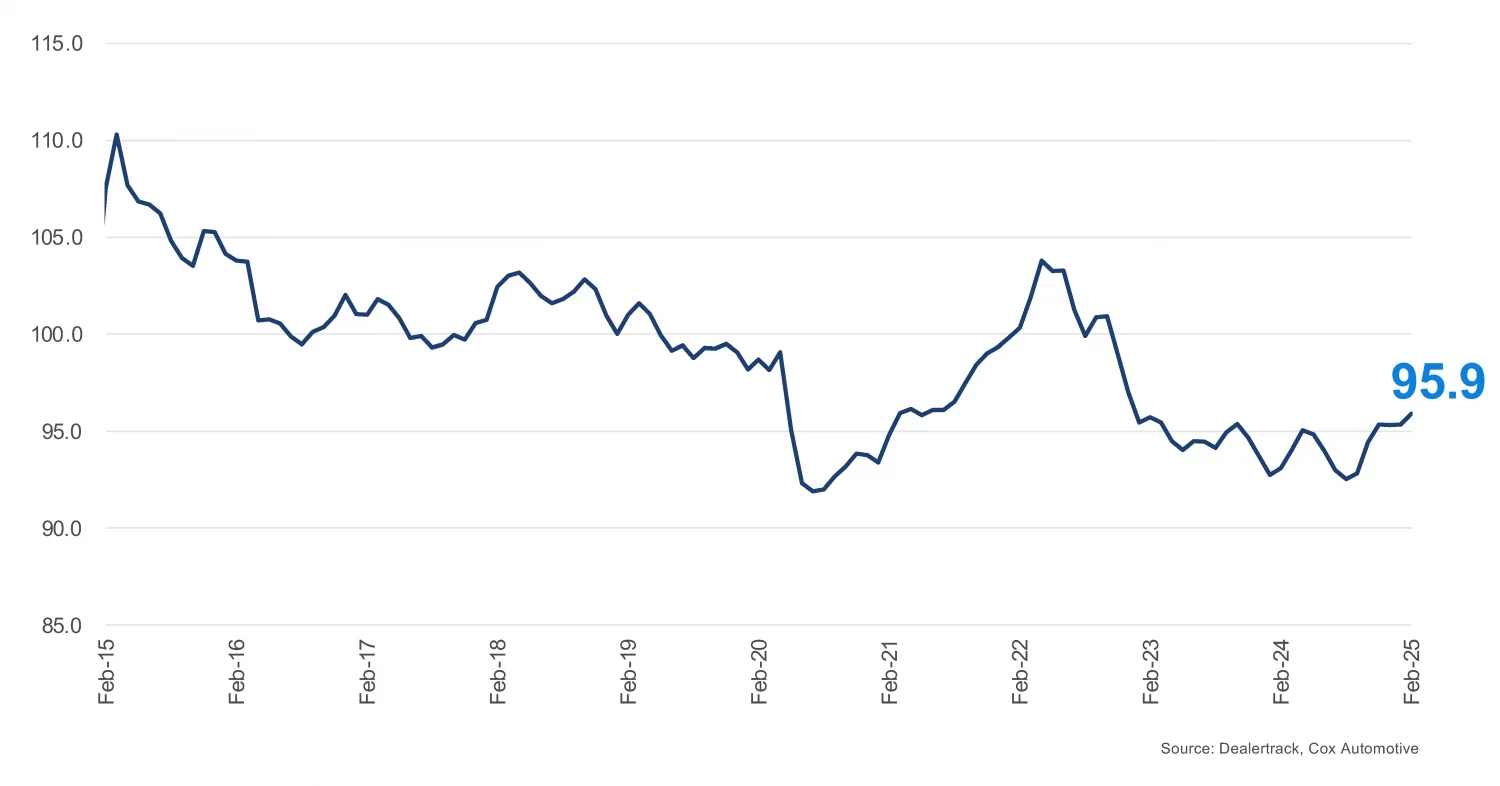
Several key factors contributed to this shift:
Approval Rates
Auto loan approval rates increased by 10 basis points (BPs) in February, signaling a slightly more favorable lending environment. This growth reflects lenders’ confidence in both the economic outlook and borrowers’ ability to repay loans.
Subprime Loan Share
The share of subprime loans—issued to borrowers with lower credit scores—rose significantly by 150 BPs. This indicates a greater willingness among lenders to extend credit to riskier consumers. While this expansion provides financing opportunities for more buyers, it also increases the overall risk within lenders’ portfolios.
Yield Spreads
The 5-year U.S. Treasury yield declined by 14 BPs in February, leading to a 50 BP expansion in yield spreads. This shift made auto loans more attractive relative to bond yields, with the average loan rate dropping by 36 BPs. The combination of wider spreads and lower rates suggests that lenders are balancing risk exposure while remaining competitive.
Loan Term Length
The percentage of loans extending beyond 72 months increased by 50 BPs, as more consumers opted for longer financing terms. While extended loan terms reduce monthly payment burdens, they also result in higher interest costs over the life of the loan. This trend reflects consumers’ preference for immediate affordability, even at the expense of paying more in the long run.
Negative Equity
The share of borrowers with negative equity—owing more on their vehicles than they are worth—increased by 110 BPs. This rise suggests that more consumers are trading in vehicles with outstanding balances, potentially leading to higher default risks.
Down Payments
Average down payment percentages increased by 10 BPs from January. While higher down payments reduce lender risk and overall loan balances, they can create affordability challenges for buyers, particularly those without substantial savings.
Sales Channels
Credit availability improved across all sales channels except new-vehicle loans, which tightened slightly. Used-vehicle loans from franchised dealers saw the most significant loosening, indicating stronger credit access in the pre-owned segment.
Lender Types
Lender performance was mixed in February. Captive lenders—those tied to automakers—showed the most tightening, while auto-focused finance companies saw the most loosening. Among lender types, credit unions recorded the greatest loosening year-over-year, while independent auto finance companies saw the least change.
February’s auto credit environment showed clear signs of improvement, with higher approval rates, increased subprime lending, and expanded loan terms contributing to broader access. However, rising negative equity and stricter down payment requirements highlight ongoing financial pressures.