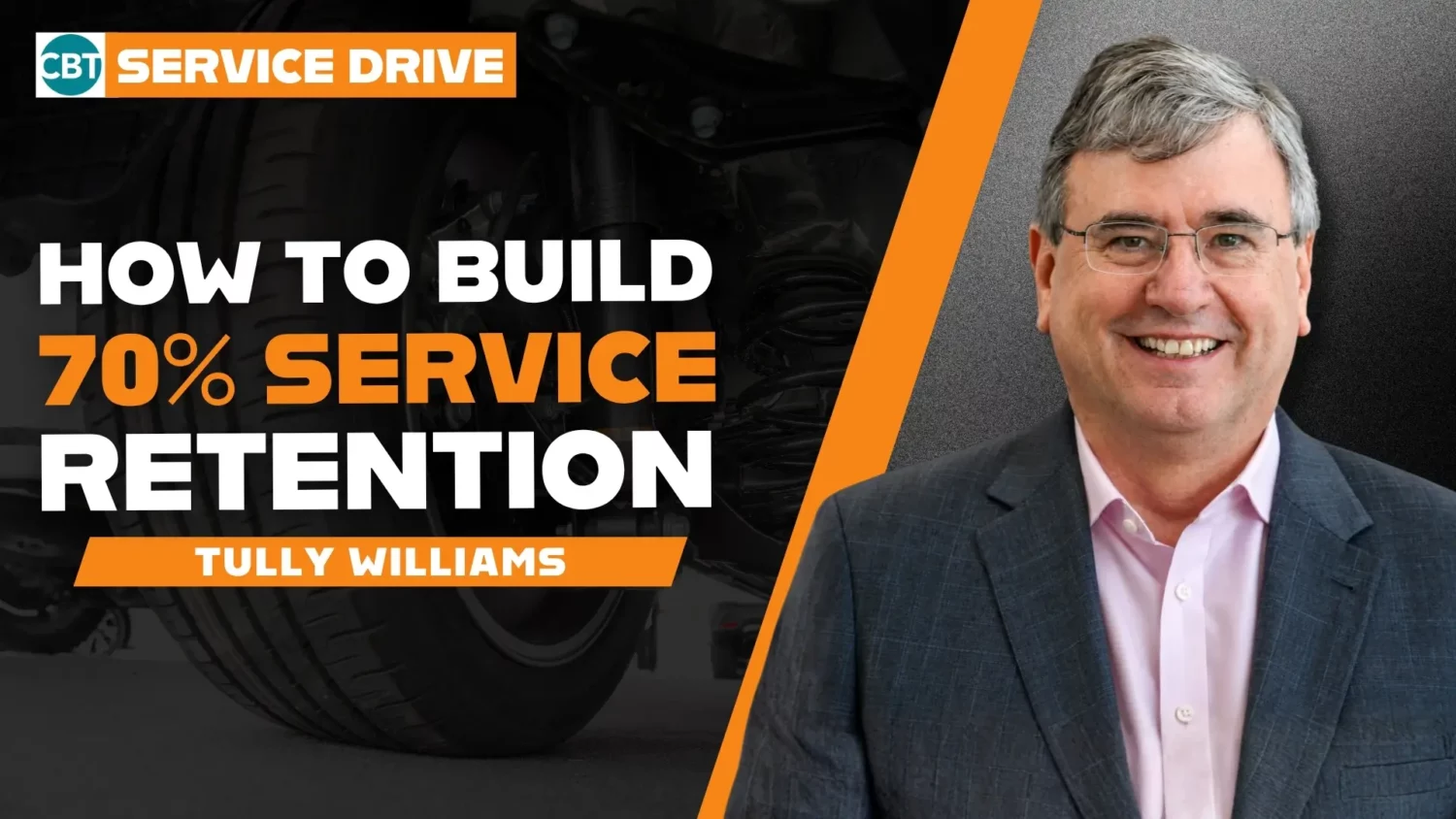
The Niello Company retains more than 70% of its service customers returning. On today’s episode of Service Drive, Niello’s Fixed Ops Director, Tully Williams, details how culture, process, and pricing strategies drive repeat and referral business and how other dealerships can achieve high retention rates, too.
Service retention starts with a team-wide focus on repeat and referral business. It isn’t just the responsibility of service advisors or managers—it requires alignment from the porter to the detailer, from the technician to every member of the service department. Each team member is trained to consider the customer experience and the long-term value of loyalty.
Williams calculates retention based on actual visits over 14 months, rather than relying on manufacturer data. His approach accounts for changes in manufacturer maintenance intervals, such as Jaguar Land Rover moving to 18 months. The group tracks customer loyalty closely and ties operational decisions directly to retention outcomes.
"If we have everybody in our service department thinking about retention, thinking about repeat and referral, then that drives customers to stay in our family and buy their next car and their friends buy their next car from us."
Pricing and selling strategies are key drivers. The dealership aggressively sells high-value items like brakes, batteries, tires, and maintenance services, aiming for at least a 70% conversion rate on these items during the same visit. Promotions like buy three, get one free on tires help keep customers in-house rather than seeking outside vendors. Williams stresses that this approach may occasionally result in selling at a loss, but it protects long-term loyalty and repeat business.
Customer satisfaction is monitored rigorously through CSI scores. Williams considers CSI a critical feedback tool, ensuring issues such as communication lapses are identified and corrected quickly. Transparency is also a priority, with inspections supported by photos and video to show customers what repairs are necessary.
Culture and mindset shifts underpin every operational change. Williams reoriented the dealership’s focus from gross hours to capacity and customer experience, teaching all employees to sell what they would recommend for their own family. This approach requires buy-in from leadership, including the dealer principal and general manager, ensuring alignment from top to bottom. Over time, the company increased its service retention from roughly 50% to over 70%, demonstrating that strategic focus, pricing discipline, and a culture of accountability can produce measurable results.