On the Dash:
- The Detroit Three have cut more than 20,000 salaried jobs from recent employment peaks.
- AI is now accelerating workforce reductions that began years before the technology emerged.
- Experts warn that 10% to 15% of all U.S. jobs could be eliminated by AI.
Artificial intelligence is accelerating a years-long decline in white-collar jobs across America’s biggest automakers. It’s a trend that is expected to continue as AI advancements allow companies to automate more roles. Just last week, General Motors announced that it cut 500 to 600 salaried IT workers in Texas and Michigan as it reshapes its workforce around AI.
GM is not alone. The Detroit Three have shed more than 20,000 U.S. salaried jobs, or about 19% of their combined workforces, according to CNBC, which cited public filings and employment data from the companies. White-collar headcount across General Motors, Ford Motor and Stellantis peaked at roughly 102,000 jobs in 2022. By the end of last year, that number fell to 88,700.
Where the Detroit Three are making cuts
GM led the cuts. The automaker expanded its U.S. white-collar workforce from 48,000 workers in 2020 to 58,000 in 2022, then reversed course. It has since cut roughly 11,000 salaried positions through a series of reductions, including software and services layoffs, global restructuring, CAD engineer cuts and the wind-down of its Cruise robotaxi business.
Ford and Stellantis cut more gradually. Ford trimmed roughly 5,300 salaried positions from its 2020 peak through a series of EV-driven restructuring moves, landing at about 30,700 white-collar employees last year. Stellantis dropped from 15,000 U.S. salaried workers in 2020 to roughly 11,000, cutting salaried tech and engineering roles and offering multiple rounds of employee buyouts along the way.
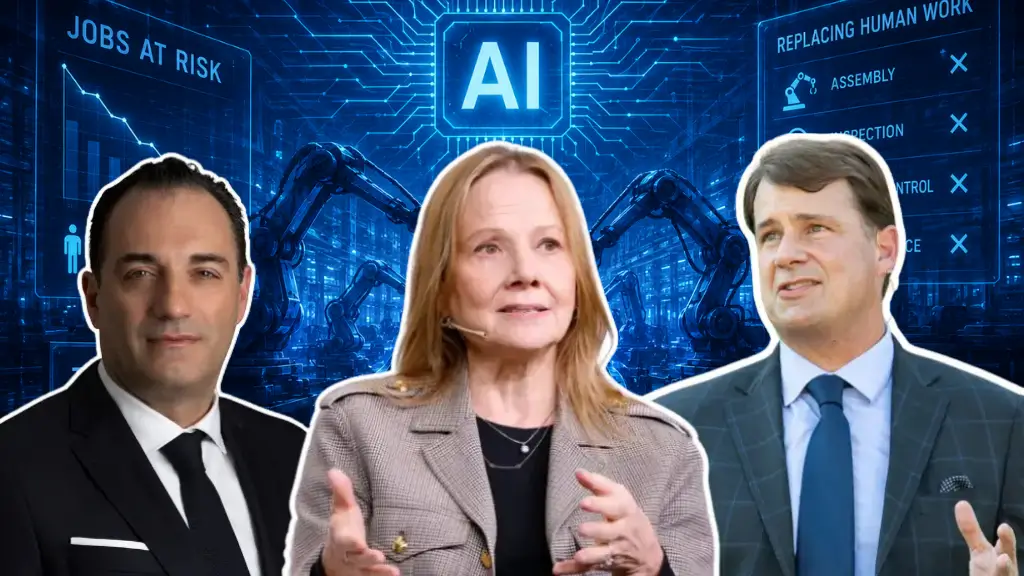
AI, not the economy, is driving this next wave of job cuts. Ford CEO Jim Farley spoke openly about it at the Aspen Ideas Festival in July.
“Artificial intelligence is going to replace literally half of all white-collar workers in the U.S.,” Farley said. “AI will leave a lot of white-collar people behind.”
Who’s hiring
The trend is not uniform across the industry. Toyota grew its U.S. white-collar workforce by roughly 31% from 2020 through 2025, reaching about 47,500 employees, according to CNBC. The job growth comes from Toyota’s ambitious hybrid strategy and a commitment to invest up to $10 billion in U.S. operations over the next five years, most recently announcing a $2 billion Texas factory expansion that would add 2,000 jobs.
The Detroit Three are still hiring in some areas, including AI. Combined, the three automakers currently list more than 2,000 open U.S. positions. Of those, nearly 400 involve AI, with GM accounting for more than 250. Stellantis CEO Antonio Filosa has said the company plans to add more than 2,000 white-collar jobs in North America as part of its broader turnaround effort.
AI’s impact on jobs across industries
AI’s impact on jobs extends well beyond the automotive industry. A recent Boston Consulting Group report projects that 10% to 15% of U.S. jobs could be eliminated as AI grows, with 50% to 55% of all U.S. jobs reshaped within the next two to three years.
The question is no longer whether AI will replace some jobs. That is already happening. What remains to be seen is the full extent of the AI revolution in the automotive industry and beyond, and whether the workforce and overall economy can withstand what comes next.