
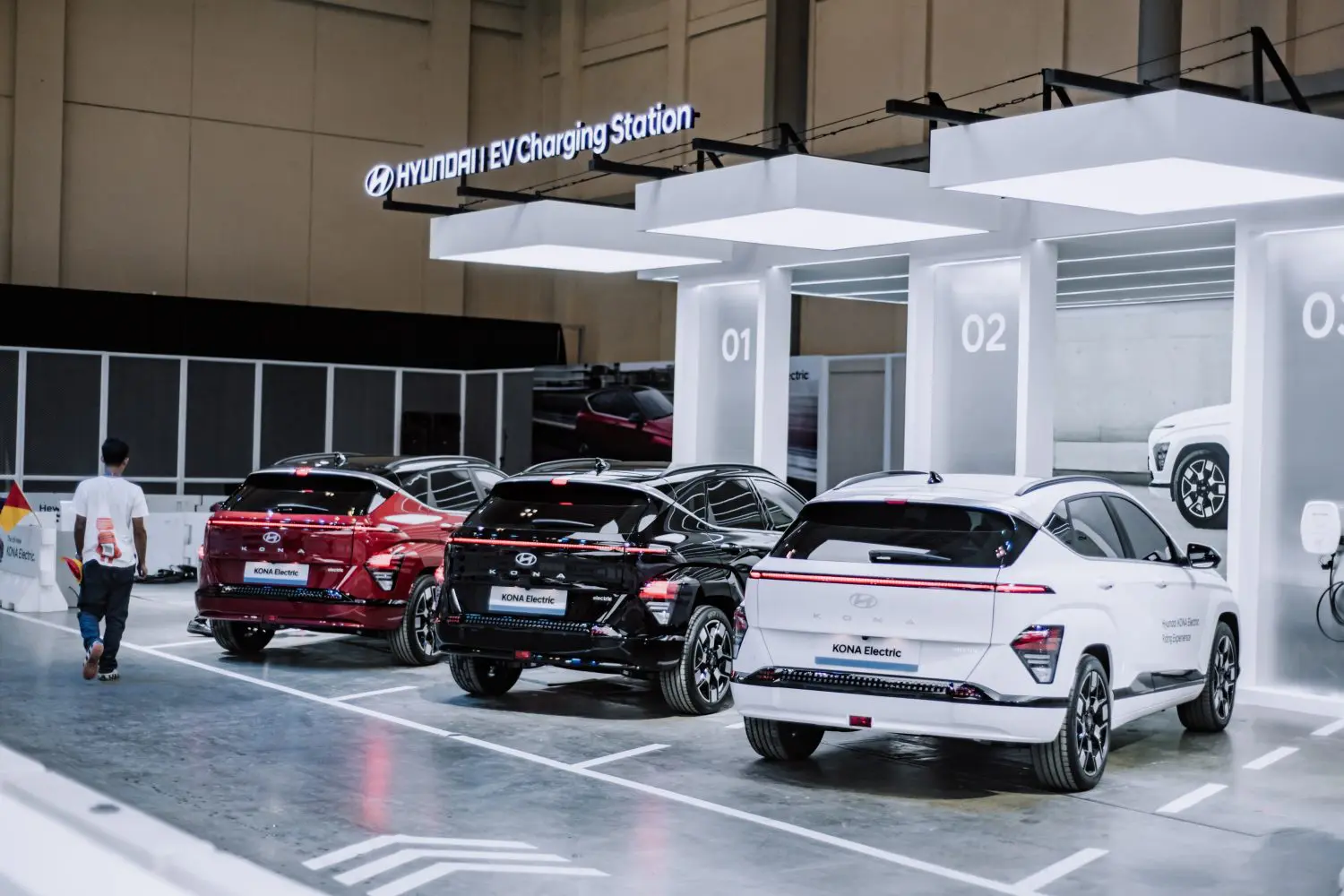
Hyundai has announced a significant shift in its strategy, focusing more heavily on hybrid technology despite a noticeable downturn in electric vehicle (EV) demand. The South Korean automaker plans to introduce two new gasoline-electric drivetrains, doubling its global hybrid offerings, and extending this technology to its luxury Genesis brand.
Hyundai now anticipates that global hybrid sales will more than triple to 1.33 million vehicles by 2028, up from 510,000 expected this year. This new target is about 40% higher than the company’s previous hybrid sales projections. The decision comes as a hedge against the cooling interest in fully electric vehicles, with North America expected to see the largest surge in hybrid sales, rising to 690,000 units by 2028.
As part of this strategy, Hyundai is developing a new extended-range EV system that uses an internal combustion engine to recharge the battery and powers the wheels solely with an electric motor. The company expects to launch this EREV technology in North America and China by the end of 2026, with widespread adoption the following year. Hyundai projects annual EREV sales to reach 80,000 units in North America and 30,000 in China.
In addition to the EREV system, Hyundai will roll out a second-generation hybrid system across its entire lineup starting in January 2025. This upgrade will include performance and fuel efficiency improvements and will be implemented in both Hyundai and Genesis models, including luxury vehicles. The number of hybrid nameplates Hyundai offers will increase from seven to 14.
Despite this renewed focus on hybrids, Hyundai reiterated its long-term commitment to electric vehicles. The automaker still plans to launch 21 fully electric models by 2030, including six for the Genesis brand. However, the company will delay the launch of some EV models to enhance their value and competitiveness, relying on hybrids as a bridge technology until EV demand stabilizes.
Hyundai’s hybrid strategy aligns with moves by global automakers like Ford and Nissan, who are also revisiting their hybrid investments due to slower-than-expected consumer uptake of EVs. Toyota and Honda, pioneers in hybrid technology, have seen strong sales and profitability from their extensive gasoline-electric lineups.
Hyundai’s CEO, Jaehoon Chang, highlighted this strategic pivot during the company’s annual CEO Investor Day presentation, emphasizing the need to adapt to shifting market dynamics. Chang noted that while the shift to EVs is slowing down, the demand for hybrids is on the rise, providing Hyundai with an opportunity to better prepare for the EV future.
In the broader context, Hyundai announced plans to invest $40.99 billion in research and development and $38.81 billion in capital expenditures over the next decade. This includes advancements in battery technologies, software-defined vehicles, hydrogen energy, and commercial vehicles.
Hyundai’s hybrid push is part of a broader rethinking of the global powertrain mix. By 2030, the company expects electrified vehicles to account for 55% of its global sales, up from 20% today, with internal combustion engines making up the remaining 45%. Hyundai forecasts its EV sales to reach 2 million units by the decade’s end, a significant increase from the 268,785 EVs sold globally in 2023.