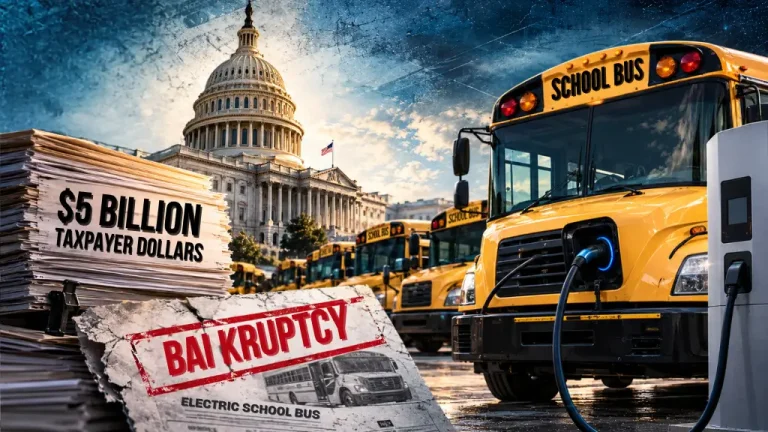
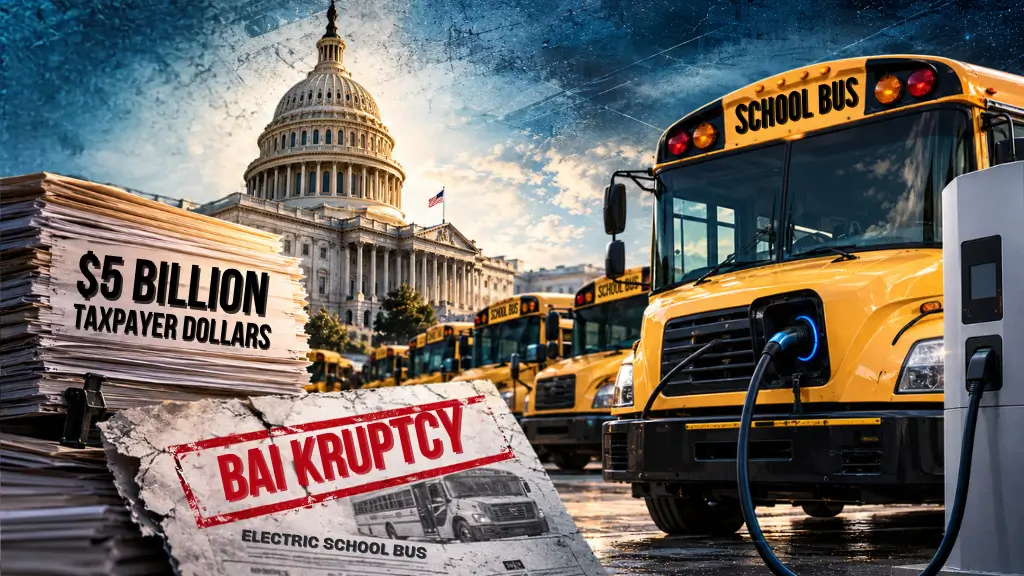
Five billion taxpayer dollars. Thousands of electric school buses ordered. Hundreds delayed, some never delivered, and a major manufacturer in bankruptcy proceedings. This is what happens when Washington puts a political agenda ahead of accountability, and taxpayers are left holding the bill.
The Biden administration pushed electric buses as the future of school transportation, but the federal government’s own numbers raise a damning question: How did Washington commit billions of dollars before ensuring the buses would actually arrive?
According to EPA figures reported in September 2026, fewer than 40% of electric buses in the reported orders had been delivered. Of approximately 2,600 buses in that group, around 1,100 had arrived, 854 were delayed and 140 would never be delivered. The failures were expected to affect approximately 46,000 children.
Those numbers demand answers. Why were so many orders delayed, and were manufacturers properly vetted before billions in public money were committed?
The real cost of going electric
The Government Accountability Office reported that diesel school buses typically cost about $98,000 to $154,000, while electric models ranged from $300,000 to $440,000. That is a substantial upfront premium, before charging stations, electrical upgrades and other infrastructure expenses.
Electric buses can reduce fuel and maintenance costs in some circumstances, but the savings depend on mileage, electricity prices, climate and vehicle reliability. When a bus is unavailable, school districts still have to get children to school.
The EPA reported an average overall program cost above $1 million per bus, a figure that includes broader program costs rather than simply the vehicle’s sticker price. Taxpayers deserve a clear accounting of where that money went and what districts actually received.
When the manufacturer fails
Canadian electric-vehicle maker Lion Electric entered creditor-protection proceedings in December 2024. The EPA reported that the company received approximately $160 million through the program, raising questions about deliveries, parts, repairs and warranty support.
A school bus is not a disposable technology demonstration. It must operate reliably, and districts need access to parts and service for years. Government agencies should assess a manufacturer’s financial stability and production capacity before awarding massive contracts.
Meanwhile, transit agencies are confronting their own challenges. Columbus’s Central Ohio Transit Authority paused electric-bus purchases in April 2026, citing recalls and range concerns, while planning to add compressed-natural-gas buses. A New York state comptroller’s audit reported that 75 electric buses at five Metropolitan Transportation Authority depots were available for service less than 60% of the anticipated time.
These examples do not mean every electric bus is a failure. They demonstrate why real-world performance must matter more than political promises.
Who is accountable?
The Government Accountability Office reported in June 2025 that the EPA had not systematically collected complete performance information from program recipients. Without reliable data, how can officials properly assess results or identify recurring problems?
The answer is not to ban electric buses or automatically favor diesel. It is to stop treating one technology as the predetermined winner. School districts need choices based on route length, weather, infrastructure, cost and reliability.
The EPA should disclose what was ordered, what arrived, what is operating and what taxpayers spent. Contracts must include enforceable delivery requirements, and manufacturers must demonstrate they can support the vehicles they sell.
Taxpayers should not be expected to finance a political vision without proof that it delivers. If billions were committed to improve school transportation, Americans deserve to know what went wrong, who was responsible and what will prevent the next expensive government experiment from repeating the same mistakes.
Check out my full commentary on this story: https://youtu.be/i6qH239S2NE
Looking for more automotive news? https://www.CarCoachReports.com
Listen and subscribe to The Drive with Lauren and Karl – https://www.youtube.com/@thedrivecarshow