On the Dash:
- Fathom’s bidirectional charging skips the wall-mounted inverter and projects more than 10 kW.
- The automaker expects the Home Power Station to cost about half as much as its first-generation charger.
- Ford formed a five-utility working group to ease grid connection before the 2027 launch.
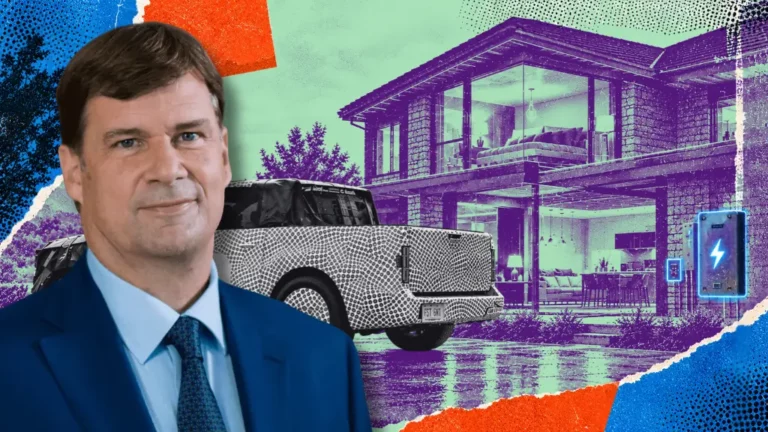
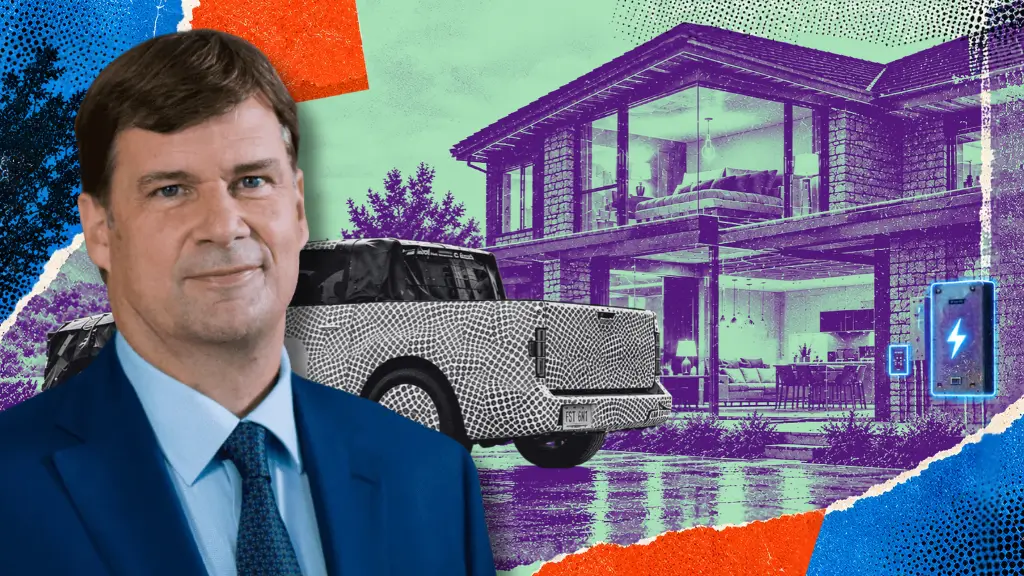
Ford says its 2027 Fathom electric truck is designed to simplify bidirectional charging by building the inverter into the vehicle. According to the automaker, the truck is projected to supply more than 10 kW of AC power to a home without a separate wall-mounted inverter.
The Fathom is positioned to be the first EV from a U.S. automaker with an MSRP below $30,000 to offer that capability. The automaker also expects the home hardware that pairs with the truck to cost much less than its first-generation equipment, and it formed a utility working group in July 2026 to make grid connection easier.
Ford builds the inverter into the Fathom’s e-box
Ford said cost has been the biggest obstacle to bidirectional power. While EV batteries store power as direct current, homes use alternating current, and converting between the two has traditionally required costly external equipment such as an inverter. That expense has kept the technology in premium vehicles and with early adopters.
Ford placed the inverter in the Fathom’s e-box, one of the vehicle’s five main modules. The design uses fewer multifunctional parts, which makes the system simpler and more affordable, Ford said. After acquiring the startup Auto Motive Power in 2023, the team started from a clean sheet on the Universal EV Platform’s bidirectional hardware and software.
The system is designed to meet applicable UL 1741 requirements and comply with IEEE 1547 interconnection standards. It also uses the SAE J3068 communications standard, developed at the University of Delaware, which helps reduce the cost of the Fathom’s charger.
Fathom owners get two ways to use home power
Home power management lets customers charge the battery when electricity costs less and use that energy to power the home when electricity costs more, which may help lower electric bills. It requires only Ford’s Home Power Station, which Ford expects to cost about half as much as its first-generation bidirectional charger.
Home backup power sends energy from the truck to the house during an outage. It requires the Home Power Station and the Ford Home Backup Power Panel, which Ford expects to cost at least 60% less than its first-generation home backup hardware.
Ford also wants utilities and regulators to make it easier for customers to connect bidirectional EVs to the grid and join programs such as virtual power plants. More than 3,000 utilities across the U.S. and Canada have largely unique interconnection processes, Ford said. Most were written for rooftop solar and stationary battery storage, which are fixed assets, while bidirectional EVs are vehicles first.
Dealers should prepare for utility questions before launch
Ford’s working group includes American Electric Power, BC Hydro, Consumers Energy, Exelon and Pacific Gas and Electric Co. The group aligned on three principles. Interconnection should not be required for customers who only charge their EV or use it for isolated backup power, and it should be required only when a customer operates the EV in parallel with the grid. Procedures should be updated to reflect the latest AC and DC bidirectional charging standards. Utilities, regulators and automakers should work together on the changes.
However, Ford hasn’t announced final prices for the home hardware, and the Fathom opened preorder invites ahead of its 2027 arrival. Dealers can use the time before launch to learn the two home power uses and the working group’s principles so sales and service teams can answer customer questions on utility approval.