
Vehicle titling and registration has long been one of the most overlooked aspects of automotive retail — until something goes wrong, that is. Missing titles, delayed funding, expired temp tags and growing fraud risk can quickly push this back-office function into the spotlight.
In a recent CBT News: Driving Solutions interview, Vitu executives outlined why the automotive industry is at a turning point in the rise of digital title and registration. With accelerating state adoption, expanding digital infrastructure and growing cross-state complexity, title and reg is core to dealership profitability, compliance and customer experience — and Vitu is leading the charge toward a truly digital title and reg ecosystem.
Key takeaways
- Digital titles reduce funding delays, improve profitability and reduce fraud risk
- Vitu’s 2025 acquisitions expand nationwide digital title and registration infrastructure
- States and jurisdictions are rapidly adopting digital title and electronic lien programs
- Dealers, lenders, auctions, remarketers, government and consumers all benefit from faster, more transparent and secure title transactions
How Vitu’s 2025 acquisitions expand digital titling nationwide
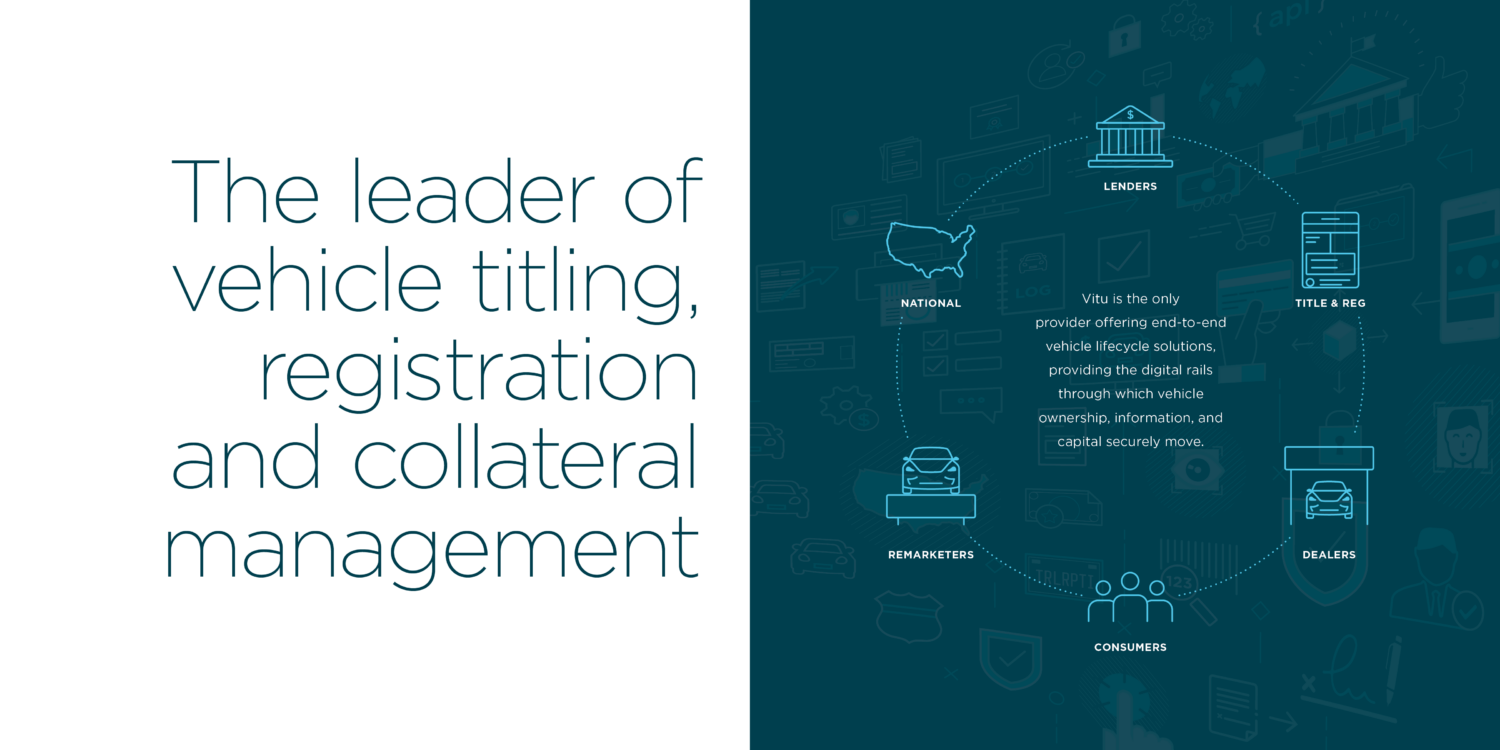
In 2025, Vitu significantly expanded its footprint through key acquisitions: Dealertrack’s Registration & Titling and Collateral Management businesses from Cox Automotive and DDI Technology from IAA Holdings, LLC. These moves added tools to Vitu’s flagship products, but more importantly they moved the needle closer to true national connectivity across dealers, lenders, remarketers and government agencies.
These acquisitions allow Vitu to build the digital “rails” of the automotive industry — secure, standardized connection points that allow title and registration transactions to move digitally between stakeholders and state systems.
From an operational standpoint, this infrastructure reduces processing time, which improves profitability. From a risk perspective, it replaces paper workflows with traceable, auditable digital transactions, dramatically reducing opportunities for fraud.
The solutions driving digital title and reg adoption across the industry
Digital adoption is not spread evenly across the country. While many states operate real-time electronic title and reg systems, some are still largely paper-based. Vitu’s Chief Strategy Officer, John Bruggeman, expects this to rapidly change. “In the next three years, we estimate 15-20 states may have new ERT programs, and as many states may have new ELT programs geared toward banks,” Bruggeman said on Driving Solutions.
Vitu’s dealer-centric solutions, including Electronic Registration and Titling (ERT), Accelerated Title (AT) and National Title Exchange (NTX) along with its lender partners on the Collateral Management Solutions (CMS) platform are designed to operate throughout and within this mixed environment. Partners can complete transactions digitally where available and maintain full compliance in states that aren’t fully digitized.
The result is faster funding, fewer title exceptions and improved visibility into the status of transactions — all the while reducing exposure to fraud and costly documentation errors.
NTX has driven increased adoption by enabling dealerships to acquire a title in their name, typically in three business days or less, taking weeks off a normally 21+ day process and saving dealerships an average of $241 per vehicle based on national averages. “[NTX] has accelerated car sales and changed business models for vehicle acquisition,” David Spencer, Vice President of National Sales for Vitu said on Driving Solutions.
How digital titling reduces fraud and speeds transactions
Put simply, digital vehicle titles replace paper documents with secure electronic records held by state jurisdictions and accessed only by authorized parties.
“Our NTX platform is extremely secure and includes robust ownership verification processes,” says Rob Cohen, CAO and General Counsel for Vitu. “We have processed over 1.5 million digital titles and have received no legitimate legal claims. That should be enough to quell even the most skittish industry lawyers. ”
Ownership transfers, lien releases, duplicate title requests and much more happen completely digitally (often the same day) rather than through mail and paper-based workflows that introduce delays, loss and risk. Every transaction creates a verifiable audit trail, significantly reducing the potential for fraudulent duplicate titles, forged documents or unauthorized changes.
Why states are accelerating digital title and reg adoption
Post-pandemic backlogs exposed the limitations of paper-reliant systems at the state level. As a result, jurisdictions across the country are fast-tracking electronic registration, titling and lien programs to meet increased consumer demand and speed commerce in their states.
With many states already on board, and many more on the way toward full digital integration, the digital ecosystem for vehicle transactions is maturing. For dealers, this means faster transactions, reduced fraud risk and improved cash flow. For lenders and auctions, this means fewer title disputes and lower risk. For consumers, it means fewer delays and a smoother car-buying and ownership experience.
“It’s fundamentally changing the car business at the lender level, at the dealer level, at the remarketing level, at the insurance level and at the state level,” Vitu’s Dave Spencer said. “Digital titling is reducing fraud and increasing speed — and with speed comes profitability.”
Digital titling: benefits beyond car dealerships
In particular, digital titling has transformed remarketing, repossessions, insurance salvage and cross-state vehicle transfers.
Instead of shipping physical titles between dealers, auctions, lenders and DMVs, digital titles allow ownership to smoothly transfer electronically until final sale. This eliminates title arbitration, accelerates resale timelines and gives authorized parties full, real-time control over ownership records.
The operational savings are significant, but so is the reduction in fraud exposure as more and more titles are removed from unsecured physical circulation.
The future of digital titling in 2026 and beyond
With its digital infrastructure in place, Vitu sees 2026 as a year of execution and expansion. Vitu plans to continue rolling out digital title implementations, strengthening connections and integration between industry stakeholders and breaking down long-standing silos in the title and reg industry.
The long-term vision is a fully interconnected ecosystem, where titles move instantly, securely and transparently with and across state lines, enabling faster, more secure vehicle transactions across the industry.
In the short term, Dave Spencer says, “This is a watershed moment for us in changing the industry… This will probably be the busiest year that we have. It’s really about executing that vision.”