TSLA388.800-3.15%
GM78.0400.26%
F12.435-0.275%
RIVN16.8900.48%
CYD42.3050.015%
HMC24.3700.11%
TM212.880-0.3%
CVNA362.400-8.68%
PAG156.0400.91%
LAD274.9550.475%
AN198.3502.54%
GPI335.5252.795%
ABG204.0401.5%
SAH67.3101.42%
TSLA388.800-3.15%
GM78.0400.26%
F12.435-0.275%
RIVN16.8900.48%
CYD42.3050.015%
HMC24.3700.11%
TM212.880-0.3%
CVNA362.400-8.68%
PAG156.0400.91%
LAD274.9550.475%
AN198.3502.54%
GPI335.5252.795%
ABG204.0401.5%
SAH67.3101.42%
TSLA388.800-3.15%
GM78.0400.26%
F12.435-0.275%
RIVN16.8900.48%
CYD42.3050.015%
HMC24.3700.11%
TM212.880-0.3%
CVNA362.400-8.68%
PAG156.0400.91%
LAD274.9550.475%
AN198.3502.54%
GPI335.5252.795%
ABG204.0401.5%
SAH67.3101.42%

Honda to launch self-driving taxis in Japan by 2026

Honda's assistance plan would cut expenses while lowering the entrance hurdle.
Honda to launch self-driving taxis in Japan by 2026

Image Source | The Robot Report | Honda

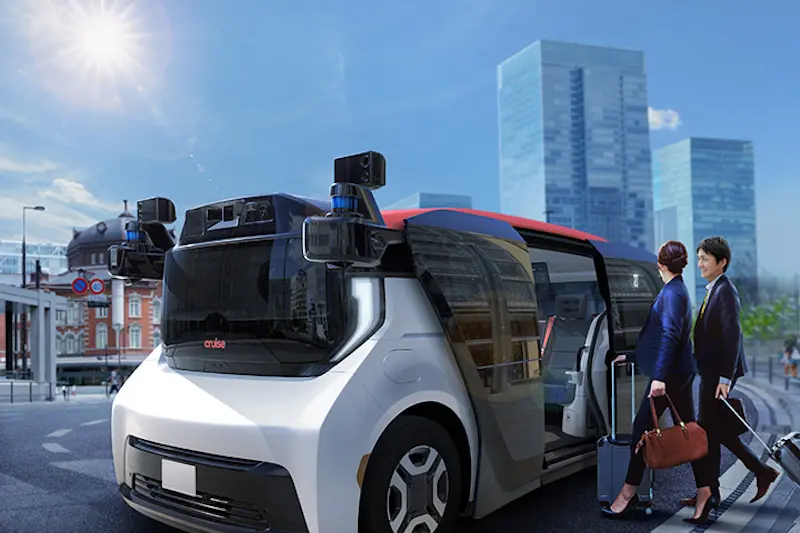
Honda Motor is collaborating with taxi companies to deploy self-driving taxis in Japan.

According to a report by Nikkei Asia, the automaker will provide technology and vehicles to current operators and plans to deploy autonomous taxis on Tokyo highways in 2026. Currently, Honda is working with Kokusai Motorcars and Teito Motor Transportation to pressure the government to alter regulations.

Unlike its counterparts in the U.S. and China, Honda’s approach to autonomous vehicles is distinct. Rather than taking on the full responsibility of vehicle operation, Honda is partnering with existing taxi operators. This unique strategy allows the operators to continue their services while Honda focuses on providing a comprehensive range of services, from ride-hailing applications to advanced security features like remote monitoring.

The project’s initial phase involves deploying around 500 driverless cars to assess feasibility. Teito and Kokusai will handle vehicle maintenance and dispatch centers and hope for increased profits and reduced driver shortages. Moreover, Japan’s introduction of Level 4 self-driving autos in 2023 led to the suspension of its first transport service in Eiheiji after a minor collision with a bicycle.

Thanks to their Level 4 self-driving capabilities, the taxis will be able to operate entirely autonomously under certain circumstances. However, in Japan, regulators mandate that a human should supervise the operation of these vehicles.

Honda’s assistance plan would cut expenses while lowering the entrance hurdle. Taxi operators who use their vehicles through remote monitoring would struggle to overcome the challenges of complicated decision-making and maintain a high safety standard.

While Honda’s collaboration with taxi operators is promising, it’s not without its challenges. Japan’s regulations currently prohibit labor outsourcing for driving-related decisions and require designated safety staff to undertake remote monitoring. However, potential solutions are being explored, including Honda obtaining a taxi business permit and revising relevant regulations, with the Ministry of Land, Infrastructure, Transport and Tourism actively involved in the process.

Read More
More from Articles
TrueCar achieves profitability and calls for a new standard in automotive pricing

TrueCar achieves profitability and calls for a new standard in automotive pricing

- April 16, 2026
SANTA MONICA, Calif., April 15, 2026 — TrueCar, one of the most recognized and trusted automotive brands, today announced it has achieved profitability, marking a key milestone in its transformation...
Stellantis, Microsoft deepen alliance to supercharge AI and cybersecurity capabilities 

Stellantis, Microsoft deepen alliance to supercharge AI and cybersecurity capabilities 

- April 16, 2026
On the Dash: Stellantis’ partnership signals a faster rollout of connected-vehicle features and software-driven services across brands AI integration is expected to improve development speed, validation, and vehicle performance throughout...
Pentagon taps automakers to boost weapons production capacity

Pentagon taps automakers to boost weapons production capacity

- April 16, 2026
On the Dash: Potential defense contracts could shift production priorities and impact vehicle supply. Increased government demand may tighten supply chains already under pressure. Automaker diversification into defense could influence...
Ford creates unified product organization to accelerate EV, software rollout and margin goals

Ford creates unified product organization to accelerate EV, software rollout

- April 16, 2026
On the Dash: A portfolio refresh signals a consistent pipeline of updated trucks and electrified models through 2029. Expanded software and OTA capabilities will increase focus on digital services and...
CBT News
Privacy Overview

This website uses cookies so that we can provide you with the best user experience possible. Cookie information is stored in your browser and performs functions such as recognising you when you return to our website and helping our team to understand which sections of the website you find most interesting and useful.