TSLA373.720-13.79%
GM78.520-0.48%
F12.480-0.15%
RIVN16.950-0.79%
CYD41.870-0.72%
HMC24.480-0.14%
TM196.080-4.35%
CVNA403.000-13.79%
PAG160.0000.53%
LAD276.390-0.19%
AN202.970-0.41%
GPI339.780-2.08%
ABG202.010-0.44%
SAH71.2200.2%
TSLA373.720-13.79%
GM78.520-0.48%
F12.480-0.15%
RIVN16.950-0.79%
CYD41.870-0.72%
HMC24.480-0.14%
TM196.080-4.35%
CVNA403.000-13.79%
PAG160.0000.53%
LAD276.390-0.19%
AN202.970-0.41%
GPI339.780-2.08%
ABG202.010-0.44%
SAH71.2200.2%
TSLA373.720-13.79%
GM78.520-0.48%
F12.480-0.15%
RIVN16.950-0.79%
CYD41.870-0.72%
HMC24.480-0.14%
TM196.080-4.35%
CVNA403.000-13.79%
PAG160.0000.53%
LAD276.390-0.19%
AN202.970-0.41%
GPI339.780-2.08%
ABG202.010-0.44%
SAH71.2200.2%

Ford doubles down on U.S. assembly as trade policies shift industry strategy

S&P Global Mobility data shows Ford outpacing rivals in domestic assembly as trade policies drive reshoring across the industry.

Ford doubles down on U.S. assembly as trade policies shift industry strategy

On the Dash:

  • Ford’s domestic production advantage may become a stronger selling point as “Made in America” messaging gains traction.
  • Policy-driven incentives could shift consumer demand toward U.S.-assembled vehicles
  • Inventory sourcing and pricing strategies may be impacted as import-heavy competitors face cost pressures.

New industry data, first reported by the Washington Reporter, shows U.S. trade and tariff policies are reshaping where automakers build vehicles, with Ford emerging as the most domestically focused major manufacturer.

According to S&P Global Mobility, Ford imported 378,123 finished vehicles into the United States in 2025, fewer than those of every other major automaker except Tesla and BMW. Toyota led all automakers with nearly 1.2 million imported vehicles, followed by General Motors (GM) with 1.17 million and Hyundai with 1.09 million. Honda, Stellantis, Volkswagen and Nissan each imported more than 400,000 vehicles.

Sign up for CBT News’ daily newsletter and get the latest industry stories delivered straight to your inbox.

Notably, Ford continues to scale its U.S. manufacturing footprint. The automaker assembled six vehicles in the United States for every one it imported last year, totaling more than 2 million U.S.-built vehicles, the highest of any carmaker. Domestic assembly also accounted for 83 percent of Ford’s U.S. sales in 2025, up from roughly 80 percent the previous year.

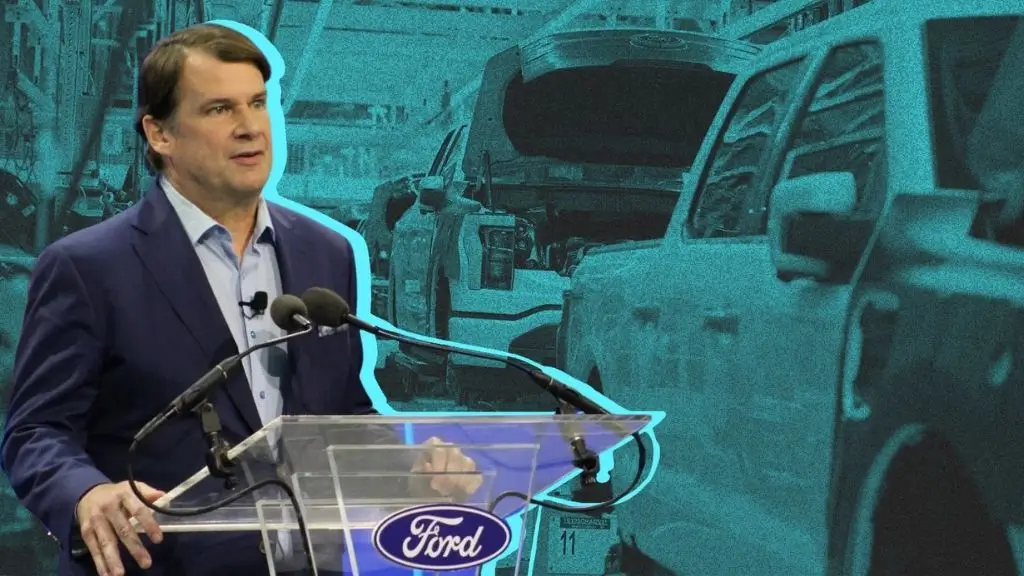
CEO Jim Farley said the company plans to continue investing in U.S. operations, including hiring across multiple states to support new gas, hybrid and electric vehicle launches, as well as battery and energy storage production. Ford has ongoing projects in Kentucky, Michigan, Ohio and Tennessee.

Lawmakers point to tariff policies, tax incentives and deregulation as key drivers behind the shift toward domestic manufacturing. The White House has positioned the auto industry’s performance as central to its broader economic and affordability strategy, highlighting lower vehicle costs, tax relief for buyers of U.S.-built vehicles and increased domestic investment.

The latest data underscores a broader industry realignment, as automakers adjust production strategies in response to evolving trade policy and rising pressure to localize manufacturing in the United States.

More from Industry News
GM indefinitely delays electric truck refresh as EV losses mount, gas demand rises

GM indefinitely delays electric truck refresh as EV losses mount, gas demand rises

- April 22, 2026
On the Dash: Slower EV rollout may extend the profitability window for gas-powered trucks and SUVs. Inventory strategies should align with continued strong demand for ICE trucks over near-term EV...
GM offers up to $40 million pay package to recruit product chief Sterling Anderson

GM offers up to $40 million pay package to recruit product chief Sterling Anderson

- April 21, 2026
On the Dash: GM’s investment signals increased focus on EV, software, and next-generation vehicle development. The leadership move points to long-term succession planning and strategic continuity. Product strategy shifts may...
Hyundai CEO says Middle East crisis will impact sales as production limits restrict reallocation

Hyundai CEO says Middle East crisis will impact sales as production limits restrict reallocation

- April 21, 2026
On the Dash: Regional conflicts can disrupt high-margin markets and impact OEM profitability even without major volume losses. Limited production flexibility highlights the importance of localized inventory strategies. North America...
Samsung SDI inks multi-year EV battery supply deal with Mercedes-Benz

Samsung SDI inks multi-year EV battery supply deal with Mercedes-Benz

- April 20, 2026
On the Dash: Expanding battery partnerships signal continued acceleration of EV product pipelines from legacy automakers. High-nickel battery chemistry points to ongoing focus on range and performance improvements in upcoming...
CBT News
Privacy Overview

This website uses cookies so that we can provide you with the best user experience possible. Cookie information is stored in your browser and performs functions such as recognising you when you return to our website and helping our team to understand which sections of the website you find most interesting and useful.