Washington has a messaging problem on self-driving cars—and it’s becoming impossible to ignore. Regulators and politicians keep telling Americans that autonomous vehicles are the future. Safer roads. Fewer accidents. Smarter mobility. That’s the sales pitch. But at the exact same time, they’re turning up the heat on the one company that’s actually put the technology into millions of vehicles: Tesla.
That’s not just a contradiction—it raises a bigger question. If this technology is so important, why is the market leader getting singled out?
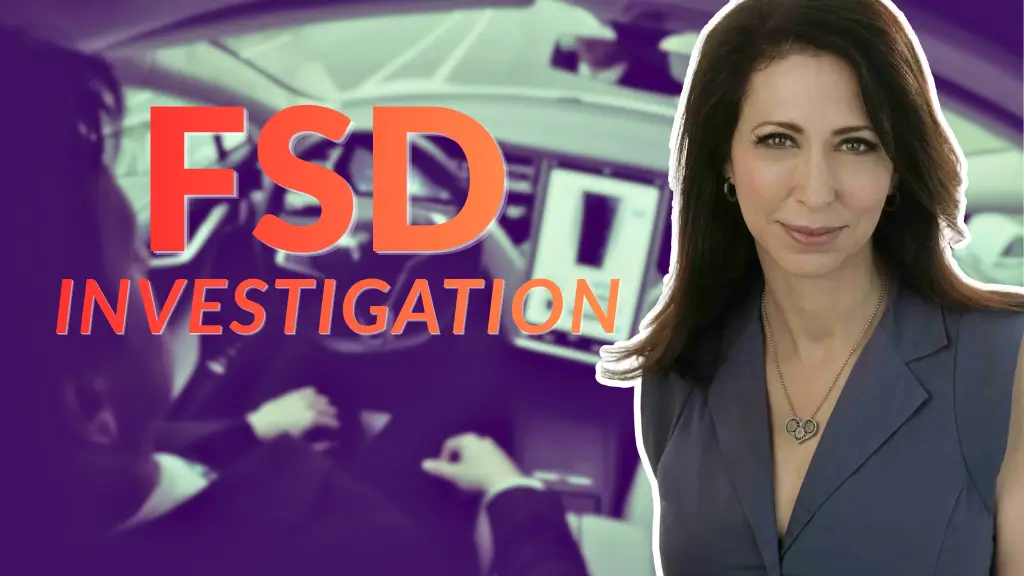
The National Highway Traffic Safety Administration has now escalated its probe into Tesla’s Full Self-Driving system, digging deeper after linking nine crashes to the technology. The focus is on low-visibility conditions—fog, glare, dust—where camera-based systems can struggle. That’s a legitimate concern. But it’s not unique to Tesla. Every system on the road today—whether it’s Super Cruise, BlueCruise, or any lane-centering tech—faces the same limitations.
Yet Tesla is the one under the microscope.
That’s where this starts to look less like safety oversight and more like selective pressure. Yes, regulators are right about one thing: these systems are not fully autonomous. Drivers still need to pay attention. But that’s been true from day one, and Tesla has said as much. So why the sudden escalation now?
At the same time Washington is warning consumers to stay engaged, it’s also pushing policies and funding that accelerate autonomous vehicle deployment. That’s the disconnect. You don’t fast-track a technology on Monday and undermine confidence in it on Tuesday.
And while U.S. regulators fixate on Tesla, real-world failures elsewhere are raising bigger red flags.
In Wuhan, China, more than 100 Robotaxis operated by Baidu’s Apollo Go reportedly froze in traffic after a system-wide glitch. Not one vehicle—hundreds. Stopped in active lanes, creating immediate disruption. No injuries, but plenty of risk. That’s what happens when there’s no human behind the wheel.
We’ve seen similar issues closer to home. In San Francisco, a late-2025 power outage knocked out Waymo’s robotaxi operations and brought traffic to a crawl. In Chongqing, an Apollo Go vehicle struggled with a construction zone—something human drivers handle every day without incident.
Here’s the part that gets glossed over: Tesla’s system still has a human in the loop. Robotaxis don’t.
When Tesla’s system makes a mistake, a driver can step in. When a fully autonomous fleet fails, it can fail everywhere—all at once. That’s not just a technical issue. That’s a scalability risk.
So again—why is Tesla the primary target? Because it’s visible. Because it’s ahead. And because it took a different path.
Tesla didn’t wait for perfect conditions or regulatory approval to start learning. It deployed its technology into the real world and improved it through over-the-air updates, collecting massive amounts of driving data in the process. That’s a lead no competitor can easily replicate.
But that approach doesn’t fit neatly into Washington’s rulebook. Regulators are used to slow, predictable development cycles. Tesla operates like a software company—iterating in real time, updating constantly, and improving through data. That forces regulators to react instead of control the timeline. And that makes them uncomfortable.
According to NHTSA findings, Tesla’s latest updates may not fully resolve visibility-related issues. That matters. It shows the technology is still evolving. But let’s be honest—every system in this space is still evolving. Edge cases, weather, lighting, unpredictable road conditions—these are unsolved problems across the entire industry.
The difference is scale. Tesla has millions of vehicles generating data. Most competitors don’t. And that brings us to the bigger issue—control. Autonomous vehicles aren’t just about convenience. They’re about data, infrastructure, and who ultimately controls mobility. Governments understand that. And they’re not just regulating for safety—they’re shaping the outcome.
That creates friction. Because innovation—especially software-driven innovation—moves faster than regulation ever will.
Tesla is pushing forward in real time. Washington is trying to catch up. And instead of creating clear, consistent rules, it’s sending mixed signals that confuse consumers and distort the market.
Meanwhile, global competition isn’t slowing down. China is aggressively expanding robotaxi programs. U.S. companies like Waymo are scaling cautiously. Partnerships involving Uber and Lyft are waiting in the wings. The race to define autonomous mobility is already underway—and it’s not just about technology. It’s about leadership.
So what’s the endgame here? If regulators are serious about safety, then standards need to be applied evenly across the board—not selectively against the most visible player. If autonomy is the future, then policy needs to support innovation—not quietly penalize it. Right now, we’re getting neither.
Instead, we’re watching a regulatory tug-of-war where the stated goal is progress, but the actions suggest hesitation—if not outright resistance. And until Washington decides what it actually wants, the future of self-driving cars won’t be shaped by technology alone. It’ll be shaped by who gets in its way.
Check out my full commentary on this story: https://youtu.be/WjLQiUNKwmY
Looking for more automotive news? https://www.CarCoachReports.