Welcome back to the latest episode of The Future of Automotive on CBT News, where we put recent automotive and mobility news into the context of the broader themes impacting the industry.
I’m Steve Greenfield from Automotive Ventures, and I’m glad that you could join us.
This week, a question about one of America’s most important industries. And whether it’s ready for what’s coming next.
Because perhaps no business depends on predicting the future more than the auto industry.
Designing a new car takes years — often four or more — before it ever reaches a showroom.
Automakers have to guess what drivers will want long before those drivers even know themselves.
But right now, industry veterans say they can’t remember a moment with this much uncertainty.
Pressure is coming from everywhere:
- Tariffs are shaking supply chains.
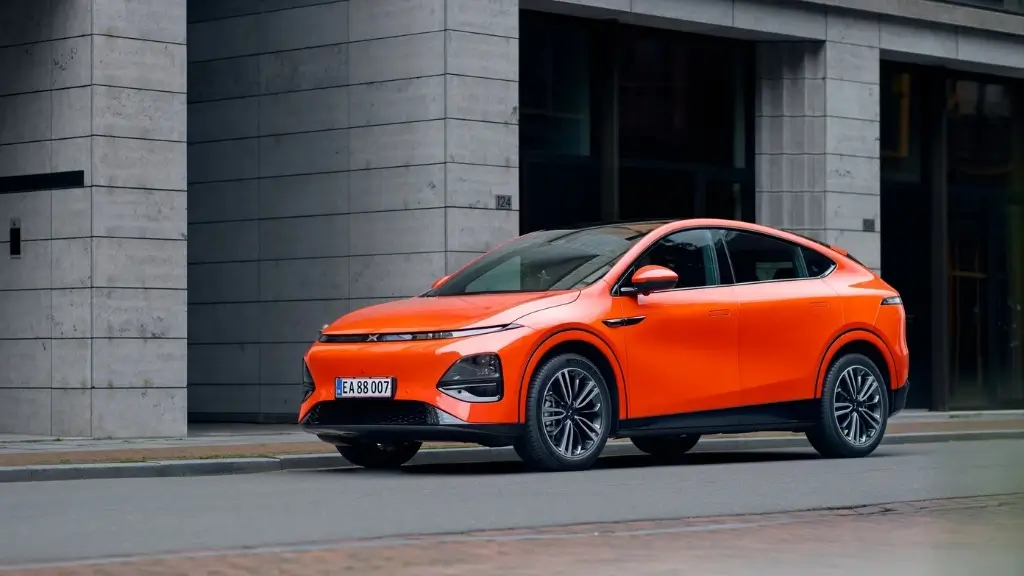
- Chinese automakers are expanding rapidly across global markets.
- Self-driving taxi services — like Waymo — are beginning to change the very idea of transportation.
- And inside the car itself, the most important feature isn’t horsepower anymore. It’s software.
At the same time, global car sales have stalled.
Profits are shrinking.
And the decisions automakers make right now could determine whether American car companies remain global leaders…or slowly fade into something smaller. Companies known mostly for trucks and SUVs sold in their home market.
So far, the early signals are not encouraging.
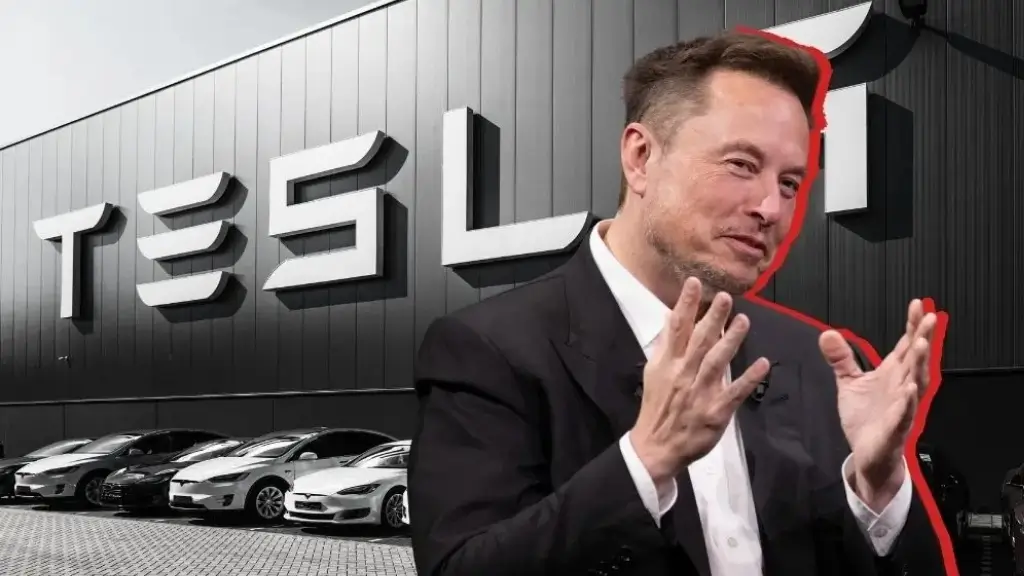
Many traditional automakers were caught off guard by Tesla’s rise. They scrambled to build electric vehicles and invested billions in new factories.
Now some of those same companies are pulling back, after Washington rolled back tax credits and other EV incentives.
The industry, executives say, is being hit by multiple disruptions at once.
And for American automakers, the choices ahead are complicated.
The Trump administration has loosened clean-air rules and fuel economy standards — making it easier to keep selling the large trucks and SUVs that generate their biggest profits.
So the question becomes: Do companies focus on short-term profits? Or keep investing in the technology that will define the next generation of cars?
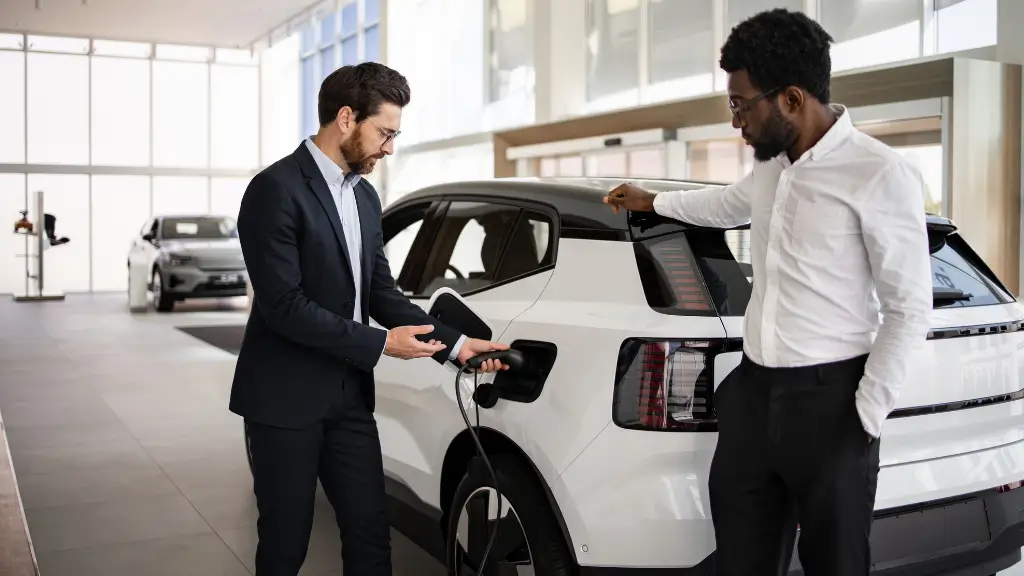
Most experts say electric vehicles will eventually win out — regardless of politics.
Battery technology is improving quickly. Within a few years, EVs could be cheaper to buy… and recharge in less than five minutes.
But right now, many legacy automakers are struggling to compete.
Tesla — and Chinese companies like BYD — have built a major lead in batteries and vehicle software.
Many Western carmakers are still losing money on electric vehicles.
They’re also behind in self-driving technology.
Meanwhile, Waymo — part of Google’s parent company — is already running autonomous taxi services in ten U.S. cities, with more to come this year.
Some analysts warn the long-term outcome could be dramatic.
Ten years from now, they say, the United States might still have familiar car brands. Ford. General Motors. Stellantis.
But the technology that powers those cars…could come from somewhere else. Possibly China.
And the stakes are enormous.
About three million Americans work directly in auto manufacturing, parts production, and dealerships. Millions more jobs depend on the industry’s spending.
Yet even with tariffs meant to protect domestic production, auto and parts manufacturers cut more than twenty thousand U.S. jobs last year.
For more than a century, automakers have driven American innovation — from the assembly line to modern robotics. Now the companies that built that legacy are facing a different challenge. Reinventing themselves…before the future of the automobile is decided somewhere else.
So, with that, let’s transition to Our Companies to Watch.
Every week we highlight interesting companies in the automotive technology space to keep an eye on. If you read my weekly Intel Report, we showcase a company to watch, and take the opportunity here on this segment each week to share that company with you.
Today, our new company to watch is PromptPath.
PromptPath works with automotive dealerships to turn invisible conversations into visible revenue.
PromptPath listens to the conversations with your customers to ultimately drive customer trust and enhance revenue.
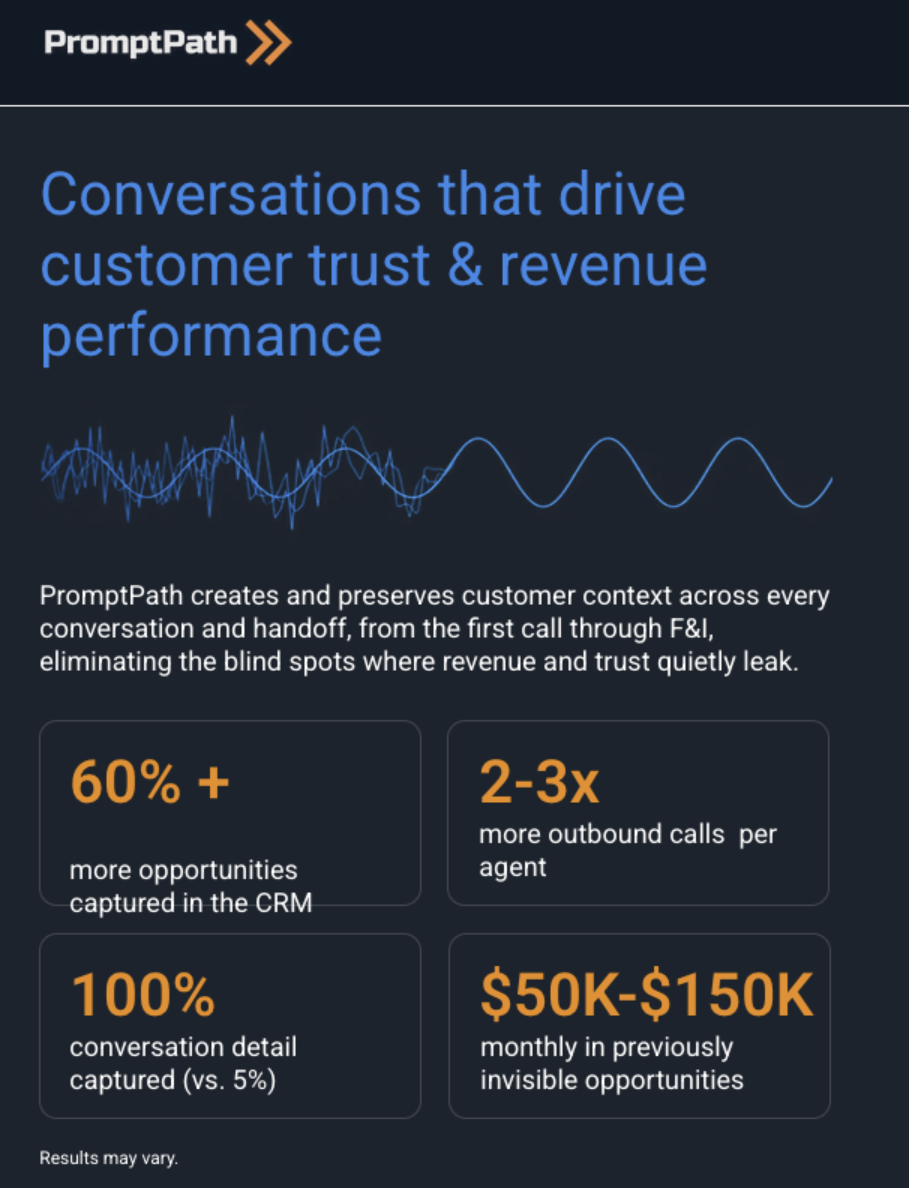
PromptPath creates and preserves customer context across every conversation and handoff, from the first call through F&I, eliminating the blind spots where revenue and trust quietly leak.
The results are 60% more opportunities captured in your CRM; 2-3x more outbound calls per agent; 100% of the details captured in every conversation. Every time.
If you’d like to learn more about PromptPath, you can check them out at www.PromptPath.ai
So that’s it for this week’s Future of Automotive segment.
If you’re an AutoTech entrepreneur working on a solution that helps car dealerships, we want to hear from you. We are actively investing out of our new Mobility Fund.
Don’t forget to check out my two books, The Future of Automotive Retail and The Future of Mobility, both available on Amazon.com.
Thanks (as always) for your ongoing support and for tuning into CBT News for this week’s Future of Automotive segment. We’ll see you next week!