
On the Dash:
- New-vehicle inventory drops to 75 days’ supply as July sales climb 8.5%.
- Toyota, Lexus and Honda keep the tightest inventories while Stellantis works through excess stock.
- Automakers roll out MY2027 vehicles at roughly half last year’s pace.
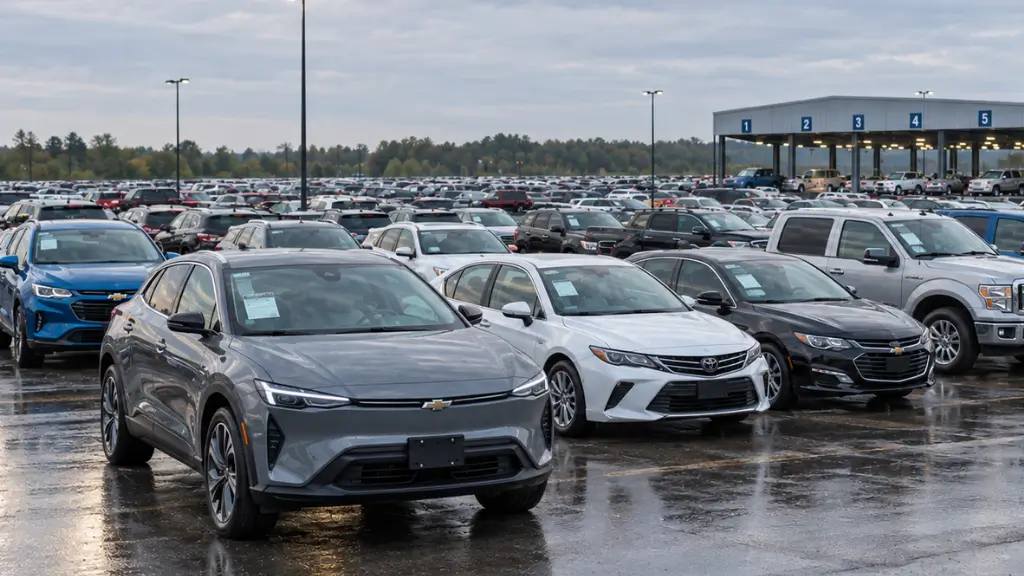
New-vehicle inventory declined in July as consumers bought vehicles faster than automakers could restock dealer lots, according to new Cox Automotive data. Available inventory totaled 2.73 million units at the start of August, down 3.5% from a month earlier and roughly flat compared to a year ago, based on vAuto Live Market View data.
July sales rose 8.5% from June and climbed 2.9% year over year, pulling national days’ supply down to 75 days from a revised 82 days at the start of July. That’s close to where the market started the year, when inventory sat at a 76-day supply entering January. The tightening in July was most pronounced in high-volume segments. Midsize SUV days’ supply fell nearly 14 days during the month, while full-size truck supply tightened by 10 days as sales in that segment rose nearly 16%.
The average new-vehicle listing price closed July at $49,249, unchanged from June and up just 1.6% year over year. Kelley Blue Book put the average transaction price at $49,855, up 1.9% year over year, with average manufacturer’s suggested retail price at $51,621, also up 1.9%. Incentive spending declined for a second straight month, falling to $3,192 per vehicle, or 6.4% of transaction price, down from 7% in June. Spending stayed elevated in some top-selling segments, including full-size pickup trucks at 8.6% and compact SUVs at 7.8%.
Brand-level results varied widely. Stellantis made further progress reducing its days’ supply, though ongoing production slowed the pace of improvement as the automaker works through its broader product offensive. Toyota, Lexus and Honda continue operating with some of the tightest inventories in the industry.
Electric vehicle sales continued trailing the broader market, rising 2.7% month over month against an 8.5% overall gain, and EV days’ supply fell just 2.1 days. Internal combustion and hybrid vehicles saw supply tighten by 6.5 days over the same period.
Model-year 2027 vehicles made up 5.6% of available inventory at the end of July, up from 3.3% a month earlier, but dealers currently have roughly half as many MY2027 vehicles in stock as they had MY2026 vehicles at the same point last year. Full-size SUVs and full-size luxury SUVs were the only major segments to post meaningful increases in days’ supply, rising 3.7 days and 9.4 days, respectively, as fresh MY2027 inventory reached lots.
Heading into fall, the market appears increasingly balanced, with inventory near year-ago levels and pricing holding steady even as automakers stay cautious about expanding MY2027 stock.