On the Dash:
- Tesla’s software-driven model highlights the growing importance of recurring revenue streams like FSD subscriptions.
- AI and software capabilities are emerging as key differentiators in the EV market.
- Demand softness and pricing pressure continue to create near-term uncertainty for EV sales.
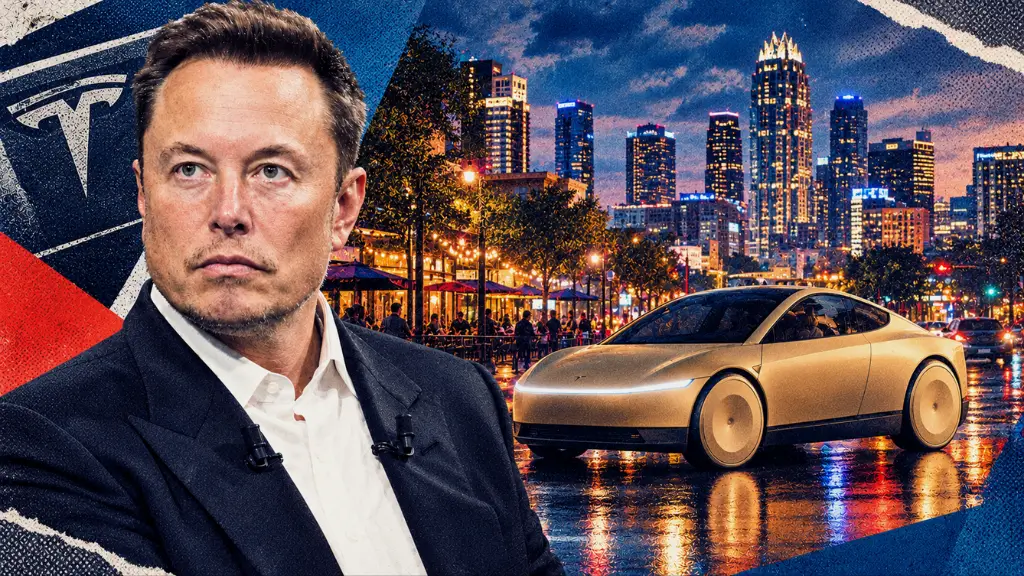
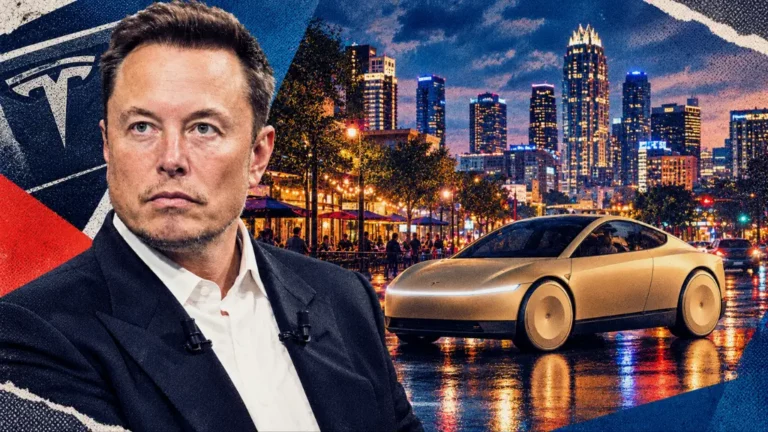
Tesla shares surged nearly 8% Wednesday to close at $391.95 after CEO Elon Musk said the company’s next-generation AI5 chip reached a key engineering milestone and is moving closer to production.
The EV maker is advancing its in-house chip strategy as part of its long-term push into autonomy and robotics. The company plans to build two chip factories in Austin, Texas, in partnership with SpaceX.
While one facility will manufacture chips for vehicles and humanoid robots, the other will produce chips for use in orbital data centers.
Intel recently joined the Tesla-SpaceX Terafab project to enhance collaboration between the companies.
Investor confidence was further supported by a rating upgrade from UBS, which moved Tesla from “sell” to “hold” and raised its price target to $352.
Analysts pointed to the potential introduction of a smaller SUV as a positive development, noting the company’s current lineup remains limited to the Model 3, Model Y and Cybertruck. Tesla has also shifted production priorities, including reallocating capacity at its Fremont, California, plant to support development of its Optimus humanoid robot.
Tesla continues to expand its software-driven revenue strategy through updates to its in-vehicle systems. The Spring 2026 software update includes enhancements to Full Self Driving (Supervised), making it easier for customers to subscribe and track usage.
The feature, priced at $99 per month in the U.S., enables assisted driving functions but still requires active driver supervision. The update also expands integration of the Grok AI chatbot, allowing hands-free interaction within vehicles.
While Musk has long said Tesla is close to delivering fully autonomous vehicles, the company has yet to achieve full autonomy for consumer use, as technical and regulatory challenges remain.