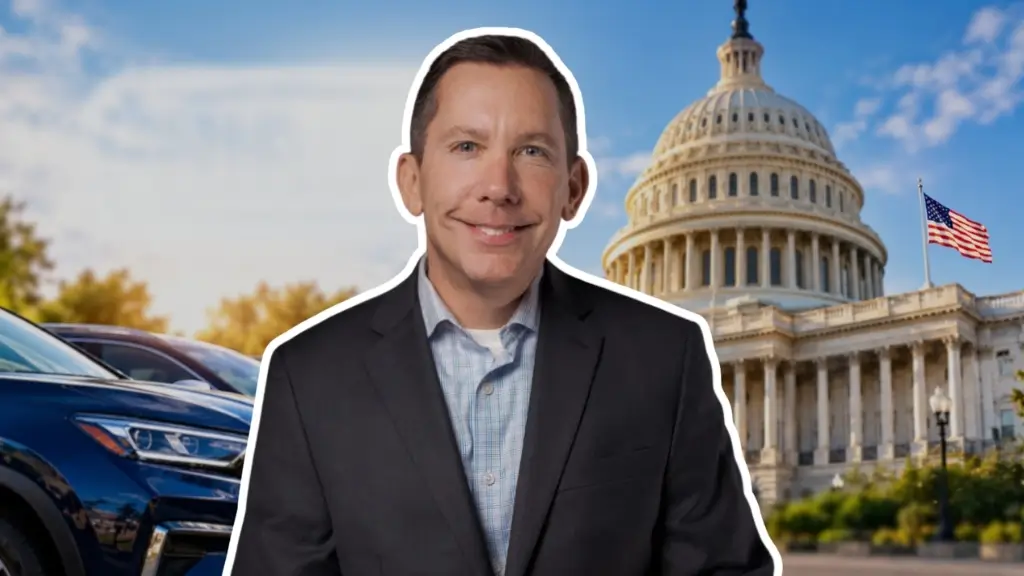
A study by the International Center for Law & Economics claims that the dealership model adds thousands of dollars to the cost of every vehicle, calling it a “middleman tax.” As you can imagine, that’s sparking plenty of debate. Joining us on today’s episode of Inside Automotive to separate fact from fiction is Mike Stanton, CEO and President of the National Automobile Dealers Association (NADA)
During today’s conversation, Stanton rejected the report’s conclusions, arguing that the analysis misrepresents how vehicle distribution works in the United States and incorrectly frames dealerships as unnecessary intermediaries in the sales process.
Stanton said the study conflates automaker decisions with dealership operations, pointing to factors such as production planning, inventory strategy, and marketing approaches that originate with OEMs rather than franchise retailers. He added that distribution costs exist in any vehicle sales model, regardless of structure, and that franchised dealers play a central role in managing those costs while delivering consumer value.
NADA’s president cited an independent study by Oliver Wyman commissioned by the organization, which estimated that automakers would need to invest between $25 billion and $45 billion to replicate a national dealership network. That estimate excludes additional costs tied to real estate, staffing, and facility development. He said those figures highlight the economic scale and efficiency of the current franchise system.
To replicate a dealer network, just form a fixed capital cost for a mass market OEM would cost somewhere between $25 and $45 billion. And that’s before even opening the store
Dealers drive efficiency
Stanton also emphasized that dealerships often absorb inventory pressures stemming from automakers’ production decisions. He said manufacturers determine vehicle mix, production volume, and market strategy, while dealers frequently manage excess inventory and use incentives to help move vehicles to consumers.
Beyond inventory dynamics, Stanton described dealerships as complex retail and service operations that integrate multiple functions, including financing, trade-in evaluation, and service support. He said this structure allows consumers to complete the full vehicle ownership experience in one location, from purchase through maintenance.
Additionally, he stresses significant dealer investments in facilities designed to meet manufacturer standards and customer expectations. According to Stanton, these investments are encouraged by state franchise laws, which provide stability and help ensure long-term commitments to local markets. He warned that without such protections, automakers would have less incentive to build and maintain large-scale retail infrastructure.
Industry outlook
Addressing ongoing industry debates, Stanton alludes that more than 96% of new vehicles in the U.S. are sold through franchised dealerships, which he said reflects broad alignment between automakers and the franchise model despite periodic criticism from outside groups.
Notably, Stanton highlights the industry-wide friction over alternative distribution methods, referencing the discussions surrounding Scout Motors’ pursuit of a direct-to-consumer sales model. He asserts that direct sales approaches frequently overlook the inherent complexity of automotive retail operations and the necessary customer support.
Shifting gears, Stanton commented on the recent FTC action targeting advertising practices and pricing transparency, noting that dealers are looking for clearer direction. He explains that NADA is currently collaborating with regulators to clarify compliance expectations, particularly regarding advertised pricing structures and dealer fees, as dealers work to meet overlapping federal and state regulations.
Despite regulatory and economic uncertainty, Stanton said overall dealership performance remains stable heading into the second quarter, although he stressed that affordability pressures and regional variability continue to impact the market. Nevertheless, he adds that fuel prices are influencing consumer behavior, including interest in EVs, though adoption remains inconsistent across regions.
Ultimately, Stanton said NADA is prioritizing efforts to strengthen the franchise system, improve customer experience, and develop clearer policies around emerging technologies like AI. He said ongoing collaboration between dealers, manufacturers, and regulators will be critical as the industry continues to evolve.