TSLA343.250-3.4%
GM76.7403.98%
F12.1900.67%
RIVN15.1400.45%
CYD41.2801.68%
HMC24.5001.01%
TM215.00011.34%
CVNA338.83018.61001%
PAG153.2805.11%
LAD263.2801.74%
AN196.9103.4%
GPI332.6308.67001%
ABG200.6805.54%
SAH65.9602.46%
TSLA343.250-3.4%
GM76.7403.98%
F12.1900.67%
RIVN15.1400.45%
CYD41.2801.68%
HMC24.5001.01%
TM215.00011.34%
CVNA338.83018.61001%
PAG153.2805.11%
LAD263.2801.74%
AN196.9103.4%
GPI332.6308.67001%
ABG200.6805.54%
SAH65.9602.46%
TSLA343.250-3.4%
GM76.7403.98%
F12.1900.67%
RIVN15.1400.45%
CYD41.2801.68%
HMC24.5001.01%
TM215.00011.34%
CVNA338.83018.61001%
PAG153.2805.11%
LAD263.2801.74%
AN196.9103.4%
GPI332.6308.67001%
ABG200.6805.54%
SAH65.9602.46%

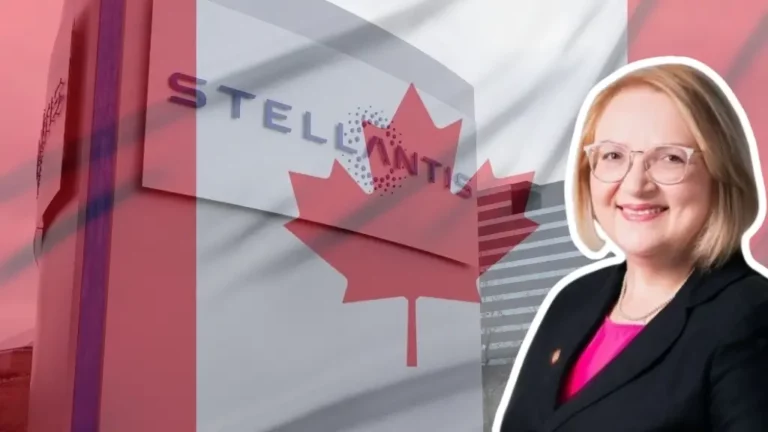
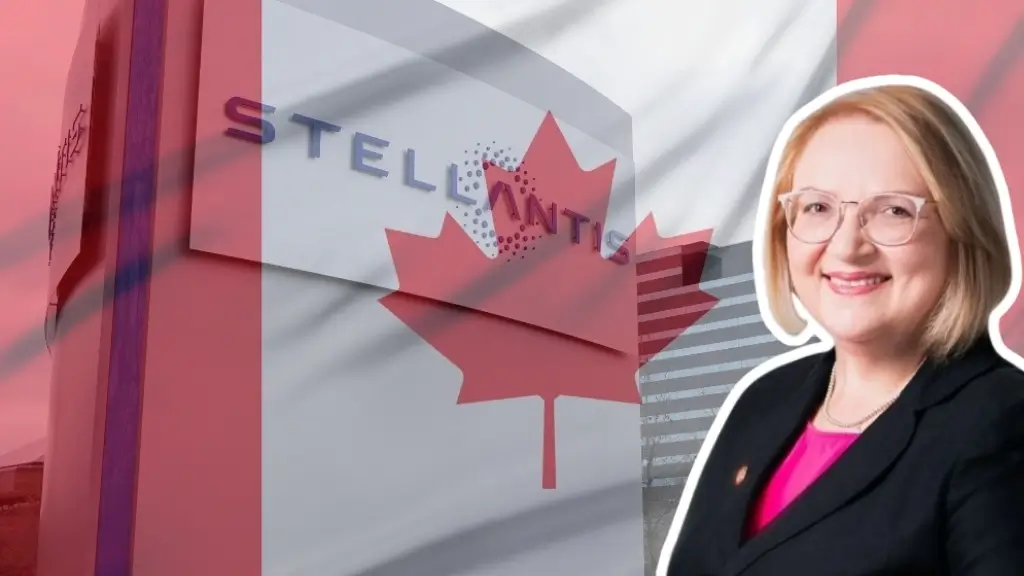
UAW workers at Stellantis to miss 2025 profit-sharing payouts

The automaker’s negative margin, even excluding special charges, prevented checks from being issued.

UAW, Stellantis

On the Dash:

  • No UAW profit-sharing may impact workforce morale across Stellantis operations.
  • Ford and GM payouts create a competitive contrast in employee compensation.
  • Dealer labor relations may be more sensitive heading into 2026.

Stellantis’ UAW-represented employees will not receive profit-sharing checks for 2025 after the automaker’s North American results failed to meet the minimum thresholds outlined in the 2023 collective bargaining agreement.

Under the contract negotiated with the UAW, profit-sharing checks are distributed at a rate of $900 per 1% of the company’s North American profit margin. The formula excludes certain special charges, including Stellantis’ $26 billion write-down tied to its pivot away from electric vehicles.

Sign up for CBT News’ daily newsletter and get the latest industry stories delivered straight to your inbox. 

Even with those special charges exempted, the company’s North American profit margin in 2025 remained negative, down $2.2 billion, a 3% drop. As a result, no profit-sharing funds were generated for UAW-represented employees.

It marks the first time Stellantis has not paid profit-sharing to its UAW workforce since 2010. The outcome stands in sharp contrast to 2023, when eligible employees received checks worth $13,860 per employee.

In a statement, spokesperson Jodi Tinson said that because North America’s results did not meet the minimum thresholds defined in the 2023 UAW collective bargaining agreement, there will be no profit-sharing paid for 2025.

While Stellantis workers will not receive payouts, UAW members at rival automakers will still see checks tied to 2025 performance. Ford employees are set to receive $6,780, while General Motors workers will receive $10,500. Both amounts are among the lowest profit-sharing payouts for those companies.

Stellantis said actions already taken are intended to support improved performance in 2026, though no additional details were provided regarding potential changes to the profit-sharing structure.

(Editor’s note: Per the company’s media contact, the article has been corrected in the fourth paragraph to reflect the first time since 2010 the company has not paid profit sharing to its employees.)

More from Industry News
Ford seeks tariff relief as F-150 costs surge

Ford seeks tariff relief as F-150 costs surge

- April 8, 2026
On the dash: Ford is seeking tariff relief after disruptions in aluminum supply significantly increased production costs for the F-150. A major U.S. aluminum plant outage forced reliance on imports...
Iran war uncertainty clouds auto outlook despite steady 2026 sales forecasts

Iran war uncertainty clouds auto outlook despite steady 2026 sales forecasts

- April 7, 2026
On the Dash: A prolonged Iran conflict could increase inflation, disrupt supply chains and weaken consumer confidence. U.S. auto sales forecasts for 2026 remain steady despite growing geopolitical uncertainty. Lease...
Hyundai flags Middle East conflict as supply chain disruptions hit exports

Hyundai flags Middle East conflict as supply chain disruptions hit exports

- April 6, 2026
On the Dash: Ongoing supply chain disruptions may lead to delayed inventory and delivery timelines. Rising logistics and material costs could impact pricing and margins. Diversions and route changes signal...
White House revises metals tariffs, shifts calculation method

White House revises metals tariffs, shifts calculation method

- April 3, 2026
On the Dash: The revised tariff structure simplifies how metals duties are calculated by applying them to consumer purchase prices and eliminating complex component-level assessments. The changes are expected to...
CBT News
Privacy Overview

This website uses cookies so that we can provide you with the best user experience possible. Cookie information is stored in your browser and performs functions such as recognising you when you return to our website and helping our team to understand which sections of the website you find most interesting and useful.