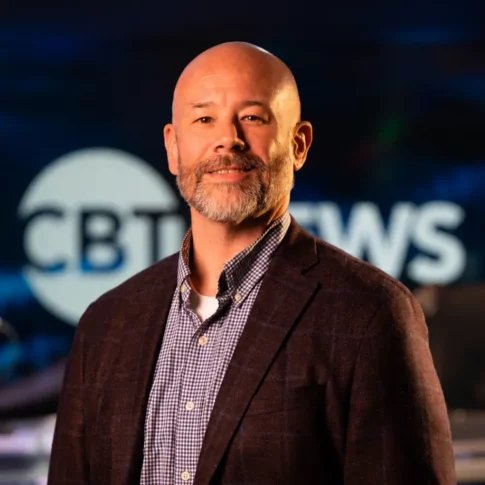
Jay Feldman started selling cars at 15 and has not stopped since. As chairman and CEO of Feldman Automotive Group, he has spent nearly three decades building one of the Midwest’s most respected dealer groups. Feldman Automotive Group, Michigan’s No. 1 Chevrolet dealer, is closing in on 25 rooftops and $2.3 billion in annual revenue. The group has stores in Michigan, Ohio, and Indiana, representing more than a dozen brands.
Jay Feldman is widely respected for his passion for people, his dedication to community, and his forward-thinking vision for the future of retail automotive. On this edition of The Executive Profile, we sit down with Feldman at the company’s headquarters in New Hudson, Michigan, to discuss growth, discipline, and what it takes to build something worth passing down.
Early beginnings
The car business runs through Feldman’s blood. He grew up around his father’s Chevrolet dealership and started in the parts department when he was just 12. When he was 15, Feldman wanted to start selling cars. His father was not happy with the idea, but Feldman did not let that stop him.
"My dad thought that was not a great idea. But I did it anyway. And basically without his permission, I just showed up in my suit and started selling cars."
After high school, Feldman enrolled at Northwood University to study automotive marketing and management. He came back to work in his father’s stores and eventually took over a struggling Chevrolet store in Milford, Mich., that his father was ready to sell.
“I talked him out of selling it and turned it around,” he said.
The two went into business together as 50/50 partners and built a new Chevrolet store in Highland, Mich. That store is still open today, expanded four times over, and marked the beginning of a growth strategy that continues today.
Feldman Automotive Group now has stores in Michigan, Ohio, and Indiana and continues to grow. The group is adding four stores in northern Ohio, including its first Toyota and Honda franchises.
“It’s three stores in Sandusky, Ohio. It’s our first Toyota and Honda store, and then Stellantis is right there, so it’s a little bit of an auto mall. And then a Chevrolet store in Vermilion, Ohio, which is a suburb of Cleveland. They’re just over 5,000 units a year retail. About $211 million in revenue that we’ll add to the bottom line,” Feldman said.
Feldman sees the road to 30 rooftops by the end of 2027 as realistic. He is eyeing additional deals in Michigan and has a new franchise point in Ohio he cannot yet discuss publicly.
The Hollywood connection
Most people know Mark Wahlberg from films like “The Departed” and “Ted,” or from his early days rapping as Marky Mark. Fewer know he is also a car dealer. Wahlberg and Feldman are partners in the Mark Wahlberg Automotive Group, which operates six car and RV dealerships across Columbus and Cleveland, Ohio.
Feldman and Wahlberg have been friends for more than a decade. Feldman says the automotive partnership started as a joke on a movie set.
“We were joking on a movie set. I was partners with him at a Wahlburgers in Cleveland, Ohio. He was asking me about the car business and told me he drove a tow truck and changed oil when he was a kid. He said, ‘I’ve always had a dream of owning a car dealership.’ And I said, ‘Oh, we should buy one together.’ He thought I was kidding. I said, ‘Let’s do it,'” Feldman said.
Their first store was Bobby Lehman Chevrolet in Columbus, Ohio. It was supposed to stop there, but when a dealership across the street came up for sale, they kept expanding. The partnership now includes six car and RV dealerships across Columbus and Cleveland.
Partnering with a celebrity like Mark Wahlberg comes with benefits. The announcement of their first store together reached 475 million people worldwide as Wahlberg made the rounds on late-night television.
"When we opened the store in Columbus, we had 475 million people worldwide see the PR announcement. We were on every major talk show. Stephen Colbert, Ellen, Jimmy Fallon, Good Morning America."
Wahlberg is not involved in day-to-day operations, but Feldman says the friendship is strong and the door is open for more deals if the right opportunity comes along.
Riding the EV rollercoaster
At its peak, Feldman Automotive Group was the No. 1 General Motors EV dealer in the country. The group was moving around 500 new EVs a month, and EVs made up 35% of total sales. Then the market shifted.
“We tried to capitalize on the opportunities that were presented to us during the whole EV craze. We were the number one General Motors EV dealer in the country and consistently we were selling across our group about 500 EVs a month,” Feldman said.
When the federal tax credits expired, EV sales dropped sharply. These days, Feldman says, EV sales account for roughly 5% to 10% of the group’s total volume.
Feldman says EVs will always have a place in the market, but he does not expect demand to return to where it was when government incentives were driving sales. He points to Toyota’s hybrid-first strategy as the smarter long-term play.
“I think it was really smart. Look what it cost the manufacturers to get out of the EV business, with $100 billion or some crazy number like that. And Toyota’s just doing their thing. Steady Eddie,” he said.
Sights set on $5 billion in revenue
Feldman Automotive Group will hit $2.3 billion in revenue after its pending four-store Ohio acquisition closes, but Feldman plans to double that. His next revenue target is $5 billion.
“You have to have goals. I started out with a store selling 25 cars a month. We had about $20 million in revenue. Now we’re doing $2.3 billion. And we’re able to do a lot of cool things from a philanthropic point of view. A lot of things that we do, we couldn’t do if we weren’t the size that we are,” Feldman said.
Giving back to the community is a big part of what drives Feldman. He sits on the board of the Tunnel to Towers Foundation and has raised more than $1.4 million for Children’s Miracle Network Hospitals through the Feldman Automotive Children’s Miracle Celebrity Invitational, Metro Detroit’s largest celebrity golf event.
While Feldman continues to expand his group, he does not do it by loading up on debt. His formula focuses on cash, and some of it comes from his own team members. Feldman lets his executives buy into deals directly. They now hold stakes in 60% to 70% of the group’s stores.
“It puts everybody at the same level. They are not going to leave. As I grow, they grow,” he said.
Digital deals & FTC pricing compliance
The COVID era brought a wave of predictions that consumers would soon buy cars entirely online, but Feldman says he is not seeing that play out.
"There's a small number of customers that are absolutely hell-bent on doing everything online. But the reality is most people want to come in and look at cars and do something in person."
While customers may still be closing deals at his dealerships, Feldman says 90% of buyers start their search online. That is where he says the digital difference matters the most.
“Your website has to be really good. People look at your Google ratings. They look at your customer reviews more than ever. You need to have a high rating or they’re going to pass and move on to somebody else,” he said.
The FTC has been cracking down on pricing transparency in the automotive retail industry. Feldman says he has no problem with that, but the rules are not yet clear enough for dealers to follow confidently.
“I think having compliance is a good thing. There’s nothing wrong with that. The biggest issue is going to be clarity, making sure that people understand what they’re supposed to do and what they’re not supposed to do. Right now it’s a little bit vague. The fear is that you’re going to be fined for something you didn’t even know you were doing wrong,” he said.
CBT News will host the Auto Leadership Summit: Fair Pricing and Compliance on June 16 at the Salamander Hotel in Washington, D.C. The event will bring together dealers, lawmakers, legal experts, and compliance specialists to address the FTC’s recent enforcement push. Registration is available at cbtnews.com/auto-leadership-summit.
From fixed ops to mobile service
As new car margins tighten, Feldman is increasing his focus on fixed ops at his dealerships.
“We are working on our fixed operations every day. It’s a huge, important part of our business. There is a huge car park out there. There are a lot of cars on the road. We want our unfair share of that business,” he said.
One area where Feldman sees growth is in mobile service. As customers become more resistant to bringing their vehicles into a dealership for service, there is an opportunity to meet them where they are.
“It’s not an easy proposition. It is an expensive proposition. But it’s the future. People don’t even want to go pick up their own carryout. People pay $15 for a coffee to be delivered. That’s the world we live in,” he said.
Biggest threats: Chinese cars, AI & affordability
Feldman is optimistic about the future, but he admits the industry faces several challenges. Possible competition from Chinese automakers, direct-to-consumer sales models, and AI are all on his radar. One issue stands out above the rest.
“The affordability factor is a concern. We’re at $50,000 on a new car average, which is crazy. Lease payments at $800 to $1,000. Something’s got to give,” he said.
When it comes to threats from Chinese automakers, Feldman says the playing field is not level when a foreign government is subsidizing the competition. He sees it playing out through domestic partnerships.
“I think you’re going to see the Chinese partnering with American companies and maybe taking a plant that isn’t being used in the U.S., maybe a former EV plant, and producing cars through there if they end up coming here,” he said.
Feldman is also keeping a close eye on threats to the franchise system. He says direct-to-consumer models like Tesla and the upcoming Scout brand from Volkswagen represent a small but growing concern.
“Right now it’s about 4% of the market. It’s a concern for sure. I wish I had more control over it. If it becomes a big number beyond 4%, it’s a concern,” he said.
Artificial intelligence is something Feldman is already putting to work in his stores. The group uses AI in fixed operations, the BDC, scheduling, and on the service drive. Their system can even detect whether a customer sounds upset before a human picks up the phone. Feldman says AI will reduce headcount across the industry. He says the time for dealers to embrace it is now.
“Everybody needs to embrace it. If you don’t embrace it, you’re going to be behind the eight ball. But there are so many AI companies out there. You could spend a billion dollars a year on AI and then another one comes out and it’s $20 a month. You have to be careful,” he said.
Keeping it in the family
Jay Feldman learned the car business from his father. Now he is preparing to pass it to his son. His 26-year-old son is finishing law school in New York and holds a business degree from the University of Michigan’s Ross School of Business. Feldman says he will enroll in the NADA Dealer Candidate Academy in January.
His daughter, however, has other plans. Feldman says she spent a summer working in the BDC, but it was not for her.
“She called me up and said there are customers yelling on the phone at me. She said, send Mom to pick me up. I need to get out of here,” he said.
For young GMs looking to build something of their own, Feldman says they should consider partnering with an older dealer rather than buying their way in cold.
“Find a dealer that’s 71 years old, maybe isn’t quite ready to retire, and buy into their deal. It’s hard to just go out and buy a store and have the capital to do that. The best advice is go out and find either a really small store and become the head cook and bottle washer, or partner with a dealer and have a buyout plan over time,” he said.
Focusing on the future
Jay Feldman started by brushing snow off cars on his father’s lot. He went on to build one of the most recognized dealer groups in the Midwest, partner with a Hollywood actor, become the country’s top General Motors EV dealer, and set his sights on $5 billion in revenue. He has navigated COVID, policy whiplash, margin compression, and a shifting EV market without taking on significant debt or losing sight of the people around him.
When asked about the road ahead, Feldman admits, it may come at a cost.
“I might have more gray hair by that point,” he said.