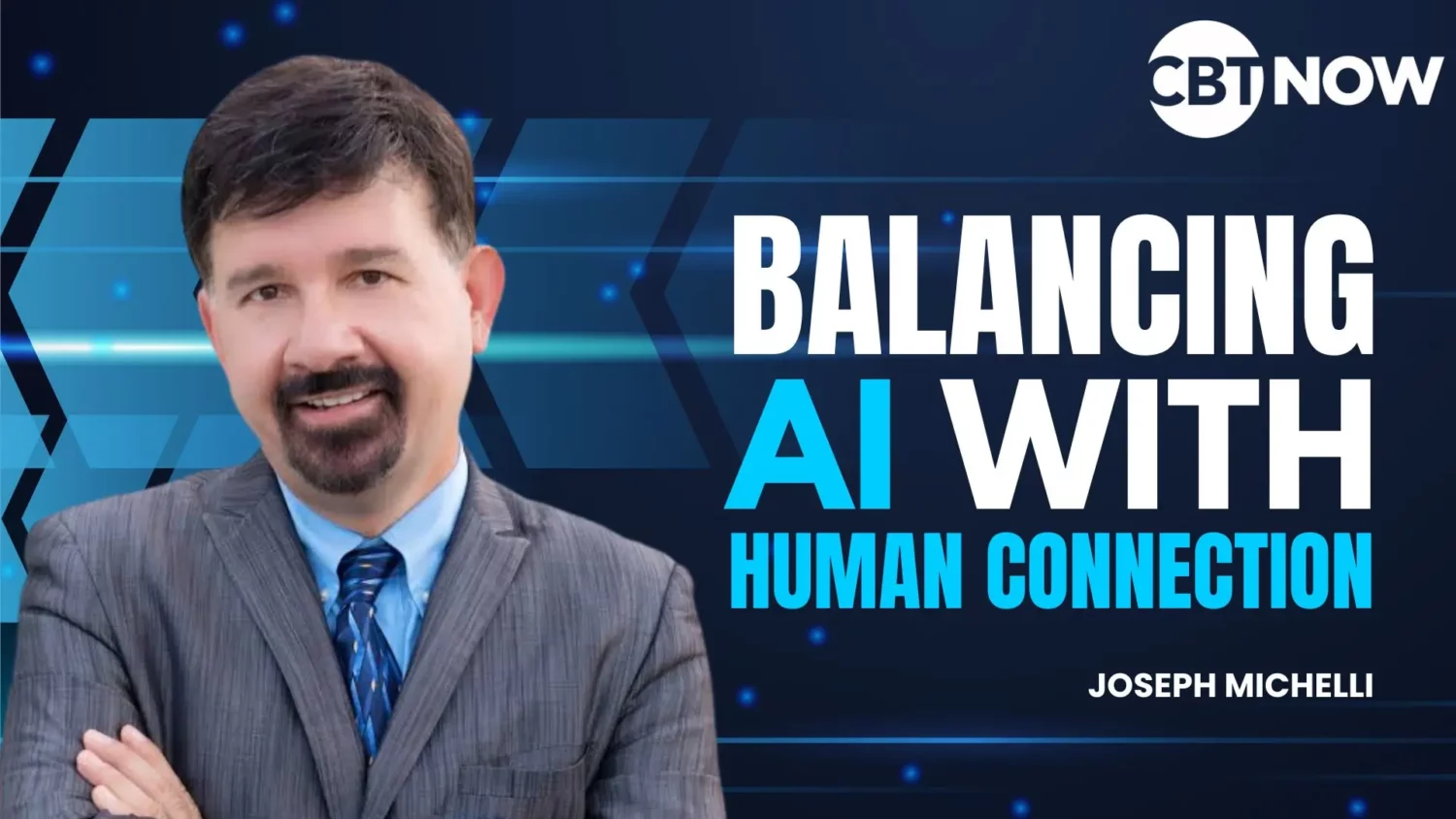
As the year winds down, many businesses are focused on closing strong and setting up for the new year. On today’s episode of CBT Now, Joseph Michelli, CEO of The Michelli Experience, speaker, consultant, and best-selling author of All Business Is Personal, shares insights into the trends shaping today’s workplace and customer experience.
One of the most significant trends Michelli highlights is the rapid increase in new technology. While these advancements are designed to improve efficiency and make work easier, 38% of employees report feeling unable to keep up with the pace of technological change.
Advances in technology and efficiency are reducing the need for certain roles, making offboarding more common. Poorly handled exits can easily damage an employer’s reputation, particularly as disgruntled workers turn to social media to share their experiences. As a result, many companies are adopting more intentional offboarding strategies focused on dignity and clarity to protect internal stability.
Michelli notes that internal communication should prioritize acknowledging role changes without sharing personal or sensitive details, clarify how responsibilities will shift going forward and reduce unnecessary anxiety among remaining employees.
Leaders often struggle to balance transparency with discretion during employee departures. Michelli emphasizes that it’s rarely appropriate to discuss the specifics of why someone left. Instead, communication should focus on what’s needed to move forward. Oversharing can erode trust, as employees may assume they will receive similar treatment when they leave.
The ripple effects of workforce changes often extend beyond internal teams and directly affect customer relationships, particularly in sales, service, and support roles. Customers are experiencing an ongoing adoption curve as companies shift toward automation and digital-first touchpoints. Reduced access to direct human contact and difficulty finding phone numbers or live support have begun to impact the customer experience. Approximately 25% of consumers report being far less satisfied speaking with AI chatbots than with humans, reinforcing that people remain essential despite automation.
AI adoption is accelerating rapidly, with tools evolving faster than earlier technologies such as the internet. These systems are becoming increasingly sophisticated, with expanded capabilities and the ability to resolve issues end-to-end without escalation to human agents. However, Michelli stresses that the core challenge is ensuring technology enhances human-centered design rather than overriding it. Organizations must also remain cautious as AI capabilities expand, protecting consumer privacy while keeping human relevance at the center of decision-making.
"2026 is no different than December 1, 2025... We need to have an effective strategies that engage our employees and customers."
Another common mistake Michelli sees is relying on annual recognition or holiday events to motivate staff and boost morale. Year-end celebrations are often too little, too late to address engagement challenges. The holiday season is also hectic, and these events often conflict with employees’ personal obligations, resulting in low participation and limited impact. Michelli emphasizes that consistent, ongoing recognition is far more effective than isolated, symbolic gestures.
High-performing organizations understand the value of feedback. For leaders looking to finish the year strong and prepare for the next, Michelli recommends proactively seeking input from both employees and customers.
Continuous learning and trend monitoring are essential as leaders navigate workforce and technology changes. Michelli encourages leaders to reflect on what was learned this year, what worked well, and where opportunities remain. Valuable insights can be drawn from employee and customer behavior, direct feedback, and voice-of-consumer data.