
By Joseph Michelli
As you know, the automotive industry has recently faced numerous challenges, from economic downturns to supply chain disruptions. These moments of adversity test the strength and resilience of dealership leadership and teams.
Effective leadership is the difference between surviving and thriving in volatile, uncertain, complex, and ambiguous (VUCA) times.
Drawing from the principles in my book Stronger Through Adversity,
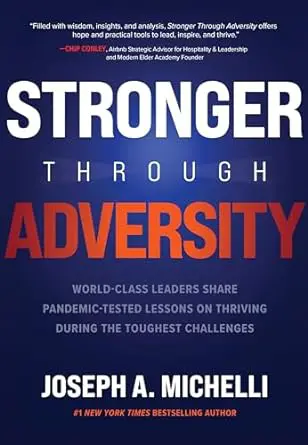
here are several actionable strategies for dealership leaders to successfully support their teams in challenging times.
- Foster Collaboration Within and Outside the Dealership: Poet John Donne reminds us, “No person is an island.” One of the best ways to get through difficult times is to encourage collaboration within the dealership and with other industry players. For example, during the pandemic, leaders like Jim Mortensen, President of Ste Michelle Wine Estates, found value in joining forces with other leaders to share ideas and best practices. Similarly, dealership managers should encourage team members to collaborate, share insights, and develop creative solutions for ongoing challenges.
Takeaway: Hold regular team meetings where staff can openly discuss challenges and propose solutions. By encouraging input and fostering collaboration, you will solve problems faster and build unity.
- Lead with Humility and Authenticity: Strong leadership is making decisions humbly during crises. Jeff Dailey, CEO of Farmers Insurance, admitted that he made a mistake early in the pandemic, but his willingness to acknowledge it openly built greater trust with his team. In the fast-paced environment of a car dealership, where meeting sales targets is crucial, it’s essential to balance confidence with humility.
Takeaway: Be transparent with your team. Admit when something isn’t working and invite feedback. Your team will respect you more when you lead authentically and show your humanity and vulnerability.
- Communicate Frequently and Purposefully: Clear communication becomes even more critical in times of uncertainty. People crave information, and as a leader, it’s your job to provide it frequently and purposefully. Southwest Airlines’ Chief Communications Officer, Linda Rutherford, emphasizes the need for consistent messaging across the company during heightened uncertainty. When information is aligned, clear, and relevant, it reduces confusion and maintains trust.
Takeaway: Develop a communication strategy that informs everyone about the dealership’s situation, goals, and changes. Be clear and concise and ensure that all communications are consistent across departments. Don’t communicate to communicate; rather, engage with purpose.
- Show Empathy and Provide Support: During challenging times, your team members may face stress at work and in their personal lives. Empathetic leaders who listen and offer support help ease that burden. Chris Recinos, CEO of Nurse Leaders Network, shared a story about how she helped her team process traumatic experiences so they could maintain high-quality work during the height of the pandemic.
This might mean recognizing when a salesperson or service technician is struggling and offering flexibility. Small acts of empathy go a long way in building loyalty and resilience within your team.
Takeaway: Regularly check in with your team members formally and informally. Ask them how they’re doing, listen to their concerns, and offer help when needed.
- Define Your Leadership Legacy: Difficult times offer a chance to define how you want to be remembered as a leader. Your decisions and how you treat your team during a crisis will leave a lasting impact. Bradley Feldman, CEO of Cubic Corporation, wanted his crisis leadership to leave a lasting impression of his care and compassion for customers and employees.
As a dealership leader, consider how you want your team to view you after challenges subside.
Do you want to be seen as a leader who prioritized people, demonstrated moral courage, or upheld the company’s values during challenging times?
Defining your leadership legacy helps guide your actions and inspires those around you.
Takeaway: Take time to think about the legacy you want to leave as a leader. Share this vision with your team and use it to guide your decisions and behaviors – especially during adversity.
Leading through challenging times requires emotional intelligence, empathy, clear communication, and a strong sense of purpose.
You build resilient teams by fostering collaboration, leading with humility, maintaining consistent communication, showing empathy, and living into your desired leadership legacy.
As a leader, how you handle difficulties shapes your dealership’s future and your team’s ability to withstand unforeseen challenges.
In the words of Martin Luther King,
“The ultimate measure of a man is not where he stands in the moments of comfort, but where he stands at times of challenge and controversy.”