Dealership buy-sell activity, valuations, and the road ahead for auto retail have dominated headlines lately, and new survey data from Kerrigan Advisors adds fresh detail to the conversation. On today’s episode of Inside Automotive, we’re joined by Erin Kerrigan, Founding Partner and Managing Director at Kerrigan Advisors, to break down the firm’s 2026 OEM Survey and a recent multi-dealership transaction making waves in the Carolinas.
Kerrigan reported that the survey received responses from 155 OEM executives, achieving the highest turnout in its three-year history. The results dismiss earlier concerns that automakers might completely bypass dealers.
While OEM executives generally expect buy-sell activity to maintain its current record pace or even increase further, approximately one-third of respondents expect a higher volume of deals over the next 12 months than in the previous period, which itself reached an all-time high. Kerrigan Advisors’ first-quarter Blue Sky Report indicated a 21% increase in transactions compared to the same period in 2025, placing the industry on track for approximately 500 deals by the end of the year, Kerrigan said. Additionally, she notes that multi-dealership transactions rebounded by 36% quarter over quarter.
Notably, Kerrigan Advisors recently represented the Yant family in the sale of Paramount Automotive’s Foreign Cars Italia platform in Greensboro and Charlotte, North Carolina, to Hendrick Automotive Group. The deal included two Ferrari franchises, a Porsche franchise, and several exotic brands, marking Hendrick’s first entry into the exotic vehicle market despite Rick Hendrick’s personal collection of what Kerrigan called well over 100 Ferraris. She also called the deal a career highlight, noting she interviewed Hendrick inside his car museum for an upcoming podcast.
A “K-shaped” market
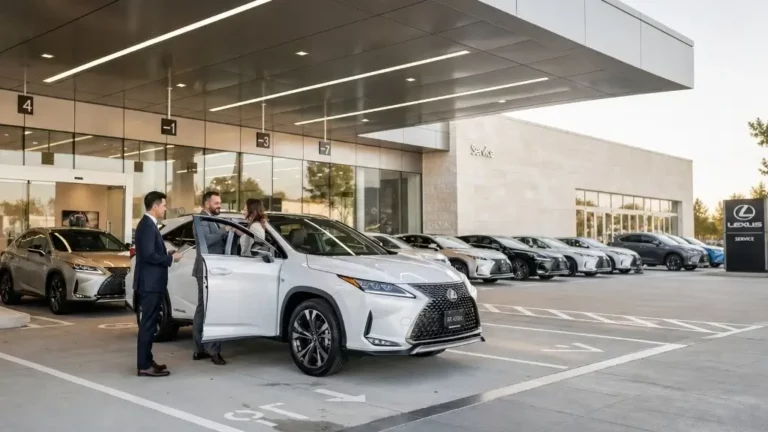
Kerrigan described today’s buy-sell market as increasingly divided, with strong franchises in high-growth markets commanding record prices, while weaker franchises in softer markets are losing value. She cited Penske Automotive’s roughly $670 million purchase of two Lexus dealerships in Orlando, the highest price ever paid for two stores, as evidence. Public dealer groups spent $790 million on acquisitions in the first quarter alone. Still, Kerrigan said overall valuations remain about 78% above pre-pandemic levels, and 82% of surveyed OEM executives expect blue sky values to hold or rise over the next year.
Further, 59% of OEM executives expect artificial intelligence to increase dealership profitability, mainly through lower operating costs and improved sales efficiency, Kerrigan said. She pointed to Carvana, whose AI-enabled model has grown retail sales 91% year over year and pushed its market cap to $80 billion, exceeding the combined value of all six public dealer groups.
According to Kerrigan, Carvana’s entry into new-vehicle sales through Stellantis franchises is attracting significant attention in the industry. She mentioned the company’s first acquisition, a store in Casa Grande, Arizona, that previously sold about 35 cars a month. Remarkably, in June, it sold nearly 1,000 new vehicles, reportedly without a general manager. If this sales pace continues, the store could become the second-highest-volume franchise in the country, behind Longo Toyota, in roughly a year since Carvana’s foray into new-car retail.
“And it really demonstrates the power of technology and the potential for a single store to cover a much larger market area."
Additionally, she adds that 45% of OEM executives anticipate their networks will shrink over the next five years. This suggests a trend towards consolidation into fewer, larger groups rather than a withdrawal from the franchise model. Meanwhile, 43% expect to require new facility designs within the next five years.
Tariffs, EVs, & Chinese competition
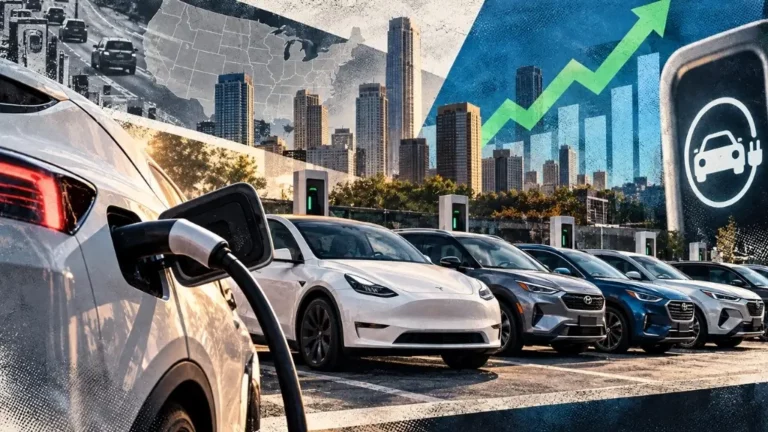
Kerrigan also notes that 58% of OEM executives expect automakers to absorb most tariff costs, versus 37% who expect consumers to bear the burden and just 5% who expect dealers to. 23% expect new vehicle sales to decline over the next year, up from 18% previously. For EVs, executives expect them to account for 21% of sales within five years, up from 8% in a prior survey.
Though this year’s survey skipped the topic, Kerrigan said last year’s edition found many OEM executives already concerned about Chinese automakers’ global market share, citing Volkswagen’s German workforce reduction, which affected roughly 100,000 jobs, as evidence of the pressure.