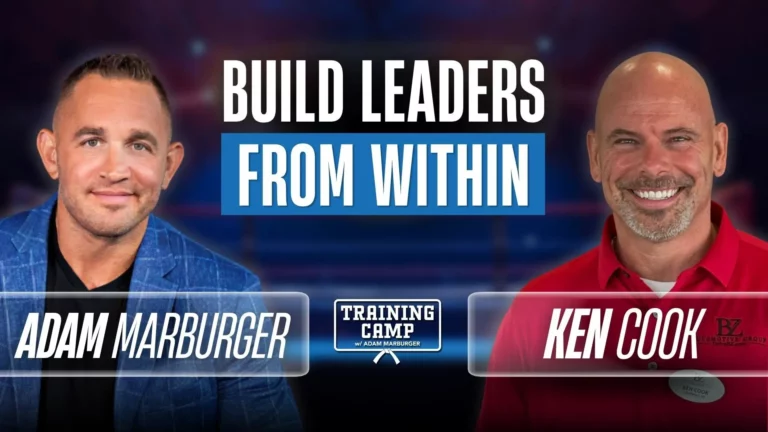
For Ken Cook, building a successful dealership starts with building the people inside it. The Dealer Principal of Cook Chevrolet and Cook Ford in northern Indiana has spent more than two decades in the automotive business, and today he sees leadership and employee development as two of the biggest challenges facing dealership operators. Cook joins us on the latest episode of Training Camp to discuss his path from selling cars to owning dealerships and the leadership principles that now shape his operation.
After leaving the Marine Corps and realizing factory work was not for him, Cook started selling cars at Jack Dees Chevrolet-Cadillac in 1999. He eventually became a manager at the dealership he would later purchase, giving him a firsthand look at what it takes to move from salesperson to dealer.
That transition also taught Cook an important lesson about preparation. After buying a Chevrolet and Ford store, he and his partner quickly decided to acquire another dealership. The experience exposed how much he still had to learn, prompting Cook to enroll in NADA school and seek out other industry leaders who could help him develop as an operator.
Today, Cook spends six days a week at the dealership, with much of his time focused on coaching and mentoring his team. After splitting with his former partner, Cook kept the Ford and Chevrolet operations and made developing younger employees central to his leadership strategy. Rather than relying heavily on outside hires, he prefers to grow talent internally and give employees opportunities to advance.
‘Coaching’ the next gen
Navigating today’s conversation, Cook rejects the common criticism that younger workers are the problem. Instead, he believes dealership leaders have to take responsibility for preparing the next generation. That philosophy extends beyond professional development, since Cook believes leaders have to model the behaviors they expect from their employees, including a commitment to continuous improvement. He trains five days a week himself and makes a point of participating in the same training he asks his employees to complete.
“If you expect people to know how to handle something but don't coach them, they're never gonna get better.”
Additionally, Cook notes that he and his variable operations team meet at 8:15 each morning to review numbers, discuss problems, and work through situations employees may encounter. Therefore, Cook really stresses that training shouldn’t stop at teaching a process, but rather leaders have to coach employees through real-world situations and provide consistent daily feedback.
Establishing a solid foundation
Cook also believes a strong dealership culture needs a clear foundation, so he encourages dealers to establish a just cause and core values that give employees direction on how the organization operates. Training can reinforce those standards, but leadership has to establish them first. Cook believes dealers can’t build strong teams by simply hiring experienced people and expecting them to perform. Leaders have to develop their employees, hold themselves to the same standards and create an environment where people understand what is expected of them.
That investment becomes especially important as younger employees enter automotive retail. Cook sees an opportunity for dealers to stop criticizing the next generation and start taking a more active role in developing it. The result, he believes, is a stronger workforce and a dealership better prepared for the future.