Affordability is reshaping acquisition
Affordability has become a defining consideration across the retail automotive journey. For dealers, the challenge is not limited to helping a shopper structure a workable deal. It begins earlier, with a more fundamental question: Does the dealership have the right vehicles available for the customers it can serve today?
That question puts vehicle acquisition at the center of the affordability conversation. A dealership may have inventory on the ground, but if the vehicles do not align with what’s selling in a market, the misalignment shows in ways that hurt—slower moving units, age, reduced gross profit.
vAuto’s Live Market View Q3 2026 explores how dealers can approach this challenge by connecting customer and inventory intelligence. In the discussion, Derek Hansen of Cox Automotive and Mike Colacchio of Fullpath outline an AI-driven vehicle acquisition workflow designed to help dealers identify and pursue inventory acquisition opportunities with customers in their communities and service drives.
The central idea is simple: If you know what’s moving in a market, the customers with vehicles that match your inventory needs and their purchase/trade intentions, you have a foundation for more efficient, targeted vehicle acquisitions that create other positive opportunities.
Move beyond a two-channel view of inventory supply
Traditional acquisition efforts often begin with a view of what’s sold in the past and what’s arrived at the showroom door.
On past sales, managers can know what vehicles sell well for their stores. Every franchise dealer’s brand creates what might be considered a natural halo effect that shapes a sizable, if not a majority share, of the inventory they stock.
Managers use this experience to guide the vehicles they might acquire from auctions and, in more recent years, to target vehicles for acquisition from customers who purchased vehicles in the past.
But this experience only goes so far: You can’t build and maintain market share and volume by relying solely on what you’ve sold in the past. Why? Because it might not reflect what’s currently selling in the market.
The full picture of what’s selling in the market comes from an analysis of same—by vehicle segments, types and price bands, if not special makes, models and trims. Often, dealers who analyze this level of market data using vAuto’s Inventory Strategy for the first time realize there’s opportunity to stock and sell different vehicles to serve their market.
This dynamic’s increasingly true as affordability, and more-limited supplies of late model vehicles, reshapes the movers in virtually every market. In fact, it’s not uncommon for dealers to unwittingly discovered the average investment in their used vehicle inventories runs several thousand dollars higher than what’s selling.
Dealers have also relied on trade-ins to stock their inventories. However, customers bring their trades to you. Whether the vehicle is the right fit for your retail inventory, or matches what’s selling in the market, depends entirely on the vehicle itself. The reality: Some fit great, others not so much.
The push for closer inventory-to-market alignment has spurred more dealers to pursue inventory acquisition beyond auctions and trade-ins. That’s why acquiring vehicles from customers in your service lane has become an operational priority for many dealers.
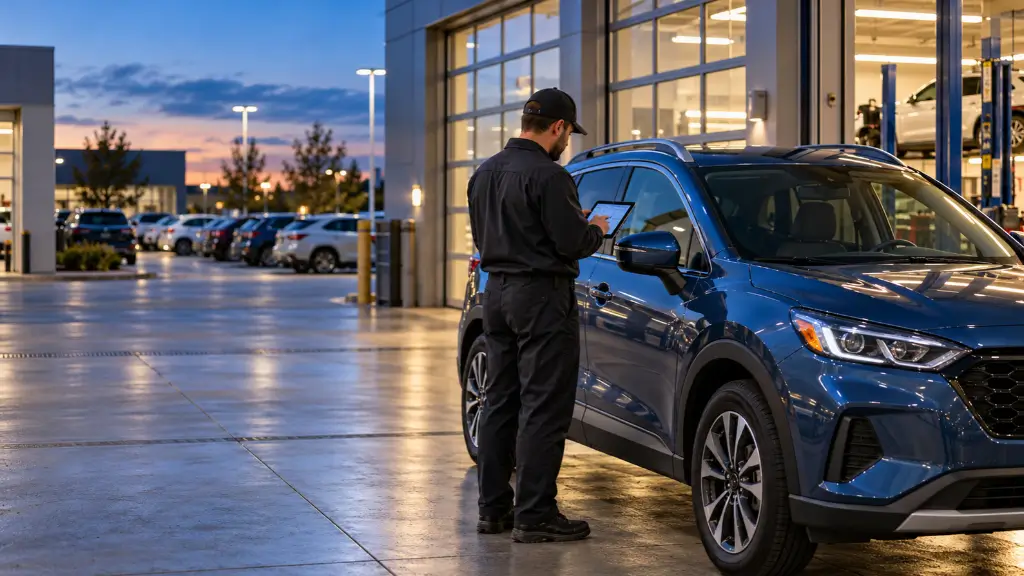
Turn the service lane into an acquisition opportunity
It’s not uncommon for dealers to recognize their service department as a distinct channel to source and acquire inventory. It’s less common for dealers to find consistent, sustained success in the service lane opportunity.
One of the key reasons dealers struggle with trade-in vehicle acquisition in their service lanes owes to disconnected departments and processes.
For starters, there’s the traditional divide between variable and fixed operations. Each wants to protect its share of the dealership’s business. This mindset tends to mask the reality of the two departments—both can find greater success when they work toward the common goal of keeping customers as customers, and moving more vehicles that become the foundation of tomorrow’s customer pay work.
Process disconnections are common, too. That’s often due to the intelligence about individual customers, their vehicles and the vehicles the used vehicle department needs reside in different systems. Historically, it hasn’t been easy to bring this intelligence together in a single place, providing a holistic view of each customer, their vehicle and the overall opportunity for the dealership.
An Intelligence-rich, connected workflow for rrade-in vehicle acquisition in service
With the acquisition of Fullpath, Cox Automotive’s vAuto has partnered to build a connected workflow that spans the systems dealers use for customer relationship management (CRM), service department customer management inventory management.
The connections A connected workflow can help teams evaluate that opportunity through the lens of the customer (what’s their current equity position, intent/interest in purchasing or trading their current vehicle drawn from online shopping behavior, their lifetime value to the dealership, and more) and their vehicles (does it fit the market and inventory needs, does the condition and mileage lend itself to an affordability-minded future buyer).
The workflow discussed by Hansen and Colacchio brings these elements together: an understanding of inventory demand, intelligence supported by Cox Automotive and an engagement capability through Fullpath. Each component has a distinct role. Inventory strategy establishes what the dealership needs. Customer context helps identify where a relevant opportunity may exist. Automated, customer-specific engagement helps the dealership act.
It’s important to recognize that a workable price point, purchase offer, replacement vehicle choice or trade decision can differ from one customer to another. That is why generic outreach doesn’t meet the moment in the service lane effectively. More customer-specific inquiries about their current vehicle find more takers.
The AI-driven workflow featured in the Live Market View is intended to support the connection to individual customers and their vehicles. By combining customer and inventory intelligence from Cox Automotive’s ecosystem of solutions, Fullpath’s customer data platform can drive automated offers and engagements tailored to individual customers.
For dealers, the goal is not to add more messages to the market. It is to make engagement more purposeful and scalable. A customer-specific approach can help explain why the dealership is reaching out and connect the conversation to an identifiable opportunity. At the same time, the dealership can focus effort on vehicles that fit its acquisition priorities.
This alignment can support a more coherent experience across departments. Inventory teams define the vehicles the business needs. Customer-facing teams can engage with clearer context. The workflow helps connect those efforts so the customer conversation and the inventory strategy are working toward the same outcome.
Build a repeatable acquisition discipline
For connected acquisition to deliver operational value, dealers need more than a single campaign. They need a disciplined workflow that can be understood, managed and improved over time.
A repeatable process also requires coordination. Used-vehicle leadership, service teams, marketing teams and customer-facing staff may each touch a different part of the experience. Shared expectations can help ensure that outreach is connected to the dealership’s acquisition goals and that employees understand how to respond when a customer expresses interest.
The workflow should remain focused on usefulness. Automation can increase consistency, but dealerships still need to evaluate whether the engagement is appropriate and whether the resulting vehicle fits the acquisition plan. The most effective process is not the one that generates the greatest amount of activity. It is the one that helps the dealership act on relevant opportunities in a way that supports its customers and inventory strategy.
Connect inventory decisions to the affordability challenge
Dealers cannot control every factor affecting vehicle affordability. They can, however, make deliberate choices about the inventory they pursue and the way they engage customers who may be positioned to supply it.
Connected customer and inventory intelligence offers a path toward those more deliberate choices. It can help a dealership start with a real inventory need, look across relevant customer relationships and activate a specific engagement through an integrated workflow. That approach brings acquisition closer to the customer’s intentions and interest.
The Q3 2026 vAuto Live Market View shows how Cox Automotive intelligence and Fullpath’s engagement capabilities can work together to achieve these outcomes in their service lanes and beyond.
For dealers evaluating their next step, the starting point is straightforward: define the inventory need, connect it to relevant customer opportunities and build a repeatable way to act. With intelligence powered by Cox Automotive and customer-specific activation through Fullpath, vehicle acquisition can become a more coordinated part of the dealership’s response to affordability.