TSLA400.62011.72%
GM81.3203.27%
F12.8700.43%
RIVN17.2300.34%
CYD43.2600.9381%
HMC25.0000.64%
TM217.2004.34%
CVNA387.50025.26%
PAG161.3205.3%
LAD283.0408.17%
AN207.9909.7%
GPI349.94014.46%
ABG211.4407.35%
SAH70.7003.33%
TSLA400.62011.72%
GM81.3203.27%
F12.8700.43%
RIVN17.2300.34%
CYD43.2600.9381%
HMC25.0000.64%
TM217.2004.34%
CVNA387.50025.26%
PAG161.3205.3%
LAD283.0408.17%
AN207.9909.7%
GPI349.94014.46%
ABG211.4407.35%
SAH70.7003.33%
TSLA400.62011.72%
GM81.3203.27%
F12.8700.43%
RIVN17.2300.34%
CYD43.2600.9381%
HMC25.0000.64%
TM217.2004.34%
CVNA387.50025.26%
PAG161.3205.3%
LAD283.0408.17%
AN207.9909.7%
GPI349.94014.46%
ABG211.4407.35%
SAH70.7003.33%

Trump administration rescinds EV fuel economy rule

The Energy Department removes a rule that inflated electric vehicle efficiency under CAFE standards, signaling a shift in federal incentives.

Trump, fuel

On the Dash:

  • Rescinding the fuel content factor eases compliance burdens and reduces costs for automakers that supply dealers.
  • Dealer EV inventory strategies may need adjustment as automakers balance gas-powered and electric vehicle production.
  • Future federal policy changes could quickly alter EV incentives, requiring dealers to stay agile on pricing and promotions.

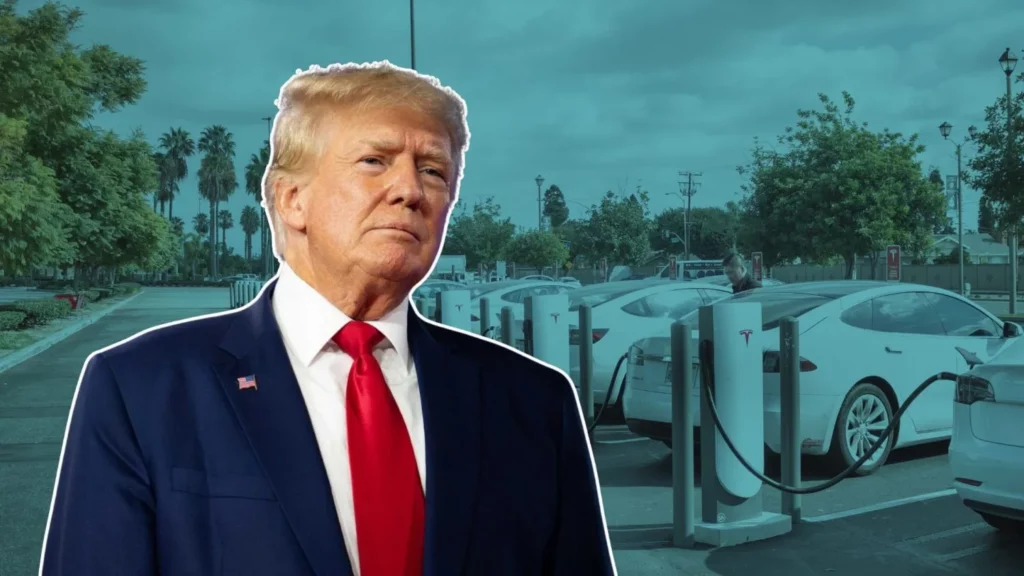
The Trump administration said Wednesday it is rescinding a federal rule that had boosted the fuel-economy value of electric vehicles, a move expected to ease regulatory pressure on automakers and potentially reshape product strategies across the industry.

The U.S. Department of Energy announced it will eliminate the provision known as the “fuel content factor,” which had assigned elevated fuel-economy values to EVs for purposes of calculating compliance under Corporate Average Fuel Economy (CAFE) standards. The agency said it determined the provision was unlawful following a September appeals court decision and will remove it immediately rather than phase it out gradually.

Sign up for CBT News’ daily newsletter and get the latest industry stories delivered straight to your inbox

The fuel content factor had long drawn criticism from environmental groups, which argued it overstated the efficiency of EVs and allowed automakers to meet fleetwide fuel-economy targets without significantly improving the real-world performance of their broader vehicle lineup. Automakers previously noted that the formula produced fuel-economy ratings roughly 7 times higher than those calculated solely from the gasoline-equivalent energy content of electricity.

Under the Biden administration, regulators initially proposed eliminating the factor beginning in 2027, a change that would have reduced the compliance value of EVs by about 70%. After industry pushback, the phaseout was extended through 2030.

The Trump administration has also proposed lowering federal fuel-economy standards finalized in 2024, reducing the required fleet average to 34.5 miles per gallon by 2031, down from 50.4 mpg under the prior rule. In addition, legislation signed last year eliminated fuel-economy penalties for automakers, with regulators saying companies faced no fines dating back to the 2022 model year.

For dealers, the regulatory shift could ease some of the production pressure that pushed automakers to prioritize EV output in recent years. A lower compliance burden may allow manufacturers to rebalance portfolios toward gasoline-powered trucks and SUVs, particularly in markets where EV demand has softened.

However, uncertainty remains. Automakers have expressed concern that a future administration could reinstate stricter standards or penalties, creating long-term planning challenges for product allocation, inventory management, and pricing strategies at the dealership level.


More from Industry News
Volkswagen ends U.S. EV output, triggering $600 million financial hit 

Volkswagen ends U.S. EV output, triggering $600 million financial hit 

- April 17, 2026
On the Dash: Slower EV demand may impact inventory planning and turn rates for electric models. Production pullbacks could tighten EV supply or shift sourcing toward imports. Ongoing cost pressures...
Pentagon taps automakers to boost weapons production capacity

Pentagon taps automakers to boost weapons production capacity

- April 16, 2026
On the Dash: Potential defense contracts could shift production priorities and impact vehicle supply. Increased government demand may tighten supply chains already under pressure. Automaker diversification into defense could influence...
CarMax shares fall 14% as new CEO Keith Barr unveils turnaround plan focused on lower-priced vehicles amid softening consumer demand.

CarMax pivots to lower-priced vehicles as investors remain skeptical

- April 15, 2026
On the dash: CarMax posted mixed results in Q4, with slight growth but weaker profits, triggering a 14% stock drop The company is shifting toward lower-priced, higher-mileage vehicles as affordability...
Tariff refund applications open as dealers and importers seek relief under CAPE program

Tariff refund applications open as dealers and importers seek relief under CAPE program

- April 15, 2026
On the Dash: Tariff refunds could improve short-term cash flow and help offset prior cost increases. Dealers should evaluate eligibility tied to imported inventory and parts exposure. Ongoing trade policy...
CBT News
Privacy Overview

This website uses cookies so that we can provide you with the best user experience possible. Cookie information is stored in your browser and performs functions such as recognising you when you return to our website and helping our team to understand which sections of the website you find most interesting and useful.