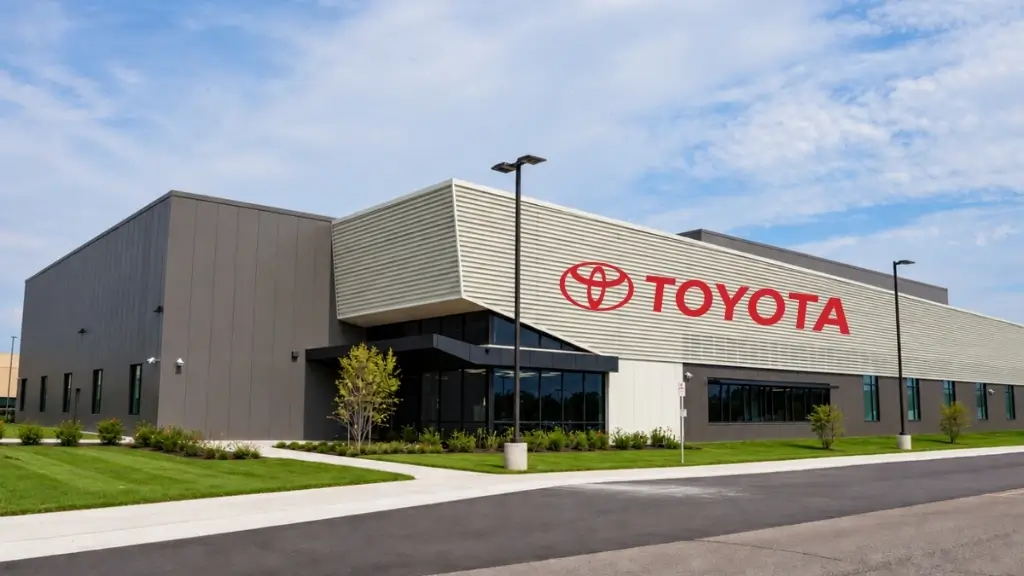
Toyota has received a $4.5 million funding boost from the U.S. Department of Energy (DOE) to advance sustainable EV battery technologies. The funding, sourced from the Advanced Research Projects Agency-Energy (ARPA-E) under its CIRCULAR program, aims to strengthen the domestic supply chain for electric vehicle (EV) batteries while addressing one of the industry’s key challenges: managing the lifecycle of aging batteries.
The initiative, led by the Toyota Research Institute of North America (TRINA), seeks to improve the processes for recycling and reusing old EV batteries. Currently, this involves slow, manual, and costly disassembly. This new project will leverage expertise from partners like Oak Ridge National Laboratory (ORNL), the National Renewable Energy Laboratory (NREL), and Baker Hughes’ Waygate Technologies to create a more efficient, automated solution for EV battery recycling.
While the project’s primary focus is to streamline key stages of the battery recycling process, it addresses the following critical bottlenecks:
- Automated battery disassembly: Traditional methods of manually disassembling battery packs are slow and costly. Toyota aims to automate this process to accelerate the recycling cycle.
- Data-driven battery classification: The project will use advanced diagnostic tools to quickly and accurately assess battery cells and modules, improving the efficiency of identifying reusable components.
- Cell degradation solutions: The team will focus on addressing cell degradation to extend the lifespan of battery materials, reduce waste, and minimize the need for mining new raw materials.
The overall goal is to establish a “3R facility of the future” – a state-of-the-art recycling center designed to reduce, reuse, and recycle battery components on an industrial scale, closing the loop on the EV battery lifecycle.
Pioneering technologies for a circular battery economy
Toyota’s research team and its partners plan to implement cutting-edge technologies to help drive the future of battery recycling. These include:
- Automated battery pack disassembly: A major focus is to automate the disassembly process to dramatically reduce recycling time and costs.
- Advanced diagnostic tools: Developing sophisticated diagnostic systems to evaluate battery cell health, ensuring the efficient repurposing of older cells.
- Refabrication methods: Instead of sending batteries directly to recycling, the team aims to refurbish them first, extending their use in new energy systems and reducing waste.
By focusing on extending the life of battery components, Toyota aims to reduce the total emissions per mile for EVs, which could have a major impact on the energy transition and EV market growth. According to Marm Dixit, leading ORNL’s efforts on the project, this strategy plays a crucial role in minimizing the environmental footprint of EVs by enhancing the sustainability of battery production and disposal.
NREL will contribute advanced technologies like machine learning and nano-computed tomography imaging to analyze battery health and predict lifespan, significantly improving the speed and accuracy of battery assessments. Meanwhile, Baker Hughes’ Waygate Technologies will apply its expertise in non-destructive testing and imaging to ensure that the batteries can be safely and effectively repurposed.