TSLA391.95027.75%
GM77.780-1.68%
F12.700-0.01%
RIVN16.4100.42%
CYD42.2900.13%
HMC24.2600.1%
TM213.1801.63%
CVNA371.115-3.09499%
PAG155.130-2.14%
LAD274.480-7.3%
AN195.810-4.19%
GPI332.730-5.25%
ABG202.540-4.03%
SAH65.820-2.41%
TSLA391.95027.75%
GM77.780-1.68%
F12.700-0.01%
RIVN16.4100.42%
CYD42.2900.13%
HMC24.2600.1%
TM213.1801.63%
CVNA371.115-3.09499%
PAG155.130-2.14%
LAD274.480-7.3%
AN195.810-4.19%
GPI332.730-5.25%
ABG202.540-4.03%
SAH65.820-2.41%
TSLA391.95027.75%
GM77.780-1.68%
F12.700-0.01%
RIVN16.4100.42%
CYD42.2900.13%
HMC24.2600.1%
TM213.1801.63%
CVNA371.115-3.09499%
PAG155.130-2.14%
LAD274.480-7.3%
AN195.810-4.19%
GPI332.730-5.25%
ABG202.540-4.03%
SAH65.820-2.41%

Toyota and BMW accelerate hydrogen fuel cell development with new partnership

BMW’s forthcoming hydrogen-powered model will be based on an existing vehicle from its lineup, offered as a zero-emission variant.
Toyota and BMW are renewing their collaboration on hydrogen fuel cell technology with a new understanding aimed at the next-gen zero-emissions

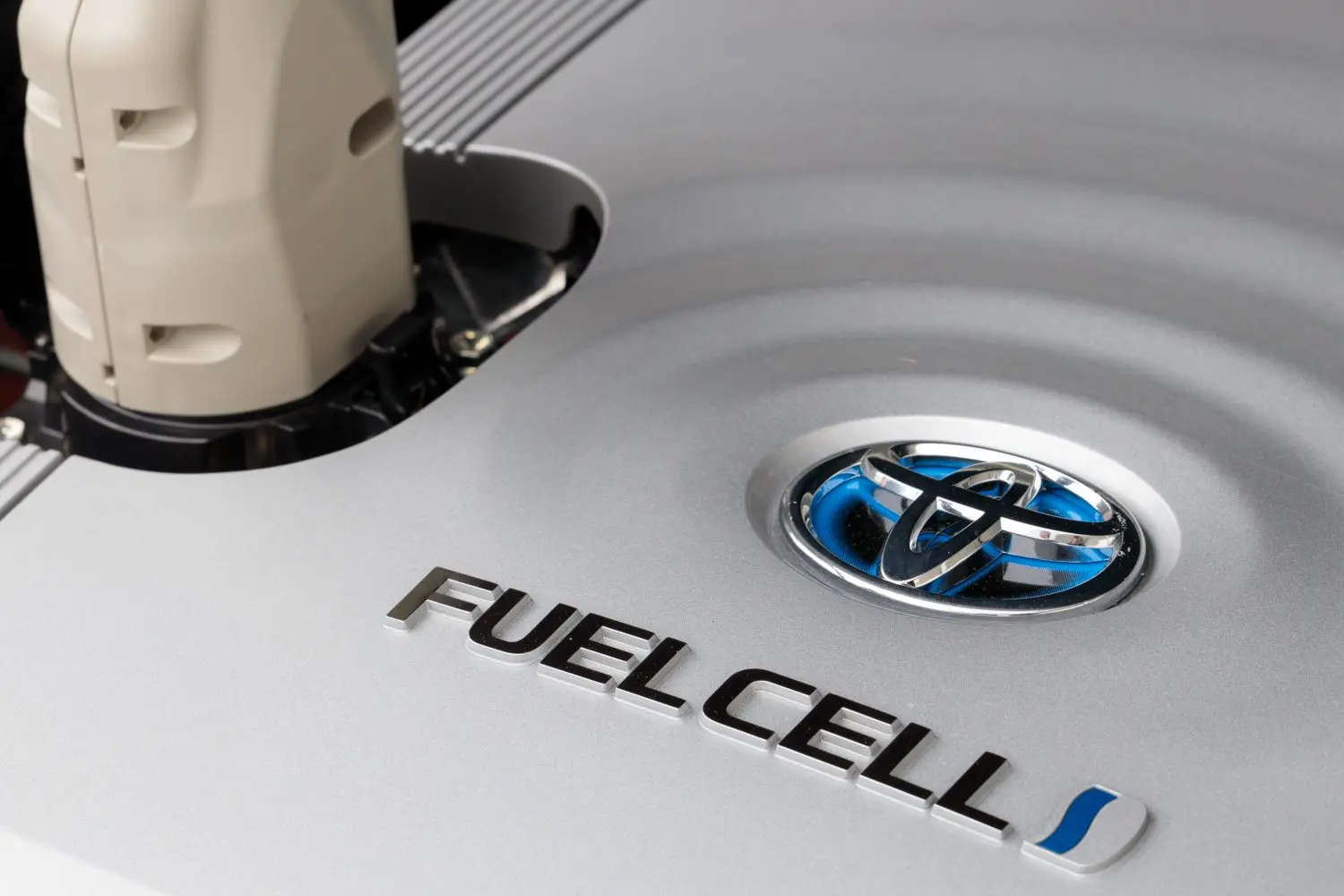
Toyota’s fuel cell module a hydrogen, logo

Toyota and BMW are renewing their collaboration on hydrogen fuel cell technology with a new memorandum of understanding aimed at fast-tracking the development of next-generation zero-emission vehicles. The partnership aims to address key challenges that have hindered the widespread adoption of hydrogen-powered cars, with BMW planning to launch its first hydrogen model by 2028. 

Although hydrogen is the most abundant element in the universe, automakers have struggled to mainstream hydrogen fuel cell vehicles (FCVs) due to a lack of infrastructure and high production costs. The limited number of fueling stations—primarily concentrated in California—along with sluggish sales have been significant barriers. In the first half of 2024, only 322 FCVs were sold in the U.S., a dramatic 82% decline from the previous year.

Toyota and BMW are optimistic that their renewed partnership can reverse this trend by focusing on two critical areas: component standardization and expanding the hydrogen fueling infrastructure. By co-developing a shared powertrain, the automakers aim to reduce costs and make hydrogen vehicles more accessible. Their collaboration on hydrogen-powered vehicles, which began in 2012, is now entering a new phase focused on accelerating innovation in the field.

BMW’s forthcoming hydrogen-powered model will be based on an existing vehicle from its lineup, offered as a zero-emission variant. Additionally, both companies are exploring hydrogen applications for commercial vehicles, though specifics have not yet been revealed. The partnership also emphasizes the need for stronger government and industry cooperation to establish a more robust hydrogen infrastructure and innovation framework.

Hydrogen fuel cells emit only water vapor and are gaining attention as a potential solution for heavy-duty vehicles and mobile power applications. One of the few automakers still producing hydrogen passenger cars, Toyota continues to sell its Mirai exclusively in California, offering a $15,000 fueling voucher to offset the costs. However, adoption remains slow, with only 26,000 Mirais sold since its debut. Meanwhile, BMW is producing limited units of its iX5 hydrogen-powered SUV to test market viability.

Despite the promise of hydrogen technology, challenges persist. California’s hydrogen infrastructure remains fragile, with many stations offline due to supply chain disruptions. Earlier this year, Shell closed several fueling stations amid hydrogen shortages, exacerbating the problem. Rising hydrogen production costs and limited station availability have made it difficult for the technology to gain momentum.

To tackle these issues, Toyota and BMW are organizing a roundtable discussion to outline their strategies for advancing hydrogen fuel cell technology. Their renewed partnership underscores a shared commitment to reducing emissions and driving sustainable automotive solutions, though the road to widespread adoption remains long and challenging. 
Read More
More from Articles
Pentagon taps automakers to boost weapons production capacity

Pentagon taps automakers to boost weapons production capacity

- April 16, 2026
On the Dash: Potential defense contracts could shift production priorities and impact vehicle supply. Increased government demand may tighten supply chains already under pressure. Automaker diversification into defense could influence...
Ford creates unified product organization to accelerate EV, software rollout and margin goals

Ford creates unified product organization to accelerate EV, software rollout and margin goals

- April 16, 2026
On the Dash: A portfolio refresh signals a consistent pipeline of updated trucks and electrified models through 2029. Expanded software and OTA capabilities will increase focus on digital services and...
Tesla outlook strengthens as software updates fuel investor confidence

Tesla outlook strengthens as software updates fuel investor confidence

- April 16, 2026
On the Dash: Tesla’s software-driven model highlights the growing importance of recurring revenue streams like FSD subscriptions. AI and software capabilities are emerging as key differentiators in the EV market. ...
CarMax shares fall 14% as new CEO Keith Barr unveils turnaround plan focused on lower-priced vehicles amid softening consumer demand.

CarMax pivots to lower-priced vehicles as investors remain skeptical

- April 15, 2026
On the dash: CarMax posted mixed results in Q4, with slight growth but weaker profits, triggering a 14% stock drop The company is shifting toward lower-priced, higher-mileage vehicles as affordability...
CBT News
Privacy Overview

This website uses cookies so that we can provide you with the best user experience possible. Cookie information is stored in your browser and performs functions such as recognising you when you return to our website and helping our team to understand which sections of the website you find most interesting and useful.