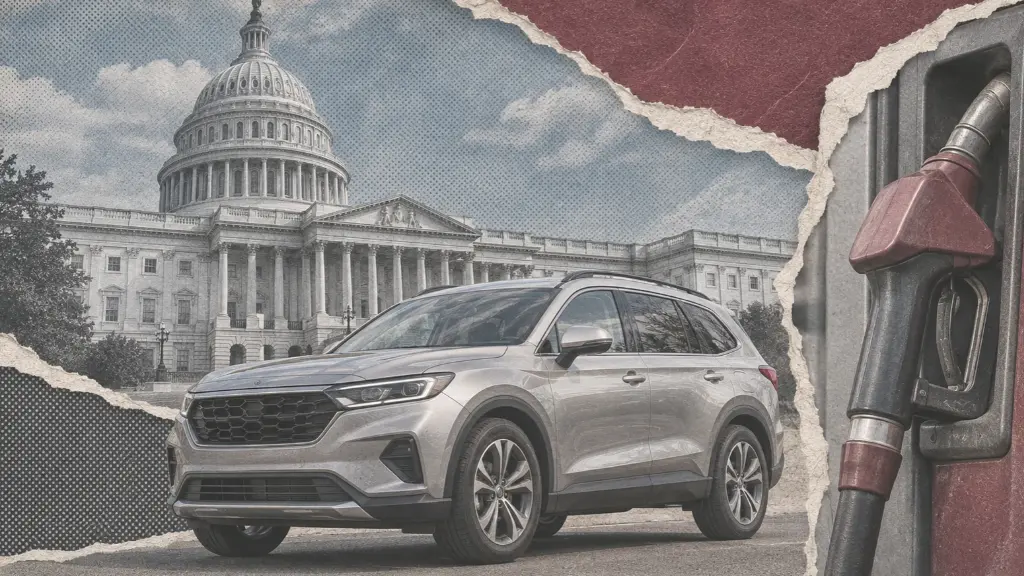
The election is over, but the fight over America’s automotive future is just getting started. And if you think the results only matter to politicians in Washington, think again. The decisions made over the next two years could affect what vehicles automakers build, what consumers pay at dealerships, how much gasoline costs, and whether drivers face another round of taxes, fees, and regulations.
Democrats have won control of both the House and Senate in the 2026 midterm elections, delivering a major setback to President Donald Trump. When the new Congress convenes in January, Republicans will no longer have unified control of Washington. That changes the political battlefield, and the automotive industry is directly in its path.
We don’t normally spend our time covering election results. That’s not what we do. But when political decisions determine the price of a new vehicle, the cost of repairs, fuel expenses, insurance rates, and how much freedom consumers have behind the wheel, it becomes an automotive story. It’s a story about your wallet.
During the first two years of Trump’s second term, his administration moved aggressively to change federal automotive policy. EPA Administrator Lee Zeldin finalized the rescission of the 2009 greenhouse gas Endangerment Finding and the federal vehicle greenhouse gas standards built on it. Transportation Secretary Sean Duffy finalized a reset of Corporate Average Fuel Economy, or CAFE, standards, with the administration arguing that the changes give automakers more flexibility and reduce vehicle costs.
Those decisions were not minor adjustments. They changed the regulatory landscape automakers had been planning around for years. Now Democrats will have the power to challenge those policies, investigate the administration, use congressional oversight, and introduce legislation aimed at reversing parts of Trump’s agenda.
But here’s the part that often gets lost in the political noise: Winning Congress does not mean Democrats can simply erase everything the Trump administration has done.
A final federal regulation cannot be reversed with a press conference or a partisan announcement. Agencies generally must follow legal procedures to revise rules, provide justification, accept public comment when required, and withstand judicial review. Congress can pass legislation to change the law, but the president still has veto power. Democrats do not have the votes to override that veto.
The Congressional Review Act also matters. When Congress passes a resolution disapproving an agency rule and it becomes law, that rule loses effect, and the agency generally cannot issue a substantially similar rule without new congressional authorization. That is a much stronger obstacle than simply changing an administration’s policy. But it does not permanently prohibit every future regulation involving emissions, fuel economy, or electric vehicles.
Then there’s the Senate filibuster. Most major legislation needs 60 votes to advance, not simply a bare majority. Some Democrats are already pushing to eliminate or weaken that requirement, while others oppose doing so. If the Senate changes its rules, the political consequences could extend far beyond automotive policy. A future majority could find it easier to advance legislation involving taxes, fees, regulations, and federal spending. And remember, even eliminating the filibuster would not eliminate the president’s veto.
The next battleground could involve tariffs. Democratic leaders have already promised action to reverse some of Trump’s tariffs. That matters enormously to automakers because the North American supply chain is deeply integrated. Parts and components cross borders, sometimes multiple times, before a vehicle reaches a dealership. Changes in trade policy can affect manufacturing costs, supplier investments, repair parts, and ultimately the price consumers pay.
Drivers should also pay attention to the growing debate over how transportation is funded. Gas taxes, mileage-based road-use charges, registration fees, and other driving-related assessments are all potential ways governments can collect revenue. Mileage taxes deserve particular scrutiny because they can apply to gasoline vehicles, hybrids, and electric vehicles alike. Some states are already experimenting with road-use charges, but a national mileage tax is not currently an enacted federal requirement.
And here’s the question nobody in Washington should be allowed to dodge: If drivers already pay fuel taxes, registration fees, tolls, and other transportation charges, how much more can governments demand before owning and operating a vehicle becomes unaffordable?
This is not about declaring every Republican policy a success or every Democratic proposal a failure. It’s about demanding answers before politicians make decisions that consumers will have to live with. Automakers need predictable rules to invest and build vehicles. Consumers need affordable choices, not another political tug-of-war that leaves them paying more.
The election has changed who controls Congress, but it has not settled the fight over the future of transportation. The next two years could bring investigations, legislative battles, tariff disputes, regulatory challenges, and renewed pressure over how Americans power and pay for their vehicles.
Washington can call it environmental policy, trade policy, transportation policy, or tax policy. But when the bill gets bigger, it’s the American driver who pays.
So here’s the question: Are lawmakers going to make transportation more affordable and protect consumer choice, or will they create more ways to control what Americans drive and charge them for every mile?
The election is over. The fight is not.
Check out my full commentary on this story: https://youtu.be/_o_pcmFX9n8
Looking for more automotive news? https://www.CarCoachReports.com
Listen and subscribe to The Drive with Lauren and Karl – https://www.youtube.com/@thedrivecarshow