On the Dash:
- Stellantis will deliver Level 4 autonomous vehicles using NVIDIA DRIVE AV software and AV-Ready Platforms.
- Uber will operate initial robotaxi fleets, starting with 5,000 units in U.S. cities, with global expansion planned.
- Foxconn provides electronics integration, enabling scalable, safe, and flexible deployment of autonomous services.
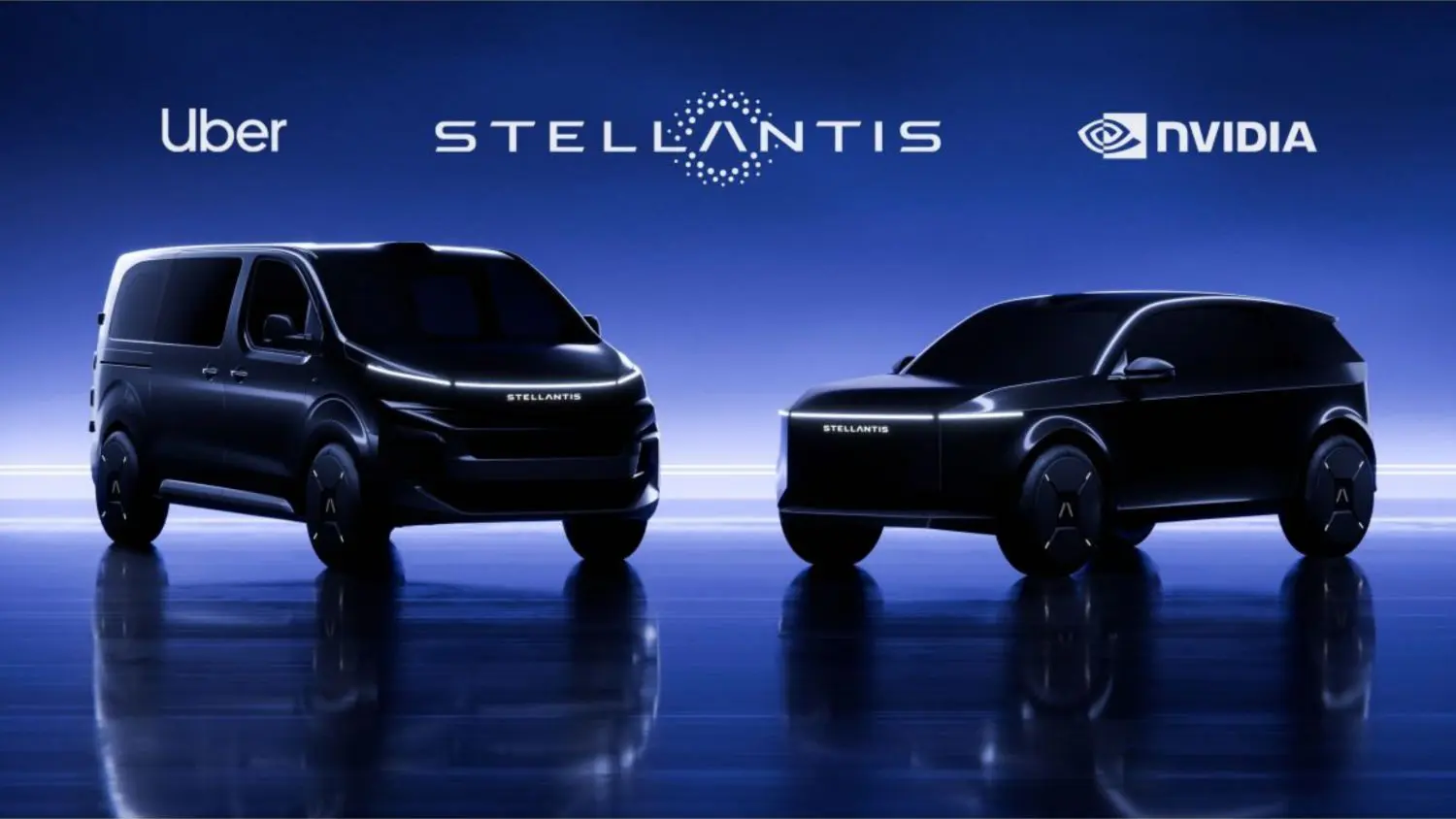
Stellantis announced a new collaboration with NVIDIA, Uber, and Foxconn to accelerate the development and deployment of Level 4 autonomous vehicles for robotaxi services. The initiative will leverage Stellantis’ engineering expertise, NVIDIA’s AI and autonomous-driving software, Foxconn’s electronics integration capabilities, and Uber’s ride-hailing operations to create scalable, safe autonomous transportation solutions.
The partnership will focus on Stellantis’ AV-Ready Platforms, including the K0 Medium Size Van and STLA Small, which are equipped with NVIDIA DRIVE AGX Hyperion 10 architecture and the safety-certified DRIVE AV software for full Level 4 autonomy. Uber plans to deploy an initial fleet of 5,000 Stellantis-built autonomous vehicles in select U.S. cities, with pilot programs expanding globally. Production will begin in 2028.
Each company has defined roles: Stellantis will engineer and manufacture the autonomous vehicles; NVIDIA will provide Level 4 driving and parking capabilities through its DRIVE AV software; Foxconn will support hardware and systems integration; and Uber will operate the robotaxi services. The AV-Ready Platforms are designed for flexibility, incorporating advanced sensor suites, system redundancies, and high-performance computing to optimize safety, reliability, and total cost of ownership for service operators.
This collaboration builds on Stellantis’ recently announced partnership with Pony.ai in Europe, positioning the automaker to play a central role in the global shift toward autonomous mobility. The non-binding memorandum of understanding establishes a framework for technology development, licensing, production, and procurement while allowing each company the flexibility to pursue additional opportunities in autonomous driving.